Cart
No products in the cart.
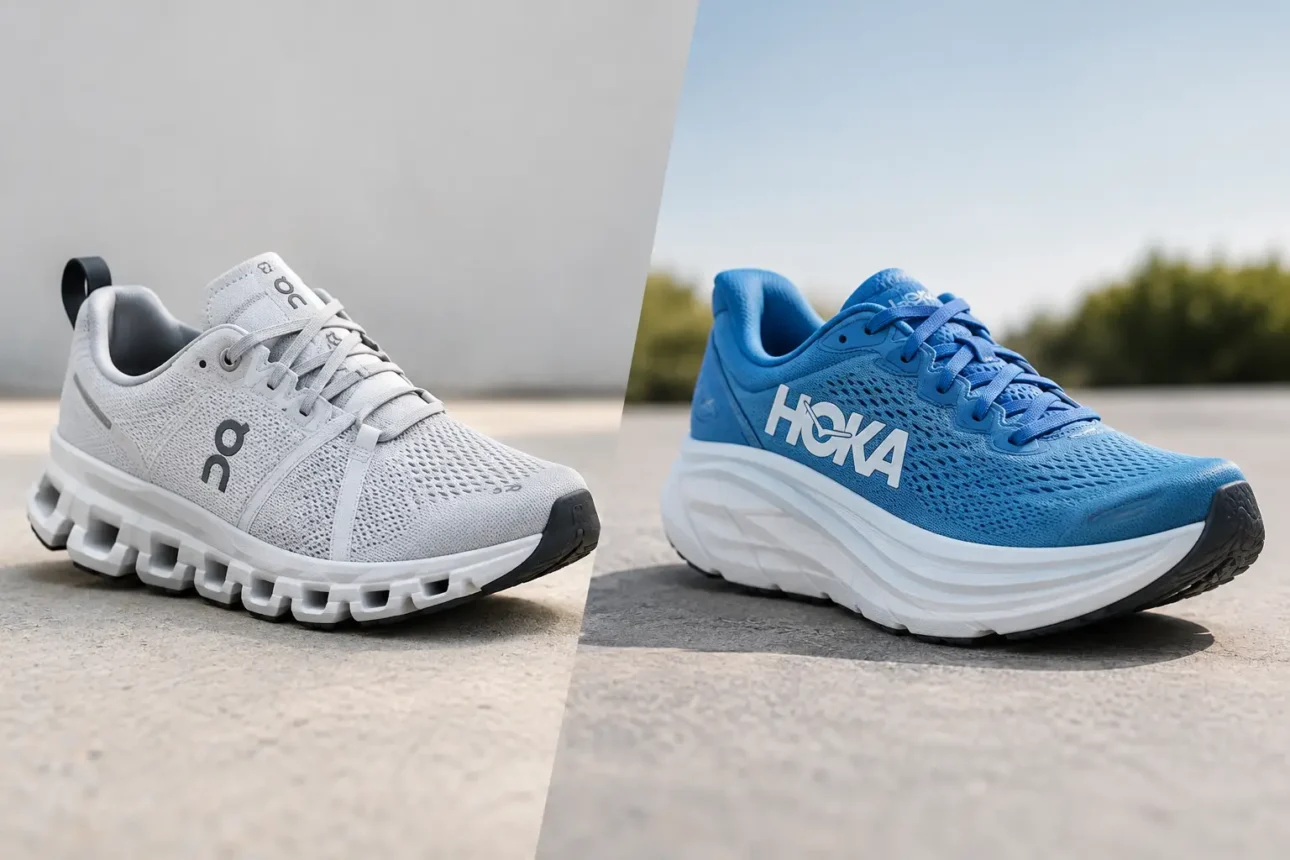
On Cloud vs Hoka is less about which logo wins and more about what happens to your feet around 5 p.m. On usually feels lighter, firmer, and sharper underfoot. Hoka usually feels softer, taller, and more cushioned. Both make solid shoes. They just solve different problems.
If you want one pair for coffee runs, commuting, jeans, and the occasional easy workout, On often makes more sense. If your day involves long walks, hard pavement, standing shifts, or recovery miles, Hoka has the stronger case. The wrong choice is buying either brand because someone online called it the best.
Pick On if you like a cleaner-looking sneaker with a responsive, slightly firmer ride. Their shoes tend to feel less bulky, work well with everyday outfits, and suit people who do not want a giant slab of foam under their foot.
Pick Hoka if comfort is your first priority and you want more cushioning for long days. Most Hoka models feel more protective on concrete and pavement. The trade-off is obvious: they can look big, feel less connected to the ground, and sometimes make a simple outfit look like you are headed to a trailhead.
Neither brand is automatically better. On is the better all-rounder for people who care about style and lightness. Hoka is the safer bet for people who want to reduce the beating their feet take during a long day.
On built its identity around CloudTec pods – the hollow sections you see on the outsole. In practice, that means a shoe that often lands with a soft initial feel, then firms up quickly. It is springy rather than marshmallow-soft. Some people love that direct, quick feeling. Others expect a plush cloud and wonder why the shoe feels firmer than the name suggests.
That is the honest part about On: not every Cloud model feels especially soft. A few are genuinely cushioned, but plenty feel more like a light performance sneaker with a tidy design. We think that is a good thing if you dislike sinking into your shoes. If you want pillow-like comfort, though, do not buy On based on the word “Cloud” alone.
Hoka goes the other direction. Its signature look is a thick midsole, often with a curved rocker shape that helps your foot roll forward. The feel is usually softer and more protective, especially on long walks. You notice the stack height right away. For some people, it feels smooth and easy. For others, it feels like too much shoe.
Hoka cushioning is not all the same, either. A Clifton feels lighter and softer than a Bondi, while a Speedgoat is built for trails and grips differently. But across the range, Hoka is usually the brand for people who want more foam between themselves and the sidewalk.
If you work retail, travel often, walk your dog for miles, or stand through long shifts, we would start with Hoka. Not because every Hoka is perfect, but because more of its lineup is built around long-haul comfort.
The Clifton is the sensible middle ground. It is cushioned without being as huge as the Bondi, and it works well for walking as well as easy running. The Bondi is the bigger, softer option. It can feel excellent on unforgiving concrete, but it is not subtle. The sole is thick, the shape is bold, and it will not be everyone’s favorite look.
On can still work for walking and standing. The Cloud 5 and Cloudrunner are popular for a reason: they are light, easy to wear, and less bulky than many Hoka pairs. But if your feet are tired every day, Hoka’s extra cushioning usually makes more sense. A clean silhouette does not help much when your heels are aching by dinner.
One warning: soft does not always mean right. If you prefer a stable, grounded feel, a very tall Hoka can feel awkward at first. Give it a few minutes on your feet, not just a mirror check.
This is where brand-wide arguments get lazy. On makes fast, lightweight running shoes. Hoka makes fast, lightweight running shoes too. The model matters more than the logo.
For easy runs and daily training, Hoka has a strong reputation because it makes the miles feel less harsh. The Clifton has long been a go-to for runners who want a soft, light daily shoe. The Bondi is more of a comfort-first cruiser. It is great for slower efforts and recovery days, but it can feel like a lot if you prefer a quick turnover.
On tends to appeal to runners who like a more responsive ride. Shoes like the Cloudsurfer lean softer, while the Cloudmonster adds more foam and bounce than older On designs. The Cloudrunner is a practical choice for runners who want support without a heavy, traditional stability shoe.
Our take: choose Hoka for easy miles, longer runs, and comfort-focused training. Choose On if you like a snappier feel and want a running shoe that does not look out of place with regular clothes. Serious runners may own pairs from both brands, and that is not overkill. It is just using the right tool for different days.
Fit can make or break this choice. On shoes often have a more streamlined shape through the midfoot and toe area. That helps them look sleek, but wide-footed shoppers should pay attention. Some On models can feel snug, especially if you have a high instep or prefer thick socks.
Hoka generally offers a bit more room up front, and many popular models come in wide options. That does not mean every Hoka fits wide by default. The heel can still feel secure and the midfoot can still be structured. But if your toes hate being squeezed, Hoka is usually the easier place to start.
Do not size up automatically just because a shoe feels narrow. Going too long can cause heel slip and make the ride less stable. Try your usual size first, then look for a wide version if the width is the issue. Your toes should have a little space in front, especially if you are buying for running or all-day walking.
On has the better casual look. We will take a side on that.
The brand’s low-profile uppers, simple color blocking, and clean soles work easily with jeans, cargos, shorts, and joggers. The Cloud 5 is especially good at this. It is not the most technical shoe in the room, but it looks sharp without trying too hard. On also uses quick-lace systems on some models, which are convenient, though not everyone likes the locked-in elastic feel.
Hoka has leaned into the oversized running-shoe look. That can be cool if you like a sportier, chunkier sneaker. A Clifton in a clean neutral color works fine with casual clothes. A Bondi makes a louder statement, whether you mean it to or not. Some people love that big-foam silhouette. Others will think it looks like a shoe designed by a chiropractor’s waiting room.
No shame either way. Just be honest about where you will wear them. If the shoe needs to handle office casual, errands, and dinner plans, On is easier. If it mainly needs to make walking feel better, Hoka does not need to win a style contest.
Both brands make shoes that should be treated like shoes, not indestructible gear. Running foam compresses over time. Outsoles wear down. Lightweight mesh can snag. If you use one pair for running, gym sessions, rainy walks, and daily errands, it will wear out faster no matter whose name is on it.
On’s CloudTec openings can collect small rocks, especially on rough paths. It is annoying, not a deal-breaker, but worth knowing before you buy them for gravel walks. Hoka’s tall foam can show scuffs and dirt quickly, particularly in light colors. Neither issue should decide the purchase, but both are real.
For everyday rotation, we like having a cleaner casual pair and a separate pair for actual training. Your shoes last longer, and you are not showing up to brunch in a pair that smells like last week’s treadmill session.
Buy On when you want a sneaker that feels light, looks clean, and can handle daily walking or moderate running without looking overly athletic. It is the better choice for the person who wants comfort but refuses to wear something that looks like a foam platform.
Buy Hoka when your priority is cushioning, long-distance walking, easy runs, or standing on hard floors. It is the better choice when your body notices every mile and you want the shoe to take some of that impact off the table.
Try not to chase the brand. Chase the feeling you want. If a shoe feels good after ten minutes, fits your actual day, and you would happily put it on again tomorrow, that is usually the pair worth buying.