Cart
No products in the cart.
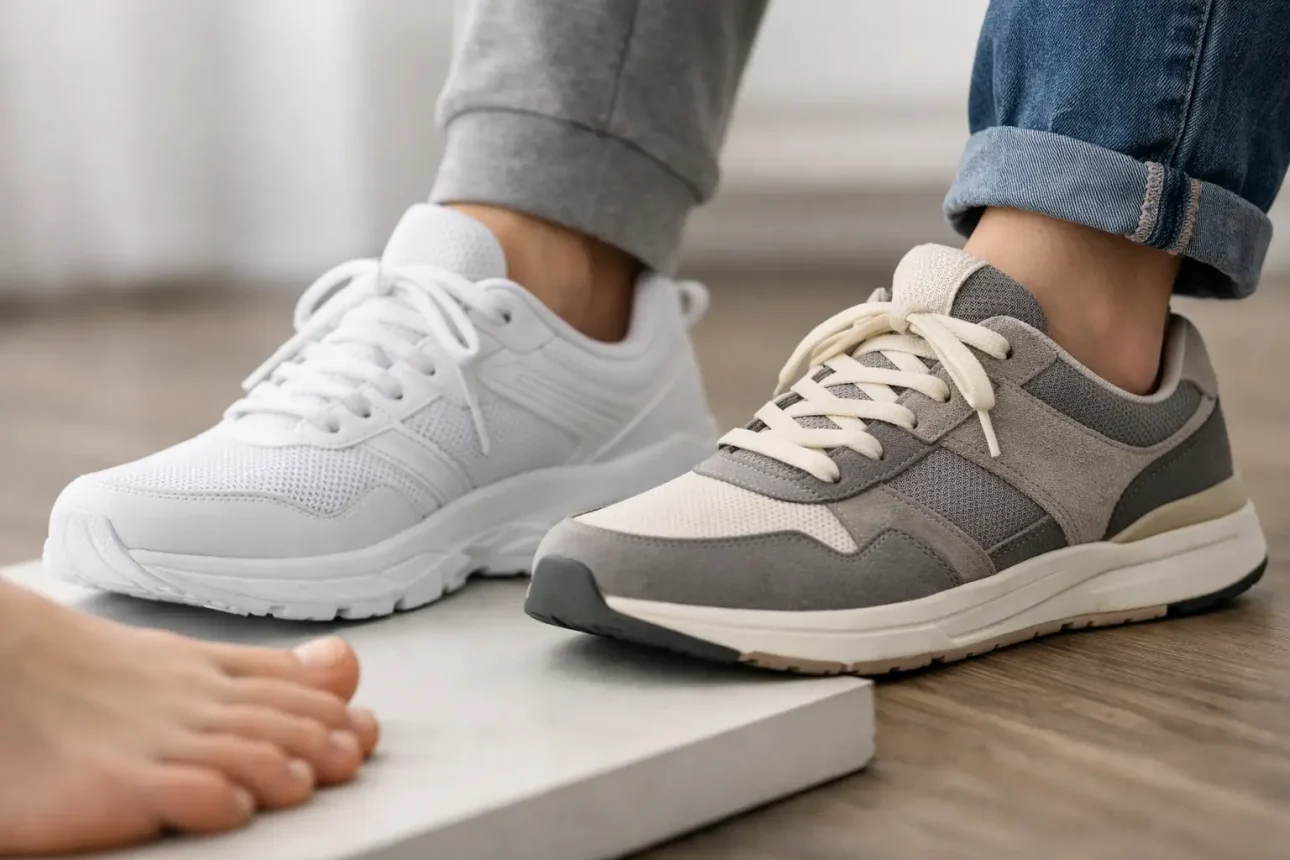
If you keep asking which sneakers fit wide feet, you’re probably tired of the same routine – shoes feel fine for ten minutes, then your toes get squeezed, your pinky toe starts rubbing, and by the end of the day you’re over it. A lot of sneakers look good on the shelf and wear terribly if your foot needs real room. That’s the part brands don’t always say out loud.
Here’s the honest version. Wide feet don’t always need a shoe labeled wide. Some standard pairs already run roomy. Others are narrow no matter what the marketing says. What matters is the shape of the toe box, the way the upper wraps your foot, and whether the midfoot holds you in without crushing the front.
The sweet spot is a sneaker that gives your toes space but doesn’t let the rest of your foot slide around. Too narrow is obvious. Too wide in the wrong places is just as annoying. Your heel slips, your foot moves on corners, and the shoe starts feeling bigger instead of better.
That’s why we usually trust certain brands more than others for wide feet. New Balance has earned its reputation here. Not because every pair is perfect, but because the brand actually makes shoes in wider sizing across a lot of models. If your feet are broad through the forefoot, New Balance is often the easiest place to start.
Brooks and Hoka are also solid if you’re buying for all-day wear, walking, or running. They tend to make comfort-first shoes with more forgiving uppers and more width options. They aren’t always the sharpest-looking pairs in the lineup, but some of them are worth the trade if your current sneakers leave marks on your feet.
Asics can be a good call too, especially in running models that come in wide versions. The fit usually feels more structured than soft, which some people like and some don’t. If you want a shoe that feels locked in and stable, that’s a plus. If you hate anything even slightly snug around the arch, it depends on the model.
Nike is where people get burned. Some Nike sneakers fit fine on wide feet, but a lot of them run narrow, especially in lifestyle pairs and sleeker runners. If you’ve got a broad forefoot, buying Nike blind is risky. Adidas sits somewhere in the middle. Some knit and mesh models have enough give to work, but the shape still matters. Stretchy material helps, but it doesn’t fix a narrow platform.
The toe box matters most. Not the official width label. Not the brand story. Not the foam name. If the front of the shoe tapers too hard, your foot will know fast.
A rounded or squared-off toe shape usually works better than a pointy one. That sounds basic, but it’s the difference between your toes sitting naturally or getting pushed inward all day. A lot of retro styles look clean and still run brutally narrow up front. Great with an outfit. Bad if your feet need space.
The upper matters next. Mesh, knit, and softer engineered materials can give you a bit more forgiveness than stiff leather or rigid overlays. That’s useful, but only to a point. If the shoe is built on a narrow base, a stretchy upper just means your foot bulges over the edge. That’s not comfort. That’s your shoe losing the argument.
Then there’s the midfoot. Some people with wide feet are wide only in the toe area. Others are wide through the whole foot. If a shoe has a tight midfoot wrap, aggressive sidewalls, or a strong arch shape, it can still feel restrictive even if the toe box seems fine. This is why two people with “wide feet” can have totally different opinions on the same pair.
New Balance is still the safest bet overall. Models like the 990 line, 2002R, and many of the brand’s running shoes usually have a roomier shape than trendier, slimmer sneakers from other brands. Not every pair is wide by default, but the brand tends to respect real foot shapes better than most.
Brooks is less exciting from a style angle, but if you’re walking a lot, standing all day, or buying for comfort first, it earns its spot. A pair like the Ghost has been a reliable pick for wide-foot shoppers for years. Not flashy. Just dependable.
Hoka works well if you like a lot of underfoot cushion and a broader platform. Some people love that soft, rolling feel. Others think it looks bulky. Fair enough. But if narrow shoes have been wrecking your day, bulky starts looking a lot better.
Asics deserves more credit than it gets. Some of its running shoes are genuinely wide-foot friendly, especially when you buy the proper width version. We like Asics when you want support and a more athletic fit, not just softness.
Adidas can work, especially in softer knit-based pairs or chunkier casual models. But we wouldn’t call it the first stop for wide feet. Same with Puma. There are exceptions, but you need to be more selective.
On and Onitsuka Tiger look sharp, but they can be tough for wider feet. On tends to fit a bit snug and structured. Onitsuka Tiger often runs slim and low-volume. If your foot is broad, those are brands we’d approach carefully.
If you need something for all-day standing or long walks, comfort beats profile. This is where Brooks, Hoka, and wider New Balance running models make the most sense. You want cushion, a stable base, and enough room that your feet don’t feel trapped by lunchtime.
If you’re buying a lifestyle sneaker to wear with jeans, cargos, or joggers, New Balance is still strong. Some retro runners and chunkier casual pairs give you more room without looking like a pure gym shoe. That’s usually the best balance between comfort and style.
If you’re running, don’t just buy the coolest silhouette and hope for the best. Running in a too-narrow shoe gets old fast. Look for brands and models that come in real wide sizing, not just a forgiving upper. Brooks, Asics, New Balance, and Hoka are better bets than most fashion-first options.
If you want a clean, slim look, that’s where the trade-off shows up. A lot of sleek sneakers are sleek because they’re narrow. That’s the truth. You can still find pairs that work, but if your foot is truly wide, the sharpest low-profile shoes may never feel great.
If the toe box looks tapered in photos, trust your eyes. If the sidewalls rise high around the arch and forefoot, that’s another warning sign. If reviews keep saying “size up” but nobody says the shoe is actually roomy, that’s not the same thing as a wide-friendly fit.
We’d also be careful with stiff leather uppers in narrow-looking casual sneakers. They can break in a little, sure, but people exaggerate that. A shoe that starts painfully narrow usually stays annoyingly narrow.
Sizing up by a full size isn’t a real fix either. It just gives you extra length. Your toes might stop hitting the front, but the width problem is still there. Then you end up with heel slip and a weird fit everywhere else.
You should feel room around your toes right away. Not a ton of empty space. Just enough that your forefoot can spread naturally when you stand. The shoe should hold your heel and midfoot without pinching the sides.
Pay attention to how the shoe feels after an hour, not just the first minute. A lot of pairs pass the quick try-on test and fail once your feet warm up and swell a little. That’s when narrow shoes expose themselves.
If the upper is visibly stretching sideways, or your pinky toe is pressing against the edge, move on. Don’t talk yourself into it because the color is good. We’ve all done it. It rarely ends well.
The best approach is simple. Start with brands that make roomier shapes or actual wide sizing. Be skeptical of sleek pairs if your feet usually feel cramped. And don’t confuse soft materials with a genuinely wide fit.
A good sneaker for wide feet shouldn’t feel like a compromise every time you lace it up. It should just fit, look decent, and let you get on with your day. That’s really the whole point.