Cart
No products in the cart.
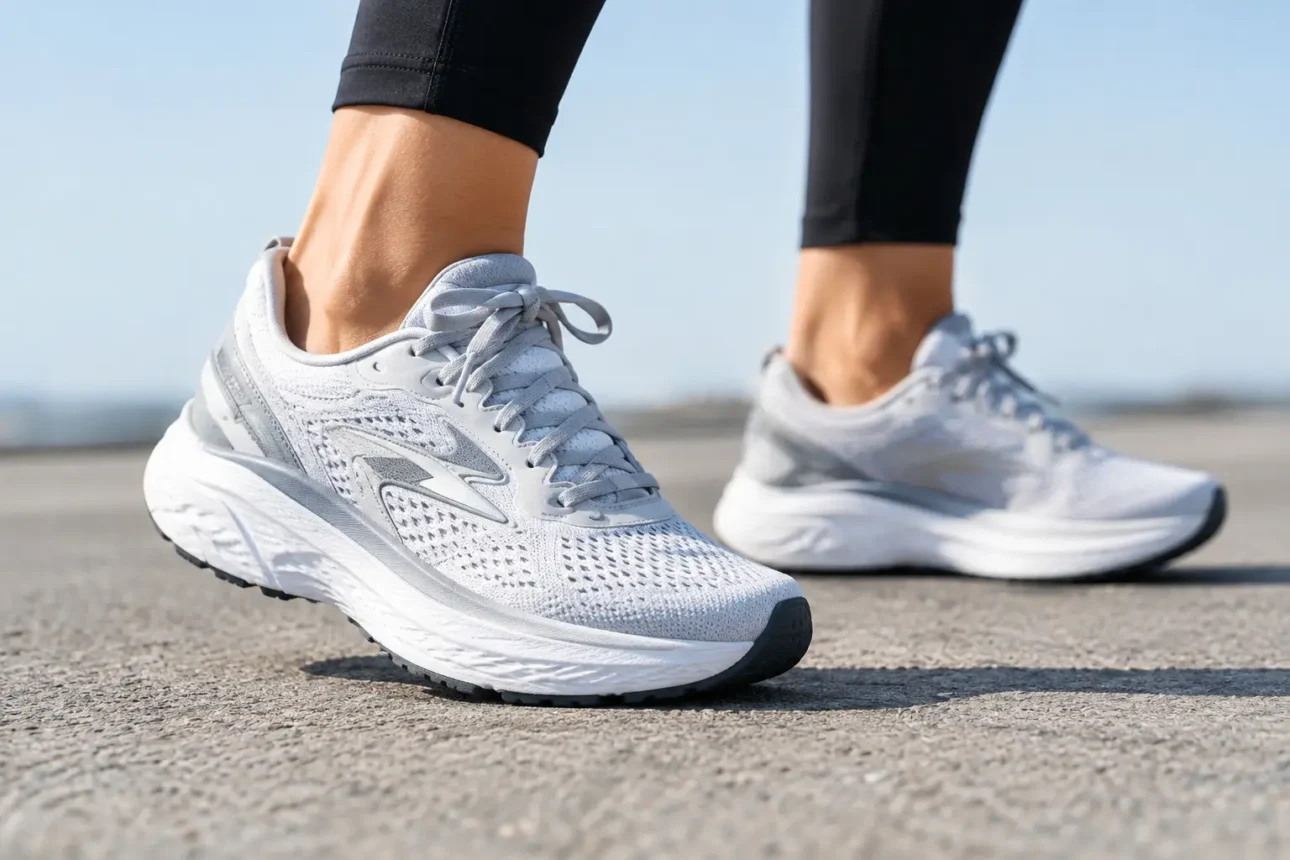
A running shoe can feel amazing for five minutes in a store and annoy you by mile three. That is why buying running shoes is less about the biggest foam stack or the loudest colorway and more about what happens when your feet heat up, your stride gets sloppy, and the sidewalk keeps going.
We are not here to tell you that every runner needs a lab test, three pairs in rotation, and a $300 race shoe. Most people need a pair that fits properly, matches where they run, and does not make them think about their feet every few blocks. Simple. Not always easy, but simple.
The first question is not, “What is the best running shoe?” That question has no useful answer. A soft, tall shoe that feels great on an easy Sunday run can feel wobbly when you pick up the pace. A light, firm shoe can feel quick for intervals and pretty harsh on a long walk home.
Think about your normal week. Are you running two or three easy miles after work? Training for a half marathon? Mixing jogging with dog walks and errands? Staying on a treadmill? Running uneven park trails? Your answer changes the shoe.
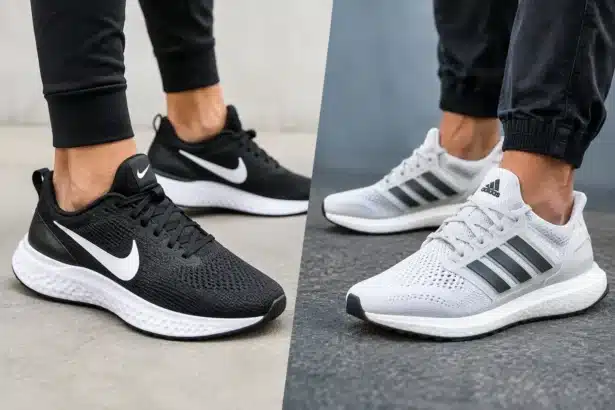
For most runners, a daily trainer is the right place to start. These are the dependable pairs built for regular miles, not race-day bragging rights. They have enough cushioning to take the edge off pavement, enough grip for ordinary conditions, and enough durability that you are not worried about every mile. Models from Brooks, ASICS, New Balance, Hoka, Nike, Adidas, and On all cover this lane well. The logo matters less than the fit.
If you run mostly easy, favor comfort and a stable feel. If you like faster sessions, a lighter shoe with a firmer, more responsive ride makes sense. If your runs include dirt paths, loose gravel, or wet roots, get a trail shoe. Road shoes on trails are not adventurous. They are just an easy way to slide around and tear up a soft outsole.
A running shoe should feel secure at the heel, comfortable through the middle, and roomy around the toes. That last part gets ignored all the time. Your feet swell when you run. A shoe that feels perfectly snug while standing can become a toe-crushing mess once you are moving.
Leave roughly a thumb’s width between your longest toe and the end of the shoe. Not a full thumb if you have huge hands. Just enough clear space that your toes are not meeting the front on downhills or hard stops. Your heel should not lift with every step, but it also should not feel clamped in place.
Width matters as much as length. If the sides of the upper bulge over the midsole, if your little toe feels squeezed, or if your foot goes numb, do not convince yourself the shoe will magically break in. Some uppers soften a little. A too-narrow platform stays too narrow.
Try shoes later in the day when your feet are naturally a little bigger. Wear the socks you run in. Walk around, jog if you can, and pay attention to pressure points right away. We like a shoe to feel good from the first step. There is no prize for suffering through a 50-mile break-in period.
A size 10 is not the same across every brand, and sometimes it is not even consistent between two models from the same brand. Use your usual size as a starting point, not a rule. If one pair fits in a 9.5 and another fits in a 10, nothing has gone wrong. Your feet do not care what the label says.
Soft cushioning sells because it feels nice when you press it with your thumb. Your legs do not run with your thumb. What matters is whether the shoe feels controlled once you are moving.
A highly cushioned shoe can be a solid choice for easy mileage, recovery days, or anyone who spends plenty of time on concrete. It takes some edge off the ground and can make long runs feel less punishing. But extra foam also adds height. For some runners, especially on corners or uneven pavement, that can feel tippy.
Moderate cushioning is usually the safer all-round choice. It gives you protection without turning every step into a wobble. Firmer shoes have their place too. They often feel more direct and stable, and many runners prefer them for shorter efforts. They are not inferior because they do not feel like a mattress.
Do not buy a maximal shoe because social media says more foam equals more comfort. If it feels awkward, heavy, or unstable under your stride, skip it. The right amount of cushioning is the amount you stop noticing once you start running.
You will see shoes described as neutral or stability models. Neutral shoes generally let your foot move with fewer built-in guiding features. Stability shoes use a wider base, firmer foam, shaped sidewalls, or other design choices to make the ride feel more planted.
Neither category is automatically better. Plenty of runners like a neutral shoe. Plenty like a bit of guidance, especially when they are tired or have a history of feeling unstable in soft shoes. What we do not love is treating the word “stability” like a diagnosis. You do not need to label your feet before trying a pair on.
If a shoe feels steady and natural, that is useful information. If it pushes your foot in a direction that feels strange, it probably is not for you. And if pain keeps showing up during or after runs, do not shop your way through it forever. A qualified running specialist or medical professional can help you sort out what is going on.
Road running shoes are made for pavement, treadmills, and smooth paths. Their outsoles are designed to handle repeated contact with hard, flat ground. They are usually lighter and smoother underfoot than trail models.
Trail shoes add grip, protection, and a more secure upper for rougher ground. That extra grip is worth having when the trail is loose, muddy, rocky, or wet. On clean sidewalks, though, aggressive trail lugs can feel clunky and wear down faster. Pick the surface you use most, not the surface that looks coolest in a product photo.
Weather matters too. A breathable mesh upper is great in heat and less great during cold, wet winter runs. Water-resistant uppers can keep splashes out for a while, but they often run warmer and can take longer to dry if water gets inside. There is always a trade-off.
Once you find running shoes that work, use them before the day that matters. Take them on a few easy runs. Check that the heel stays put, the tongue does not rub, and the laces do not create pressure across the top of your foot. Small annoyances become loud ones after an hour.
You also do not need to replace shoes on a fixed calendar date. Mileage, body weight, running surface, and the shoe itself all affect how long a pair lasts. Many daily trainers start feeling tired somewhere around 300 to 500 miles, but your feet will usually tell you first. Watch for flattened foam, worn-out outsole spots, a shoe that suddenly feels dead, or new aches that disappear when you wear another pair.
Rotating two pairs can help if you run often, but it is not mandatory. One solid pair is enough for plenty of people. Spend for fit and comfort before you spend for carbon plates, limited colorways, or features you will never notice.
At SneakerNess, we think the best pair is the one you actually want to lace up tomorrow. It should look sharp if that matters to you, but it also needs to disappear under your feet once the run starts. Find that balance, then go get some miles in.