Cart
No products in the cart.
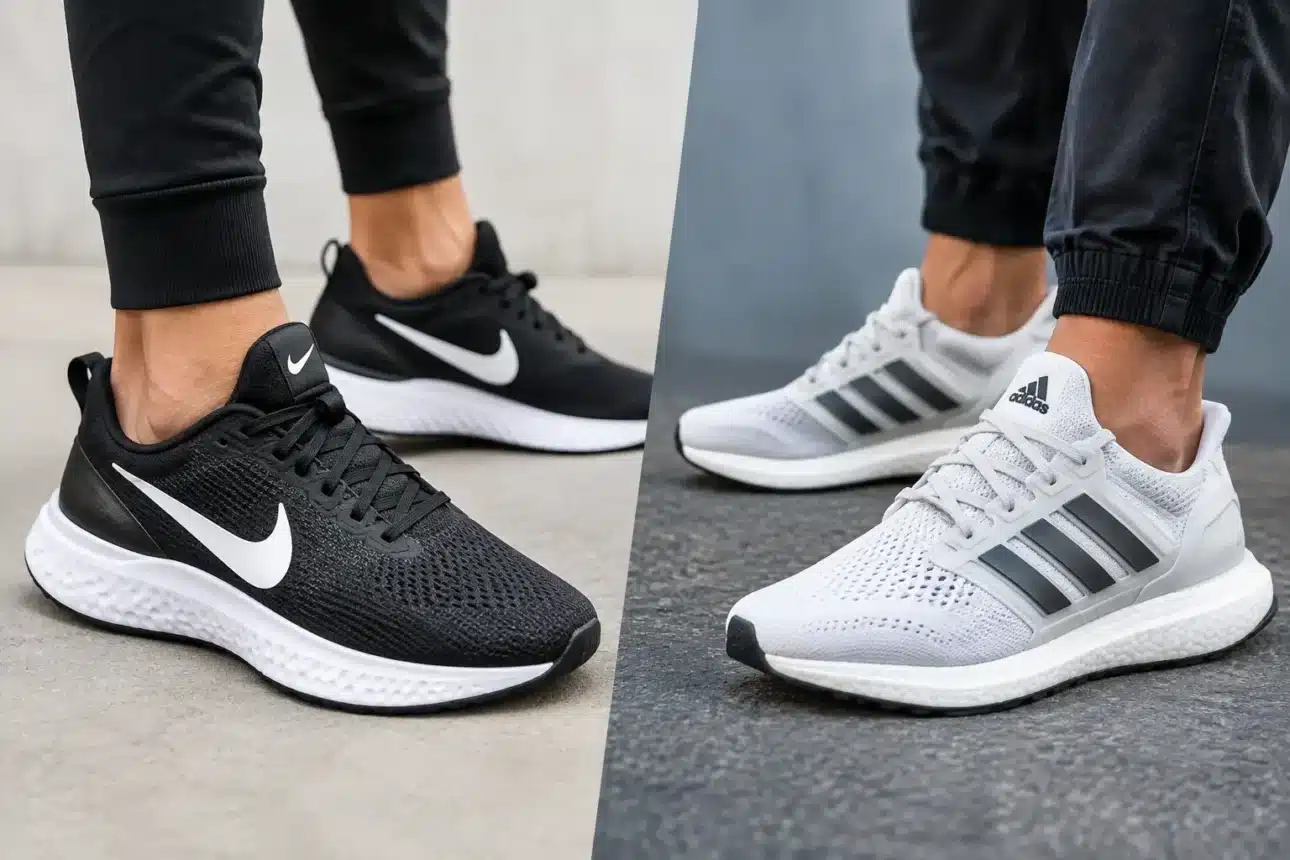
A Nike Adidas comparison gets real when you stop looking at logos and start thinking about your actual week. Are you walking to class, standing through shifts, running a few miles, or just trying to make jeans look better? Both brands make good shoes. Neither wins every category. The better pick is the one that feels right at 5 p.m., not the one with the louder campaign.
Nike usually brings the sharper, sportier look. Adidas often feels more relaxed, more casual, and a little easier to wear straight out of the box. That is the short version. The longer version matters if you are spending real money on a pair you plan to wear hard.
Nike tends to fit narrower through the midfoot and toe box, especially in many running and lifestyle models. If your feet are slim or you like a locked-in feel, that can be a good thing. Your foot stays put when you move, and the shoe often looks sleek rather than bulky.
The downside is simple: a sleek shape can feel cramped. People with wider feet often need to try a half size up in Nike, though that is not a universal rule. A larger size gives your toes more room, but it can also leave extra length at the front. We would rather see you choose a model with a naturally roomier shape than force the wrong fit with sizing tricks.
Adidas has plenty of narrow shoes too, but many of its everyday pairs feel a bit more forgiving across the forefoot. Models with knit or softer textile uppers can feel especially easy on feet that do not enjoy stiff sidewalls. The trade-off is that a softer upper may not give the same secure hold during quick runs, hard cuts, or gym sessions.
For lifestyle wear, Adidas often gets the edge for people who want a relaxed fit. For performance running, Nike’s close fit can feel more precise if your foot shape matches it. If you have wide feet and are buying without trying on, pay more attention to the individual model than the logo on the heel.
A shoe can feel plush for five minutes and annoying by lunch. What matters is the mix of cushioning, shape, weight, and how the upper presses against your foot.
Nike’s cushioning often feels springy and responsive. That makes sense for people who want a shoe to feel lively on walks or runs. Air-based cushioning can give a noticeable bounce, while foam-focused Nike models tend to feel lighter and more flexible. The best Nike runners have a clear purpose. They are built to move, not just look fast on a shelf.
But not every Nike lifestyle sneaker is an all-day comfort king. Classic styles such as the Air Force 1 look clean and go with almost anything, yet they are heavier and stiffer than many modern running shoes. We like them for style. We would not choose them for a long day of airport walking unless the look matters more than your feet.
Adidas has built a lot of its comfort reputation around Boost foam. It has a soft, slightly bouncy feel that works well for casual walking and standing. An Ultraboost can feel very good underfoot, especially if your day involves concrete, errands, or commuting. The catch is weight and warmth. Some Boost models are heavier than they look, and knit uppers can run warm in summer.
For simple everyday comfort, Adidas has a strong case. For a faster, more energetic ride, Nike usually has more options. Neither answer is wrong. It depends whether you want soft cushioning or a shoe that feels quicker underfoot.
Skip flat retro shoes from both brands if you are on your feet for eight hours. They may look sharp, but a thin sole does not become kinder because the logo is famous. Look toward cushioned running-inspired styles, and choose a stable base over the squishiest foam possible. Too much softness can feel wobbly by the end of a shift.
Nike has the deeper bench for runners who care about speed, lightweight builds, and a close-to-the-foot feel. Its road-running lineup has options from easy daily miles to race-day shoes. Adidas is no slouch, especially if you prefer a more cushioned and relaxed ride, but Nike is the easier place to start if running is the main job.
For gym work, be honest about what you do. A tall, soft running shoe is not ideal for heavy lifting. Choose a lower, steadier trainer if squats, deadlifts, and lateral movement are on the plan.
This is where the choice gets personal. Nike is usually more aggressive in its design language. Bigger panels, visible cushioning, bold color blocking, and basketball or running roots are all part of the look. A Nike Dunk, Air Max, or Air Force 1 makes a clear statement even in a simple colorway.
That can be exactly what you want. Nike works well when your outfit needs the sneakers to do some work. A clean pair can carry joggers, cargo pants, shorts, or loose denim without much effort. But some Nike shoes are overbuilt for daily outfits. If the colors are loud and the sole is huge, the shoe can end up wearing you instead of the other way around.
Adidas often feels calmer. The Samba, Gazelle, Campus, and Stan Smith family all sit closer to the ground and pair easily with jeans, chinos, shorts, and wider-leg pants. These are not always the most comfortable choices for long walking days, but they are easy to style. They look intentional without trying too hard.
We will take a side here: the Samba is a great-looking shoe, but it is overhyped as an all-day walker. It is slim, flat, and better for coffee, dinner, and a normal day around town than twelve miles on vacation. Buy it because you like the shape. Do not buy it expecting running-shoe comfort.
Nike has stronger choices if you want a modern, athletic silhouette. Adidas wins if you want low-profile casual sneakers that do not fight the rest of your outfit.
Both brands offer shoes across a wide price range, and both can charge plenty for famous silhouettes. Higher price does not always mean a better shoe for you. Sometimes it means premium materials, a special colorway, or a design with a bigger cultural footprint. Sometimes it just means the shoe is popular.
For practical value, look at how often you will wear the pair. A neutral, comfortable runner that handles walks, travel, and errands can earn its price quickly. A retro sneaker you wear twice a month because it rubs your heel is not a bargain, even on sale.
Nike is often worth it when you want specific performance features or a design that you genuinely love. Adidas is often worth it when you want easy daily comfort and classic styling without making the shoe the whole outfit. Neither brand deserves blind loyalty. Both make hits. Both make shoes that look better online than they feel on foot.
Choose Nike if you like a snugger fit, want a sport-forward look, or need shoes that lean toward running and active use. It is also the better bet when you want cushioning that feels quick rather than simply soft.
Choose Adidas if you prefer a more relaxed casual look, often need a little more room up front, or want a sneaker that works easily with the clothes you already own. Its retro models are strong on style, while its cushioned options can be solid for long days.
Still stuck? Start with the job, then the fit, then the color. That order saves more bad purchases than any brand debate ever will. At SneakerNess, we would rather help you find the pair you will actually wear than sell you the logo people are talking about this week.