Cart
No products in the cart.
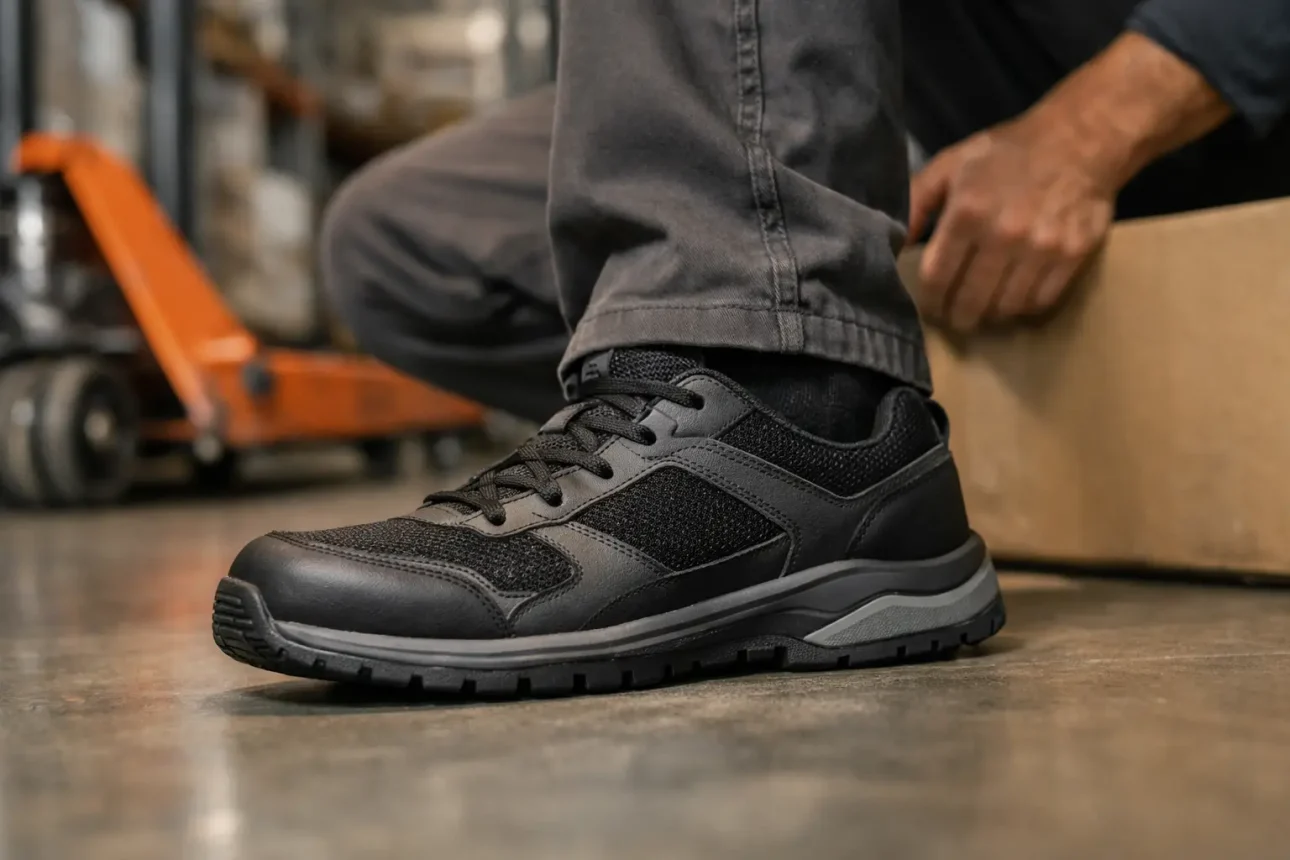
By hour six, bad shoes stop being annoying and start feeling personal. If you’re shopping for shoes for warehouse shifts, you already know the problem. Concrete floors are brutal, the pace is steady, and a pair that feels fine at 8 a.m. can feel dead by lunch.
We’re not going to pretend there’s one perfect shoe for every warehouse job. There isn’t. Some people are picking and packing all day. Some are walking miles. Some are standing at one station. Some need slip resistance. Some need a safety toe. What actually matters is how the shoe feels late in the shift, not how good it sounded on a product page.
The first thing we look at is cushioning, but not the soft, squishy kind that collapses fast. A lot of shoes feel great for twenty minutes because they’re pillowy. Then the foam bottoms out and your feet start doing extra work. For warehouse shifts, we’d take balanced cushioning over marshmallow softness every time.
Support matters just as much. If the midfoot feels sloppy or the heel slips, that little bit of movement adds up over eight to twelve hours. You don’t need a lecture on foot mechanics. You need a shoe that keeps you stable when you’re turning, stopping, and walking on hard ground all day.
Outsoles are easy to ignore until they aren’t. Warehouse floors can be dusty, smooth, or slick in spots. Grip matters. Not in a dramatic way, just in a practical one. A solid rubber outsole with real traction is worth more than flashy details you’ll never notice after day one.
Then there’s upper comfort. If a shoe runs hot, rubs your toes, or presses weirdly across the top of your foot, that irritation gets louder every hour. Breathable mesh is usually a win, but only if the rest of the shoe still feels secure.
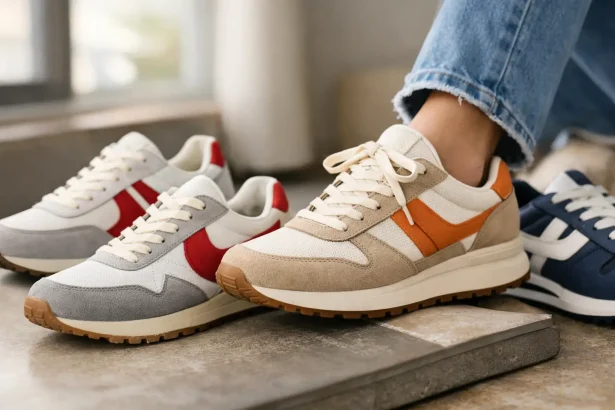
They buy flat lifestyle sneakers because they look clean and seem versatile. We get it. Some retro pairs look great with everything. But a lot of them are rough for warehouse work. They’re often too flat, too firm, and too basic underfoot for long shifts on concrete.
That doesn’t mean every classic sneaker is bad. It means you should be honest about the job. If you’re doing short periods on your feet, fine. If you’re walking and standing for ten hours, skip the shoes that are all style and no support. Your knees and feet will call you out before the week ends.
If you want the short version, running shoes and walking shoes usually make the most sense. Not race-day shoes. Not super minimal trainers. We mean daily pairs with enough cushioning to absorb impact, enough structure to keep you steady, and enough durability to survive repeat wear.
Brands like Hoka, Brooks, Asics, New Balance, and On usually have strong options here. Not every model is a hit, though. Some are too soft and unstable for quick side-to-side movement. Others feel great for running but awkward for long standing. It depends on your shift.
If you walk a lot, we usually lean toward shoes with moderate cushioning and a smooth ride. Something like a dependable daily trainer tends to beat a trendy fashion sneaker every time. If you stand more than you walk, a stable platform matters even more. Too much bounce can actually get tiring when you’re mostly planted in one area.
Go for a shoe with enough foam to take the edge off hard floors, but not so much that you feel wobbly. This is where a lot of daily running shoes shine. Models from Brooks and Asics are often a safe bet because they’re built for repeat mileage without feeling flimsy.
New Balance also does this well. A lot of their everyday trainers have a nice middle ground – cushioned enough to feel good, stable enough to trust. That balance is what most warehouse workers actually need.
You still want cushioning, but you probably want firmer support than the person doing laps around the building. Super soft shoes can feel nice at first and weird later. If your heel sinks too much or your arch feels unsupported, standing gets old fast.
This is where walking-focused shoes or stable trainers can make more sense than flashy max-cushion pairs. They’re not always the coolest-looking option. They are often the better one.
Traction jumps up the list. Some athletic shoes have decent grip, some really don’t. A smooth outsole and polished warehouse floor are a bad mix. Look for shoes with clear rubber coverage and tread you can actually see doing something.
This is also where work-specific shoes sometimes beat regular sneakers. If slip resistance is part of your day, don’t talk yourself into a stylish pair with weak traction because it was on sale. Cheap gets expensive when the shoe can’t do the job.
If your workplace requires a safety toe, that decision is made for you. Don’t try to get cute with dress-code rules. Find the lightest, most wearable option that still meets the requirement.
If you don’t need one, we’d usually stick with a regular athletic shoe. Safety toe shoes have their place, but they’re often heavier, stiffer, and less forgiving over long hours. Some modern pairs are much better than they used to be, but they still feel different from a good running or walking shoe.
The honest answer is simple. If you need protection, wear it. If you don’t, don’t add bulk for no reason.
A great model in the wrong fit is still a bad shoe. Toe box space matters a lot for warehouse shifts because feet tend to swell through the day. If the front of the shoe feels snug in the morning, it might feel awful by late afternoon.
We’d rather see you in a less trendy shoe that fits right than a popular one that squeezes your forefoot. Some brands run narrow. Some run long. Some feel secure in the heel but roomy up front. That’s normal. Don’t force it because you like the look.
Socks matter too, more than people admit. Thin socks in a roomy shoe can create slide. Thick socks in a snug shoe can create pressure. If you’ve got a pair that almost works, sock choice can be the difference between solid and miserable.
We’d skip very flat court shoes for long warehouse days unless your shift is short and your feet tolerate firm shoes well. We’d also skip super soft max-cushion pairs if they make you feel unstable. And we’d definitely skip anything that feels good only when you’re standing still in your bedroom.
We’re also not big on buying purely by looks for this category. Clean design is nice. Nobody wants an ugly pair if they can avoid it. But for warehouse shifts, function gets first pick. The best-looking shoe in your cart is not always the one you’ll still like at 5 p.m.
Hoka is strong if you want a lot of cushioning, though some models can feel bulky depending on your build and pace. Brooks is one of the safer picks overall because their daily trainers tend to be balanced and easy to live with. Asics is often underrated for all-day comfort, especially if you want support without a giant stack underfoot.
New Balance is quietly one of the best options in this space. Plenty of their pairs look clean enough for everyday wear but still do the job on long shifts. On has fans for a reason, but not every model works for warehouse use. Some look sharp and feel quick, yet the ride can be firmer than expected if you’re standing on concrete for hours.
Nike and Adidas can work too, but you have to be pickier. Both brands make solid all-day shoes, but they also make a lot of pairs that are better for style than shift work. Don’t assume a big logo means all-day comfort.
If the outsole is wearing unevenly, the cushioning feels flat, or your legs feel more beat up than they used to in the same shoe, it’s probably time. Shoes for warehouse shifts don’t have to be destroyed to be done. Once the support fades, the whole day feels longer.
A lot of people wait too long because the upper still looks fine. That’s the trap. Shoes can look decent and feel cooked. If you’ve had the same pair in heavy rotation for months and everything hurts more, trust that signal.
The right pair won’t make warehouse work easy. It will make it less punishing. That’s really the goal. Find the shoe that still feels solid when the shift is dragging, your step count is stupid, and the floor feels like concrete because it is.