Cart
No products in the cart.
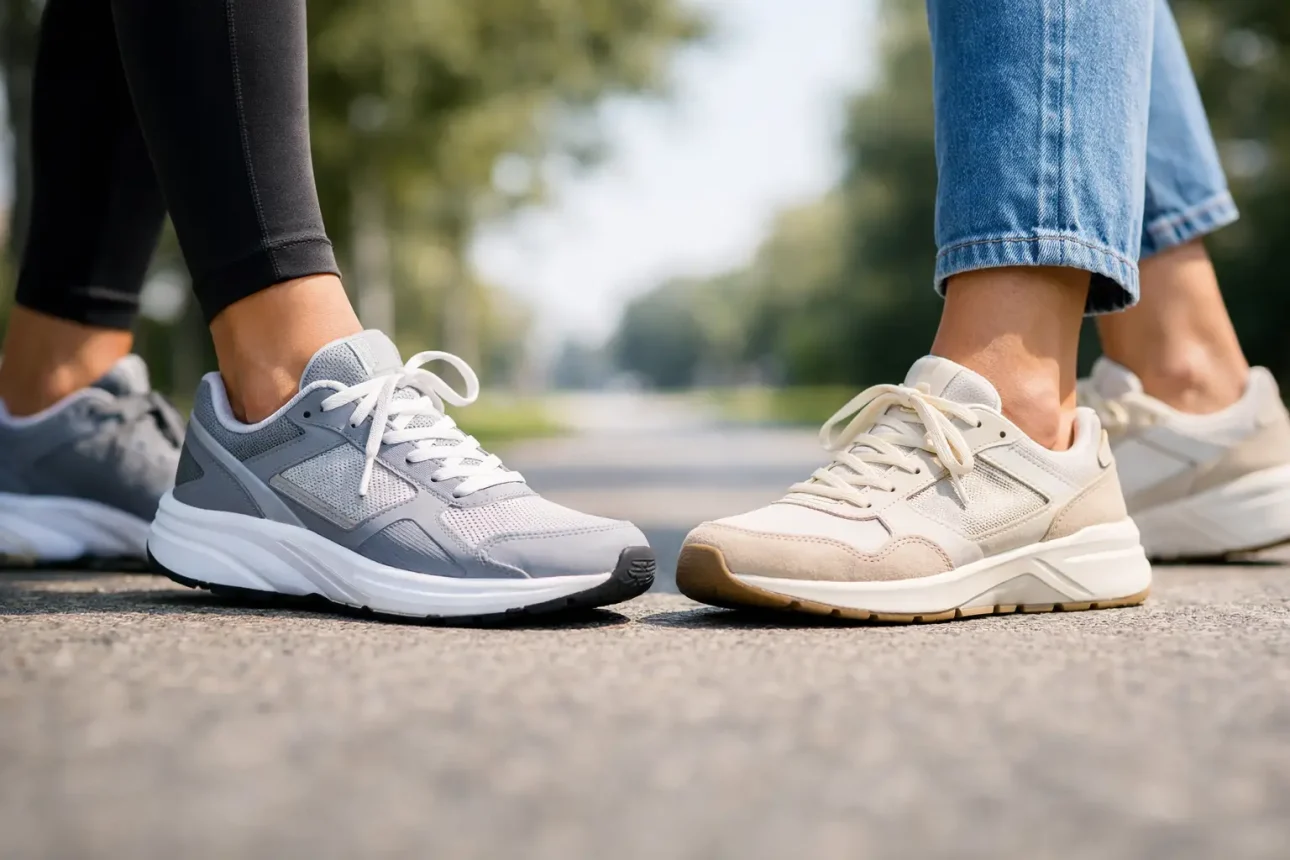
You feel it about 20 minutes into a walk. The shoes either disappear and let you move, or they start making demands. Hot spots. Slapping soles. Tight toes. So, are sneakers good for walking? Yes, a lot of them are. But plenty of sneakers are better at looking good than carrying you through miles.
That split matters. People hear “sneakers” and treat the whole category like it means comfort. It doesn’t. A clean retro pair and a modern walking shoe might both be sneakers, but they do very different jobs. If you want something for real walking – commuting, travel, errands, long days on your feet – you need to look past the label and pay attention to how the shoe is built.
For short walks, almost any decent sneaker can get by. If you’re heading to the store, walking the dog around the block, or moving through a normal day, most pairs won’t cause trouble. That’s why so many people assume their favorite sneakers are “good for walking.” For light use, they probably are.
The problem starts when the walk gets longer or your day gets harder. A shoe that feels fine for 15 minutes can feel rough after two hours. Flat midsoles start to feel dead. Stiff uppers rub. Heavy shoes make your legs work more than they need to. This is where walking shoes, running shoes, and some sportier everyday sneakers pull away from fashion-first pairs.
We’d put it simply. If a sneaker is built with decent cushioning, stable support, a flexible forefoot, and enough room up front, it can be very good for walking. If it’s mostly a style piece with a hard sole and narrow shape, it’s probably not.
Cushioning matters, but not in the way brands like to sell it. More foam is not always better. Super soft shoes can feel nice at first, then get sloppy and tiring once you’ve been walking for a while. What you want is cushioning that takes the edge off pavement without making you feel like you’re standing on a mattress.
Stability matters just as much. Walking is repetitive. Your foot lands thousands of times. If the platform feels wobbly, your legs do extra work all day. A solid walking sneaker should feel planted, especially through the heel and midfoot. Not stiff like a brick. Just steady.
Then there’s flexibility. Good walking shoes bend where your foot bends – usually near the forefoot. If the shoe fights that motion, every step feels a little awkward. Too rigid and it feels clunky. Too floppy and it feels cheap. The sweet spot is a shoe that moves naturally without collapsing under you.
Fit is the deal breaker. Even a solid sneaker won’t walk well if your toes are cramped or your heel slips. We’d take a less hyped shoe that fits right over a popular pair that doesn’t. Every time.
Weight matters too. You notice it more on mile three than in the mirror. Heavy leather sneakers can look sharp, but they’re rarely our first pick for all-day walking. Lighter pairs usually win if comfort is the goal.
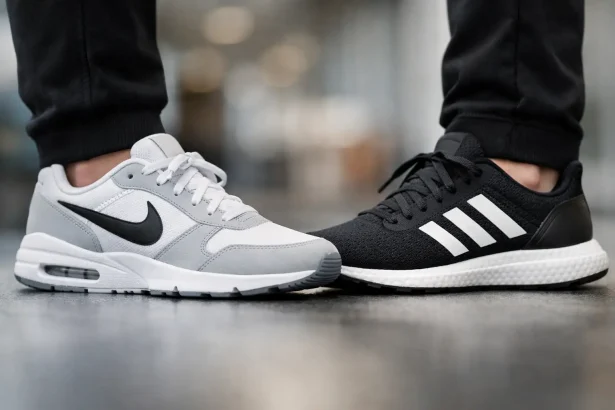
Running-inspired sneakers are often the safest bet. Not because everyone needs a running shoe, but because that category usually gets the basics right. Better foam. Better flexibility. Better breathability. Brands like New Balance, Asics, Brooks, Hoka, On, and some Adidas and Nike models tend to do well here.
Walking-specific sneakers can be even better if you care more about comfort than looks. They’re often less flashy, sometimes a little plain, but they’re built for long hours on your feet. If your job keeps you standing or you’re putting in serious daily steps, that trade-off is worth it.
Some lifestyle sneakers also do the job surprisingly well, especially newer ones with sport-inspired tooling. Clean enough to wear with jeans, cushioned enough for a full day out. That’s the sweet spot for a lot of people.
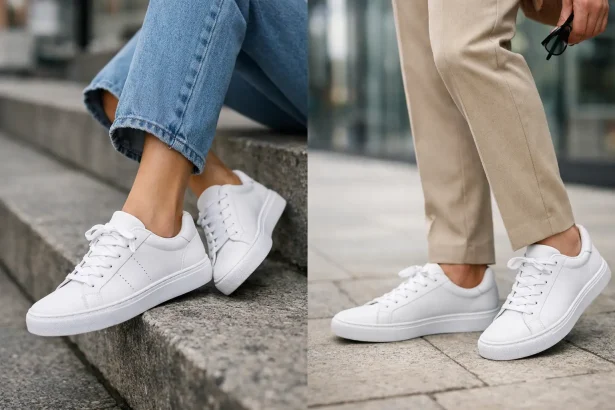
Retro court and terrace styles are where we get more skeptical. They look great. We like them. But many of them are flat, firm, and not built for distance. Fine for casual wear. Not our first choice for a city trip where you’ll hit 20,000 steps.
If the shoe is stiff, flat, and mostly built for style, don’t expect much. That includes a lot of older-school leather sneakers and low-profile fashion pairs. They can look clean and still be a bad walking shoe. Both things can be true.
Platform sneakers are another one. Some are okay for short wear, but a lot of them feel bulky and unnatural once you start moving for real. The same goes for shoes with very narrow toe boxes. If your toes can’t spread a bit, your feet usually let you know by the end of the day.
We’d also be careful with worn-out sneakers. A pair that used to be great for walking can turn bad once the midsole is packed down and the outsole is uneven. If your favorite pair suddenly feels dead, it probably is.
Usually, yes. In many cases they’re better than regular casual sneakers.
Running shoes are designed to handle repeated impact, and walking is exactly that, just at a different pace. A lot of people end up happiest in running sneakers for daily walking because they’re lighter, softer, and easier on hard ground. That’s especially true if you walk on concrete all day.
Still, there’s a catch. Some running shoes are too soft or too high for people who want a more stable feel. Others have aggressive rocker shapes that some walkers love and others hate. If a shoe feels like it’s tipping you forward in a weird way, don’t force it just because it gets good reviews.
We’d say this: if you want one pair for lots of walking, a good running sneaker is a smart place to start. Just don’t assume the softest option is the best one.
You don’t need a lab test. Your feet are honest.
If a sneaker is good for walking, it should feel comfortable out of the box or very close to it. Not perfect after a five-day break-in period. Not “it’ll soften up.” Usually that’s code for “this shoe isn’t right.” A solid walking sneaker feels supportive without feeling restrictive.
Pay attention to what happens after an hour, not just the first five minutes. Do your arches feel strained? Are your toes rubbing? Is your heel sliding? Does the forefoot feel harsh on pavement? Those are better signals than whatever tech name is printed on the box.
Check the sole with your hands. If it’s rock hard and barely bends, that’s a clue. If it folds in half like a cheap slipper, also not great. Look inside too. If the shoe has a narrow, pointy shape, walking comfort probably wasn’t the priority.
And be honest about your use. Walking from the train to the office is one thing. Eight hours on your feet is another. Vacation days with nonstop city walking are another level again. Match the shoe to the job.
This is where most people get stuck. They want a sneaker that looks clean and handles real walking. Fair enough. We do too.
The truth is, some of the best-looking sneakers are only average walkers. And some of the best walking sneakers are a little boring. That doesn’t mean you need to choose an ugly shoe. It just means you may need to give up a bit of that flat, retro look if all-day comfort is the main goal.
Our take? It’s smarter to buy for how you actually live. If you walk a lot, prioritize comfort first and style second. There are plenty of pairs now that do both well enough. But if you pick a shoe mostly because it looks sharp, don’t be surprised if it taps out halfway through the day.
That’s also why cross-shopping helps. One brand’s clean everyday sneaker might feel dead to you, while another brand’s slightly sportier option ends up being the pair you wear nonstop. At Sneakerness, that mix matters because not everybody wants the same thing, and not every “comfortable” sneaker actually is.
Yes – if they’re the right kind of sneakers.
The best ones feel stable, cushioned, and easy from the first mile to the last. The bad ones just happen to have laces and a nice shape. Don’t let the category fool you. A sneaker can be popular, expensive, and still not worth wearing on a long walk.
If you’re shopping for a walking pair, be a little picky. Go for the shoe that feels good at 5 p.m., not just the one that looks good at 9 a.m. Your feet are carrying the whole day. They deserve better than a pair that only works in photos.