Cart
No products in the cart.
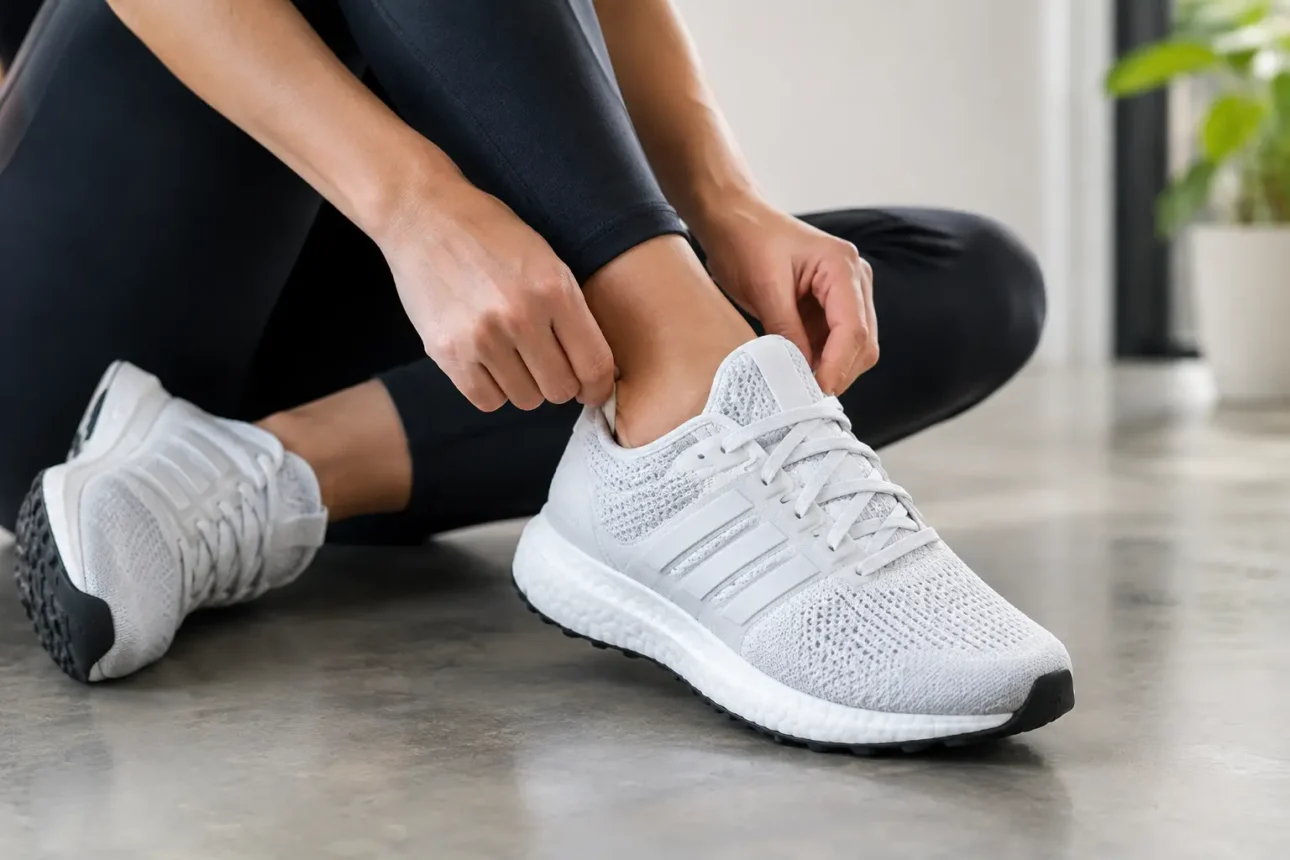
A sneaker that feels a little snug in the store can feel totally different after a few wears. But there’s a line between “needs breaking in” and “this is the wrong size.” If you’re asking, do sneakers stretch, the honest answer is: a bit, sometimes, and mostly in the width. Do not buy a pair that crushes your toes hoping it will turn into a perfect fit.
Most sneakers soften and give where your foot presses against the upper. They do not meaningfully get longer. That small difference saves a lot of people from painful first weeks and bad return decisions.
Sneakers usually stretch across the forefoot, around the pinky toe, and over the top of the foot. That is where the upper bends, warms up, and gets pushed outward as you walk. Leather, suede, knit, mesh, and canvas can all give to some degree.
Length is different. The outsole, midsole, toe cap, and overall construction set the shoe’s length. Those parts are built to hold their shape. A shoe may feel less restrictive after a few wears, but your longest toe will not suddenly gain more room at the front.
Here’s our rule: if your toes touch the end when you’re standing, size up. If the shoe feels snug on the sides but you have proper toe room, there’s a decent chance it will settle in. That applies whether you’re looking at a clean retro pair for jeans or a running shoe for daily miles.
A little pressure can relax. Numb toes, rubbing, or a toenail hitting the front cannot be negotiated with.
The upper is the main thing that changes. A flexible knit or open mesh upper can feel noticeably more forgiving after several wears. Soft leather also molds well, especially around the toe box. Suede has some give too, though it tends to hold its shape better than very soft leather.
Canvas can loosen, but don’t expect miracles. It often feels stiff at first, then becomes more flexible rather than much wider. Synthetic leather is even less predictable. Some versions soften nicely. Others are basically plastic-coated fabric and stay stubbornly tight no matter how much you wear them.
The tongue, collar padding, and laces also make a shoe feel less tight over time. This is why a sneaker can feel better after a week without truly stretching much. Your foot gets used to the pressure, the padding compresses, and the upper starts moving with you instead of fighting you.
The sole does not stretch. It may flex more once it has been worn in, but it will not create extra foot space. The same goes for rigid overlays, thick rubber toe guards, and structured heel counters. If a tight spot sits directly under one of those pieces, waiting it out is usually a bad bet.
A soft leather sneaker is the safest bet if you need a little extra room across the forefoot. Leather responds to body heat and repeated movement. It does not become a different size, but it can shape itself around your foot in a way that feels personal after a few days.
Knit running and lifestyle sneakers are often forgiving right out of the box. The fabric moves easily, which feels great if your feet swell during the day. The trade-off is support. A stretchy upper can let your foot shift around more, especially during sharp turns or faster runs. For casual wear, that might be fine. For serious training, a little structure is usually worth having.
Mesh sits in the middle. It usually adapts enough for daily comfort without feeling loose. That is why it works so well for walking shoes and everyday runners.
Structured retro sneakers are often the least forgiving. Think layered panels, firm sidewalls, and rubber around the toe. They can look sharp, but they are not always kind to wide feet. We would rather size up or choose a roomier model than spend weeks trying to force a stiff shoe into submission.
People use these terms like they mean the same thing. They do not.
Breaking in means the shoe becomes more flexible under your foot. The foam settles, the outsole bends more naturally, and the upper stops feeling factory-stiff. Stretching means the material physically gives more room in a specific area.
A running shoe with a mesh upper may break in quickly but barely stretch. A leather basketball-inspired sneaker may need longer to break in, then give slightly across the toe box. Neither outcome is better by default. It depends on what feels tight and what you need the shoe for.
This matters because a shoe can feel better after five wears while still being too small. If your toes are jammed at the front or your heel hangs off the back of the footbed, breaking it in will not solve the real problem.
Expect subtle change, not a full size. In most cases, a snug sneaker might gain a few millimeters of give across the width. That can be enough to take a pair from annoying to comfortable. It is not enough to rescue a shoe that is clearly narrow, short, or painfully tight.
Your feet also change through the day. A pair that feels perfect at 9 a.m. can feel cramped by late afternoon, especially if you walk, stand, commute, or work long shifts. Try sneakers later in the day when possible. Wear the socks you actually plan to wear with them. Thin no-show socks and thick athletic socks can change the fit more than people think.
We also would not size down because a sneaker “will stretch.” That advice gets repeated too often. A neat-looking fit is not worth blisters and dead space at the end of your day. Sneakers should feel secure, not shrink-wrapped.
If the fit is close and the tightness is only across one small area, you can encourage a little give. Wear the sneakers indoors for short sessions with the socks you normally use. Lace them properly instead of cranking the laces down hard. A looser forefoot lacing pattern can take pressure off the top of your foot without making the heel sloppy.
For leather or suede, a professional shoe repair shop can sometimes stretch a targeted spot. That is a sensible option for a shoe you love that is tight at one bunion area or along the little toe. It is less useful for a fully rigid shoe or a pair that is simply the wrong size.
Skip the internet stunts. Freezing bags of water inside sneakers, soaking them, blasting them with a hair dryer, or forcing them over random objects can damage glue, warp materials, stain suede, and ruin the shape of the upper. You might get a fraction more room. You might also wreck a pair you could have returned.
If any of these happen, don’t wait for the shoe to become something it isn’t:
For running, walking, or standing all day, leave a little room in front of your longest toe. Your feet move forward as you walk and swell with heat and activity. A casual sneaker can be a closer fit, but it still should not punish you by lunchtime.
If you have wide feet, do not assume every popular silhouette will work after a break-in period. Some sneakers are built on narrow shapes. That is not a character-building experience. Look for wide sizing where available, roomier toe boxes, or softer uppers. At SneakerNess, we’d take a less hyped pair that fits all day over a famous one that lives in your closet.
Put both shoes on. Stand up. Walk around indoors for a few minutes. Your heel should feel held in place, your midfoot should feel secure, and your toes should have room to move without sliding around.
Then pay attention to the exact kind of tightness. Gentle pressure on the sides of a soft upper can be normal. Pressure at the toe, a pinching seam, or pain over the top of your foot is a warning. Don’t talk yourself out of what your feet are telling you because the color looks good.
A good pair should feel mostly right on day one. Let the upper soften and mold a little, sure. But buy the fit you have, not the fit you hope to earn after twenty uncomfortable miles.