Cart
No products in the cart.
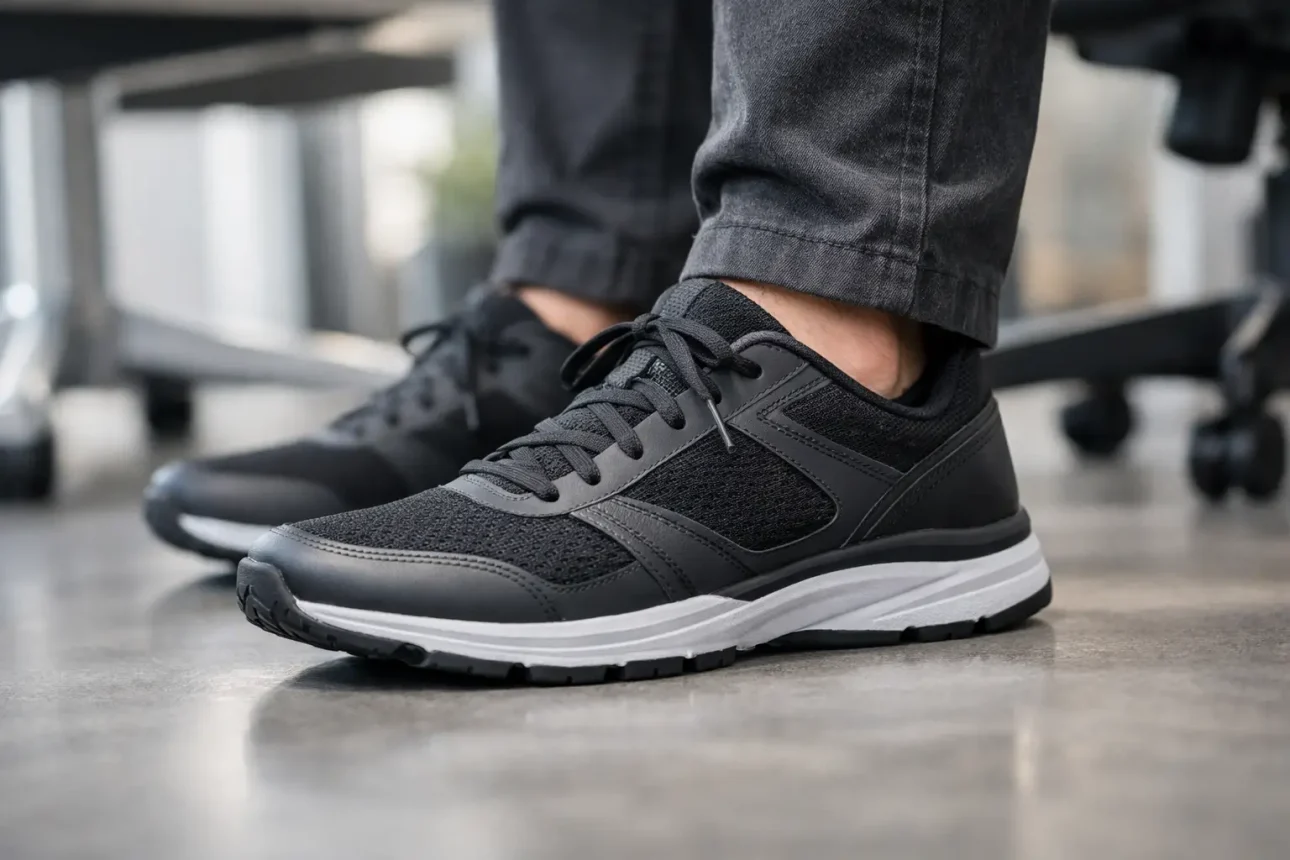
If your feet are cooked by lunchtime, the problem usually is not you. It is the shoes. That is why knowing how to choose standing shoes matters more than whatever trend is getting pushed this week. A standing shoe has one job. Keep you comfortable for hours without feeling clunky, unstable, or ugly enough to make you hate wearing it.
A lot of people buy for soft step-one comfort and regret it by hour six. That is the trap. Super plush can feel amazing in the first five minutes, then turn sloppy once your feet start working. For standing all day, we would take balanced cushioning over a marshmallow sole every time.
Start with the midsole. That is where most of the comfort comes from, and it is also where brands love to oversell. What you want is cushioning that feels supportive, not sinky. If your heel drops in too far or the foam feels unstable side to side, skip it. Standing is different from running. You are not rolling through quick strides. You are loading the same areas over and over, so a shoe that keeps you steady usually beats a shoe that feels ultra-soft.
The outsole matters more than people think too. A standing shoe needs a solid base. Wider platforms help. Good rubber coverage helps. If the bottom feels narrow or curved like it is always trying to tip you forward, that can get old fast. Some running shoes are great for movement but annoying when you are planted in one spot for hours.
Then there is upper fit. If the shoe squeezes across the toes, your feet will let you know. They swell through the day. That means a snug fit at 8 a.m. can feel brutal by 3 p.m. We like a toe box with some room to breathe, especially for work shifts. Not sloppy. Not clown-shoe wide. Just enough space that your forefoot is not fighting the shoe.
This is where people get it wrong. They press on the foam with a thumb, decide it feels soft, and call it a comfort shoe. That tells you almost nothing. What actually matters is how the shoe feels after four, six, eight hours.
A solid standing shoe usually has a few things working together: enough cushion to take the edge off hard floors, enough structure to keep your foot from wobbling, and a shape that does not force weird pressure onto your arch or heel. If one of those is missing, the shoe can still look great online and wear terribly in real life.
If you are on tile, concrete, hospital floors, stockroom surfaces, or hard retail floors, impact adds up. You want cushioning, but you also want protection under the forefoot and heel. Thin, flat lifestyle sneakers might look clean, but they are a bad bet for long shifts. We like retro pairs for style, but for standing all day, a lot of them are all looks and not much else.
Arch support gets a lot of attention, and fair enough, but it is not the whole story. Some people want noticeable support under the midfoot. Others hate that feeling. That is why blanket advice is useless here. If a shoe feels like it is poking your arch, that support is not helping you. The right shoe should feel natural, not corrective.
Heel security is another one people overlook. If your heel slips, your foot works harder to stay in place. That means more fatigue, even if the shoe is technically cushioned. A good standing shoe should hold the heel cleanly without forcing you to crank the laces like crazy.
Breathability matters if you run warm or work long indoor shifts. Hot feet get uncomfortable fast. Mesh uppers usually win here, but not all mesh is equal. Some are soft and breathable but lose structure. Others keep shape better and still let air through. We would not choose a stiff leather upper for a long standing shift unless you already know it breaks in well.
Ignore the marketing copy for a minute. Put the shoes on and pay attention to the boring stuff. Do your toes have room? Does your heel stay put? Does the arch feel neutral or annoying? Can you stand still in them without feeling pressure building right away?
That last part matters. Some shoes feel fine while walking around a store or living room because movement hides the pressure points. Standing exposes them. If you can, spend a few minutes just standing in the pair. Not pacing. Just standing. That tells you more than a quick lap ever will.
Sizing can get weird across brands too. Some run long, some narrow, some shallow through the toe box. Do not get too attached to your usual size if the fit is clearly off. The number on the box is less important than how the shoe feels after a couple of hours.
Running shoes are often the safest place to start, but not every running shoe makes a good standing shoe. We tend to like models with moderate to max cushioning, a stable base, and a smooth underfoot feel. Shoes from brands like Hoka, Brooks, Asics, New Balance, and On often do well here, but even within those brands, some pairs are built more for speed than comfort. Skip the stripped-down, race-inspired stuff if your job is mostly standing.
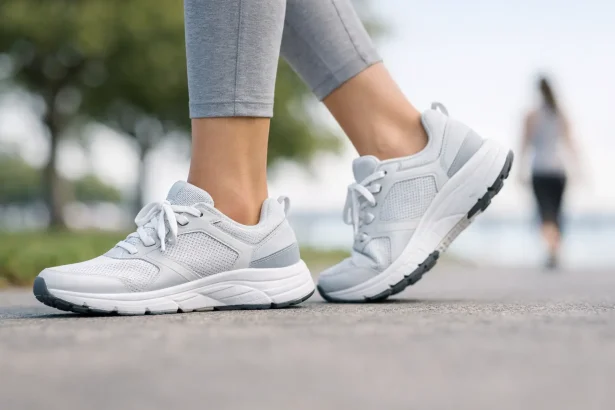
Walking shoes can be a strong option too. They are not always exciting to look at, but some are built exactly for this kind of use. If you care more about getting through a shift than impressing anyone in the break room, they are worth a look.
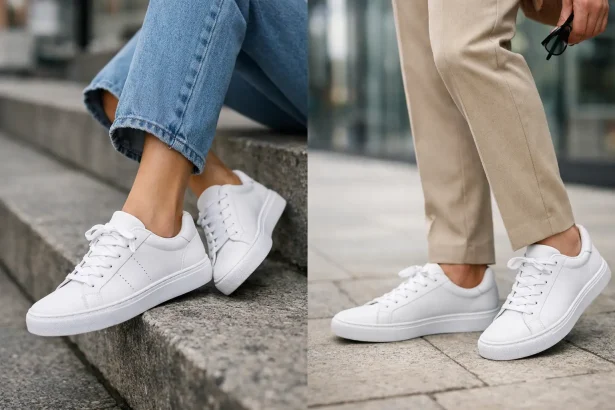
Lifestyle sneakers are hit or miss. Some modern ones borrow enough comfort tech from running shoes to do the job. Others are basically flat fashion sneakers with decent branding. Clean outfit, rough shift. We would not trust a casual retro pair for all-day standing unless you have already worn that model and know your feet love it.
Slip-resistant work shoes are their own thing. If your job needs that outsole, that changes the shopping list. In that case, grip and stability may matter even more than plush cushioning. A shoe can feel slightly firmer and still be the right call if it keeps you steady on slick floors.
The softest shoes are not always the most stable. The most supportive shoes are not always the lightest. The best-looking shoes are definitely not always the best for long shifts. You are picking your compromise.
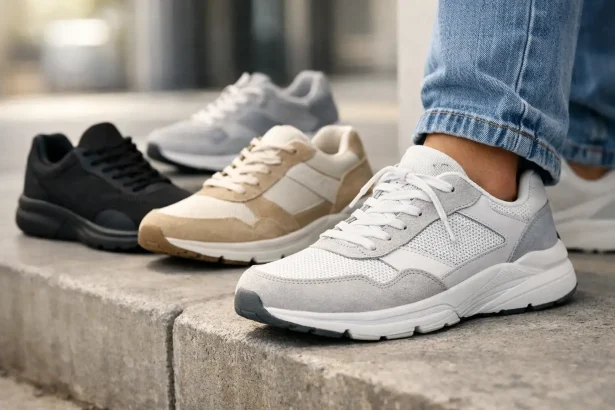
If you stand mostly in one place, we would lean toward stable cushioning and a roomy fit. If you move around a lot, a lighter shoe with a smoother ride may feel better. If you need one pair to handle work and everyday wear, go for something clean and athletic, not super technical-looking and not dead-flat.
And yes, looks still matter. You have to want to wear them. There is no point buying the sensible pair if it sits by the door because you hate how it looks. The good news is you do not have to choose between comfort and style as often as people think. You just have to stop chasing the pairs that are all image and no support.
Trust that. Do not talk yourself into a pair that pinches, slips, rubs, or feels oddly unstable because the reviews were strong or the colorway looked sharp. Break-in can help with stiffness in the upper. It does not usually fix bad geometry, bad sizing, or foam that feels wrong under your foot.
We would also skip the idea that insoles can rescue every bad purchase. They can fine-tune fit or add a bit of support, sure. But if the base shoe is too narrow, too flat, too unstable, or shaped wrong for your foot, an insole is just papering over the problem.
One more thing. Replace your standing shoes before they look completely dead. Foam wears out before the upper falls apart. If your usual pair suddenly feels harsher, flatter, or more tiring, it probably is. A shoe can still look decent and be past its best.
If you are trying to figure out how to choose standing shoes, keep it simple. Pick comfort that still feels stable, a fit that leaves your toes alone, and a shape that does not fight your foot. Hype does not help you at hour eight. A solid pair that feels good and holds up does.