Cart
No products in the cart.
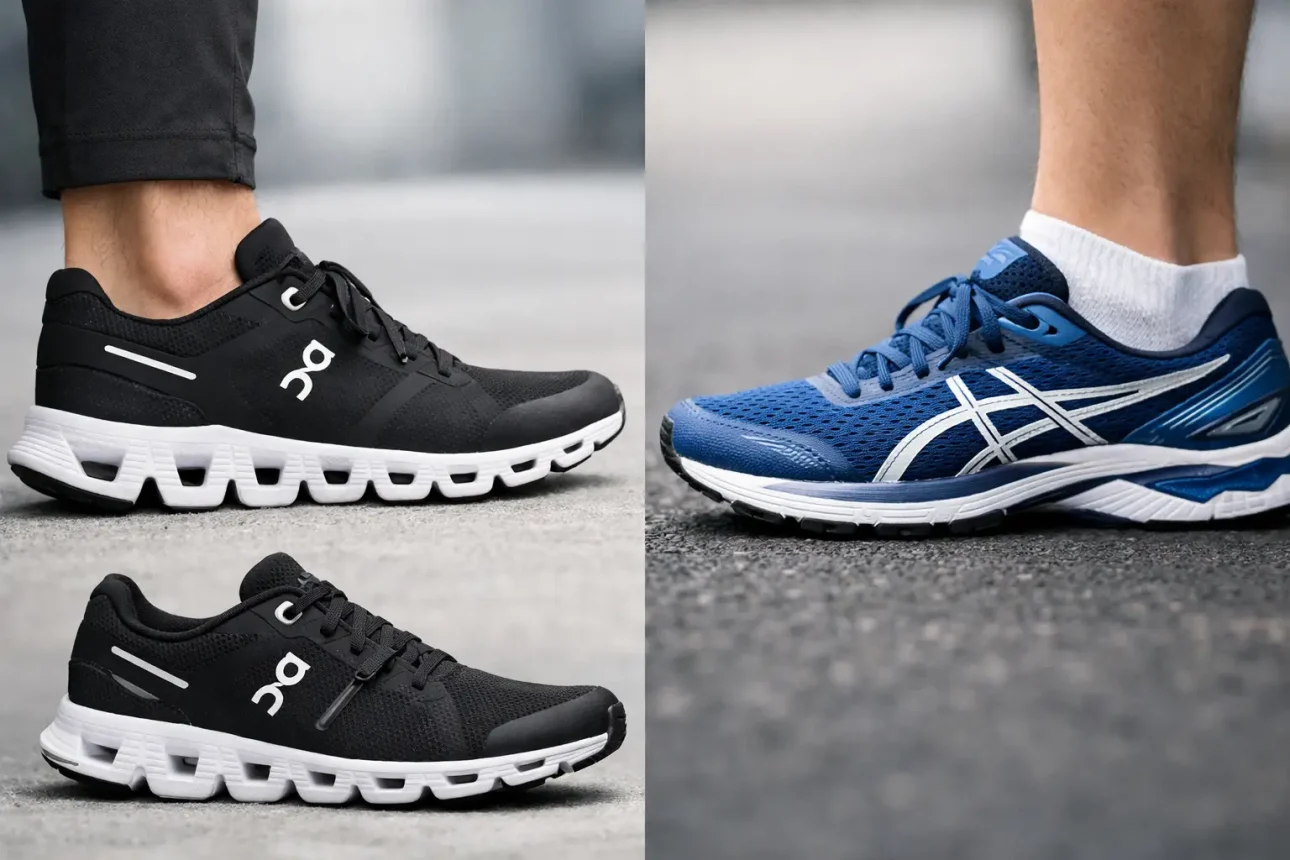
A shoe can feel amazing for two minutes in a store and annoying by mile three. That is the real On vs Asics running question. On gives you a light, clean-looking ride with a firmer, more noticeable platform. Asics usually gives you more padding, more guidance, and less drama when your legs are tired.
Neither brand wins for everyone. That would be too easy. The right pick depends on whether you want a quick-feeling shoe for daily life and shorter runs, or a softer workhorse that can handle long miles without beating up your feet.
Pick On if you like a light shoe, a modern low-key look, and a ride that feels firm and responsive rather than soft and squishy. A lot of On models also work well with jeans, joggers, and regular everyday outfits. That matters if you want one pair that does more than run.
Pick Asics if comfort is your main priority, especially for easy runs, longer distances, walking, or standing all day. Asics has spent years making shoes for runners who need dependable cushioning and stability. Some models look a little more traditional. Frankly, that is often because they are built to do a job, not just look good in a mirror.
Our honest take: On wins on style and lightweight feel. Asics wins on cushioning depth and practical support. If your feet hurt late in the day, we would lean Asics. If you hate bulky running shoes and want something that looks sharp off the track, On makes a strong case.
On shoes are easy to spot. The hollow CloudTec pods under the sole give them a distinct look and a ride that is different from a typical foam-heavy trainer. They tend to feel structured, springy, and fairly firm underfoot.
That firmness is not automatically bad. Some runners prefer it. You get a more connected feel with the ground, and many On models feel quick when you pick up the pace. Shoes like the Cloudsurfer and Cloudmonster soften things up compared with older On pairs, but the brand still does not usually feel as plush as a comparable Asics daily trainer.
The fit is generally secure through the heel and midfoot, with a sleek shape that can feel snug on wider feet. If you have a narrow or average-width foot, that locked-in feel may be exactly what you want. If your toes need room, do not assume every On will work just because the color looks clean. Try the fit carefully, and consider a wide version where available.
There is also the little issue nobody should pretend does not exist: stones can occasionally get stuck in the CloudTec openings. It is not a dealbreaker, but it is annoying on gravel paths. On does not make a perfect shoe. No brand does.
The Cloudsurfer is the easier entry point for daily runs and casual wear. It has a smoother, softer ride than the firm early On shoes many people remember. The Cloudmonster is for runners who want more cushioning and a more dramatic rolling feel without wearing something that looks huge.
The Cloudrunner is the better bet if you want extra guidance and a stable base. It is not the most exciting shoe in the lineup, but it makes sense for easy miles and everyday walking. The Cloudswift sits more on the city-running side of things: structured, agile, and good-looking, though not our first pick for a relaxed long run.
Asics is less concerned with making every shoe look minimal and more concerned with how it behaves after an hour on pavement. That approach pays off. Most Asics running shoes feel protective, stable, and built for repetition.
The brand’s foam options vary a lot, but the general idea is simple. You can find soft shoes for recovery days, lively shoes for faster sessions, and support-focused shoes for runners who want a steadier platform. The cushioning usually feels more traditional than On’s. There is more foam under you, more impact absorption, and often a smoother transition from heel to toe.
Asics also tends to be friendlier to wider feet. Not every model is wide, but the range of widths and roomier fits is better than what many fashion-forward running brands offer. If you have ever sized up just to stop your toes from feeling crushed, this matters more than a flashy outsole.
Some people will find Asics a bit boring. Fair enough. A Gel-Kayano is not trying to be the coolest shoe at brunch. But for runners who need steady comfort, boring can be beautiful. You should not have to think about your shoe every few minutes during an easy run.
The Gel-Nimbus is the soft, cushioned choice for easy running, recovery days, and people who want a plush feel for walking. It has a lot underfoot, so it is not the shoe for someone chasing a stripped-back, fast sensation.
The Gel-Cumulus is a more balanced daily trainer. It is lighter and less bulky than the Nimbus, while still giving you enough cushioning for regular miles. For many runners, this is the sensible Asics pick.
The Novablast is where Asics gets more fun. It has a bouncier, more energetic ride and works well when you want one shoe that can handle everyday runs but does not feel flat when the pace rises. The Gel-Kayano and GT-2000 are worth a look if you want a more stable, guided ride. They are not medical devices, and they will not solve every foot issue, but their structured platforms can feel reassuring for runners who dislike a loose or wobbly shoe.
If you only remember one thing, remember this: On cushioning feels more controlled, while Asics cushioning usually feels more protective.
On’s firmer platform can feel efficient for short-to-medium runs, faster efforts, and daily movement. You are less likely to sink into the shoe. That can be great if you like a crisp toe-off. It can also feel harsh if you run mostly on concrete, have sensitive feet, or want a soft landing after a long day.
Asics has more options for runners who want to cruise. The Gel-Nimbus and Gel-Cumulus are easier on tired legs, while the Novablast adds more bounce. Asics stability models also tend to give more obvious support than On’s lineup. If your ankles roll around in soft, tall shoes, a stable Asics platform can feel much more secure.
For speed, neither brand should be judged only by its regular daily trainers. On and Asics both make race-focused shoes. But for most people, the better question is whether your daily shoe lets you run consistently. A shoe that feels fast for one mile but leaves your calves wrecked is not a smart buy.
This is where On pulls ahead. Its shoes have a clean, modern look that works naturally with casual clothes. You can wear a pair of Cloudsurfers on a coffee run, a commute, or a weekend walk without looking like you forgot to change after training.
Asics has improved a lot on the style front, especially with color choices and the popularity of retro runners. Still, its performance line is usually more athletic-looking. That is not a knock. If you want a shoe mostly for running, walking, or standing at work, performance-first design is a fair trade.
At Sneakerness, we think it is fine to care about both. If you will wear the shoe four days a week, it should look like something you actually want to put on. Just do not choose a narrow, firm runner for all-day walking because it matches your jacket. Your feet will call you out by 5 p.m.
Choose On when you want a lighter, more streamlined shoe and prefer a firmer, snappier feel. It is especially good for runners with average-to-narrow feet who also want a shoe that earns its place outside the gym.
Choose Asics when you want cushioning you can feel, a broader range of fit options, and a dependable shoe for easy miles or long days on your feet. It is the safer pick for runners who value comfort over a minimalist look.
Do not buy based on the logo alone. Put the shoe on, walk around, and pay attention to the heel, arch, and toe room. The best pair is the one you stop noticing after the first mile – except when someone asks where you got them.