Cart
No products in the cart.
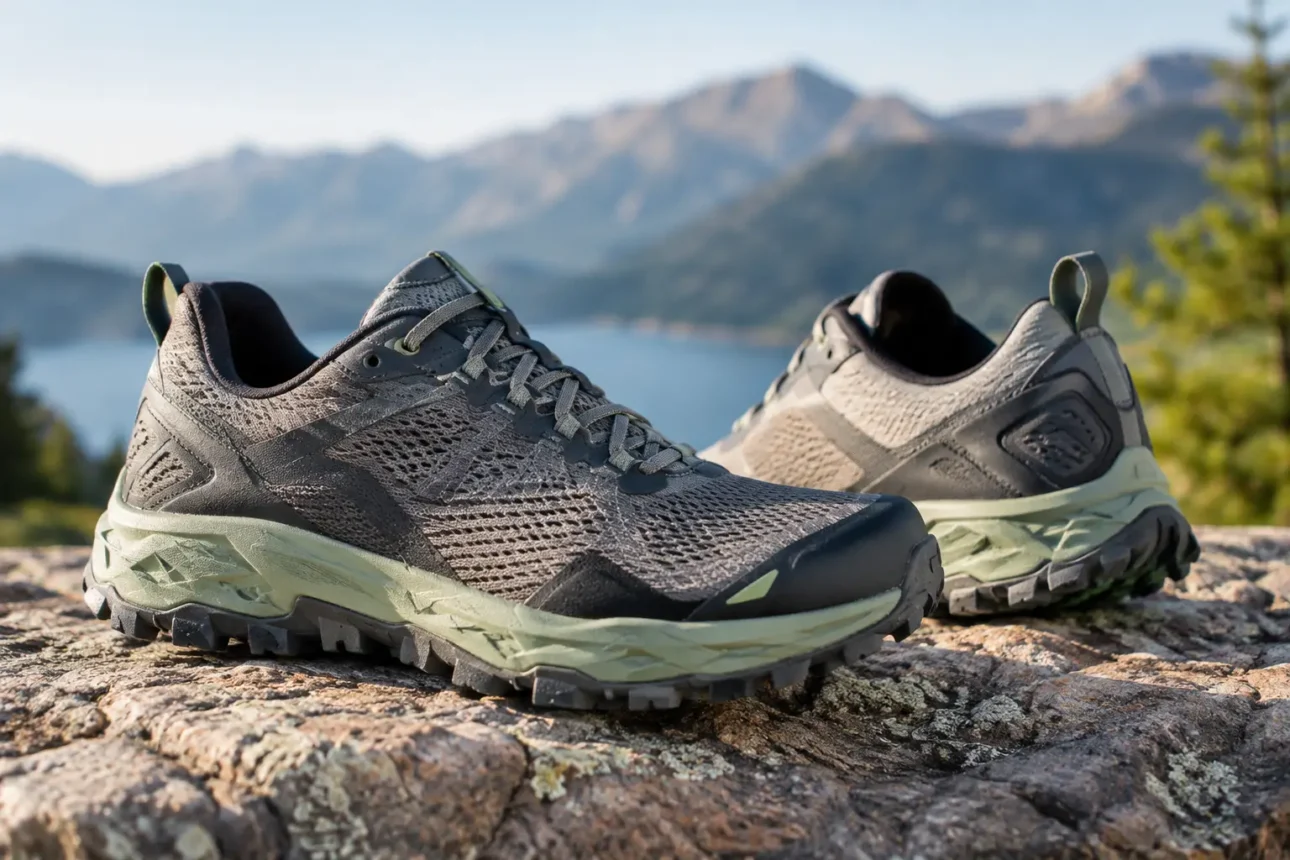
A trail can make a perfectly good road shoe feel like a bad idea fast. Loose gravel slides underfoot. Roots catch your toe. Wet rock has no interest in your personal best. This trail running shoe guide cuts through the spec-sheet noise and gets to what matters: grip, fit, protection, and how much shoe you actually want under your foot.
The wrong trail shoe is not always a bad shoe. It may just be built for someone else’s terrain, pace, or tolerance for feeling every rock. Start with the ground you run on most, not the mountain race you might enter once next fall.
Trail running is not one surface. A packed park path, a muddy forest loop, and a rocky alpine route ask different things from a shoe. Brands love to call everything “all-terrain.” We think that label is usually too vague to be useful.
If your routes are mostly dry dirt, crushed gravel, and hard-packed paths, keep it simple. You want a flexible shoe with moderate lugs and enough cushioning for the distance. A heavy, deeply lugged mud shoe will feel slow and awkward here. It is like wearing winter tires all summer.
For wet woods, loose soil, and regular mud, outsole grip moves up the list. Look for deeper, more spaced-out lugs. Spacing matters because mud needs somewhere to go. Tight little tread patterns can clog up, then you are basically running on dirty soap bars.
Rocky trails are different again. Grip still counts, but so does stability. A wide base, secure upper, and some protection under the forefoot help when sharp edges keep finding you. You do not need a tank for every rocky route, though. More protection usually means more weight and less ground feel. That trade-off is real.
Lugs are the rubber bumps on the outsole. Bigger lugs bite better in soft dirt and mud, while smaller lugs roll more smoothly on firm ground. For mixed trails, moderate lugs are the smart middle ground. They work well enough almost everywhere without feeling clunky on a short stretch of pavement.
Rubber compound matters too, especially on wet roots and rock. A shoe can have deep lugs and still feel sketchy on slick surfaces if the rubber is hard. There is no magic outsole that dominates every condition, so be honest about what you see most often. If your trails are dry 90 percent of the year, do not buy around the other 10 percent.
More cushioning can take the edge off long runs and hard descents. It can also make a shoe feel taller and less precise on uneven ground. Some runners love that soft, protected feeling. Others feel disconnected from the trail and start rolling their ankles more often.
For short runs or technical terrain, a lower, firmer shoe often feels more controlled. You can place your feet quickly and react when the ground changes. For longer, smoother routes, more foam can be worth it. Your feet may feel less beaten up late in the run, especially if you are still building trail strength.
Do not confuse soft with stable. A tall stack of foam can feel amazing in a store and wobbly on a sidehill. If you are new to trails, we would take a stable mid-height shoe over the tallest, squishiest option every time.
A rock plate is a firm layer under the forefoot that spreads pressure from sharp rocks. It is useful on rough trails and long rocky runs. On mellow dirt, it can make a shoe feel stiff for no real payoff.
Toe bumpers are another practical feature. They will not make you stop kicking rocks, but they make the mistake less painful. A reinforced upper helps when your route includes brush, scree, or constant debris. Breathable mesh feels cooler, but thin mesh can tear sooner on rough ground. Again, no free lunch.
Waterproof trail shoes sound sensible until you run in warm weather or step into water deeper than the shoe collar. Once water gets in, the membrane slows drainage and the shoe can stay wet for a long time. For cold, wet walks or light rain, waterproofing has a place. For running through streams, quick-draining mesh is usually the better call.
We like plenty of shoes from Nike, Hoka, ASICS, Brooks, New Balance, Adidas, and On. But no logo makes a bad fit good. Trail shoes need to lock your heel down while leaving enough room for your toes to spread and swell on longer runs.
Check the fit late in the day if you can. Feet tend to be a little bigger then, which is closer to how they will feel after a few miles. Wear the socks you actually run in. Walk downhill on an incline or stairs. If your toes hit the front right away, do not talk yourself into it.
A snug midfoot is good. Numb toes and pressure across the top of your foot are not. Some trail uppers feel secure in a quick try-on but become annoying after an hour, especially when they are stiff around the tongue or collar. Comfort at minute five matters. Comfort at mile eight matters more.
If your heel lifts, try a runner’s knot before abandoning the shoe. That can tighten the collar without crushing the forefoot. But if you have to use lace tricks just to stop obvious slipping, the shape probably is not right for you.
Heel-to-toe drop is the height difference between the heel and forefoot. A higher drop can feel familiar if you usually run in traditional running shoes. A lower drop can feel more natural and planted for some runners, but it asks more from your calves and Achilles.
Do not switch from a high-drop daily trainer to a low-drop trail shoe and take it straight to a 15-mile run. That is not tough. It is just an easy way to make your lower legs angry. Ease into a major change over a few shorter runs.
Weight matters, but not as much as brands want you to think. A super-light shoe that slides around or leaves your feet sore is not fast in any useful sense. A slightly heavier shoe with a secure fit and dependable grip is often the better choice on technical ground.
We also would not overthink whether a shoe is labeled neutral, stability, speed, or ultra. Those categories can help narrow things down, but your actual stride, terrain, and fit decide the result. Put the marketing names aside. Ask whether the shoe feels stable when you land off-center and whether you trust it on a descent.
A lot of runners buy an aggressive trail shoe because it looks serious. Then they use it on bike paths and dry park loops where a lighter hybrid shoe would feel better. The opposite happens too: people take a smooth, road-to-trail model into mud and wonder why it has no bite.
If you split time between pavement and mellow trails, a road-to-trail shoe makes sense. It will have smoother tread, enough grip for dry dirt, and a ride that does not feel awful on asphalt. Just do not expect it to handle greasy roots and ankle-deep mud like a dedicated trail shoe.
If you run one type of trail most weeks, buy for that trail. You can always keep an older pair for rainy days or rougher routes. Two honest pairs beat one expensive do-everything shoe that does nothing particularly well.
Do not judge a trail shoe only by the upper. It can still look clean while the midsole has gone flat and the outsole has lost its edge. Notice how it feels on familiar terrain. If your feet are more tired than usual, grip feels vague, or the shoe has started leaning to one side, it may be done.
Mileage is only a rough clue. Runner weight, surface, weather, and how you land all change the timeline. Check the outsole for worn-down lugs and the midsole for deep creasing or uneven compression. More importantly, trust the ride. When a shoe stops feeling predictable, it has stopped doing its job.
The best pair is not the one with the loudest colorway or the longest feature list. It is the one you forget about after the first mile because your feet feel secure, the grip does what it should, and the trail gets to be the interesting part.