Cart
No products in the cart.
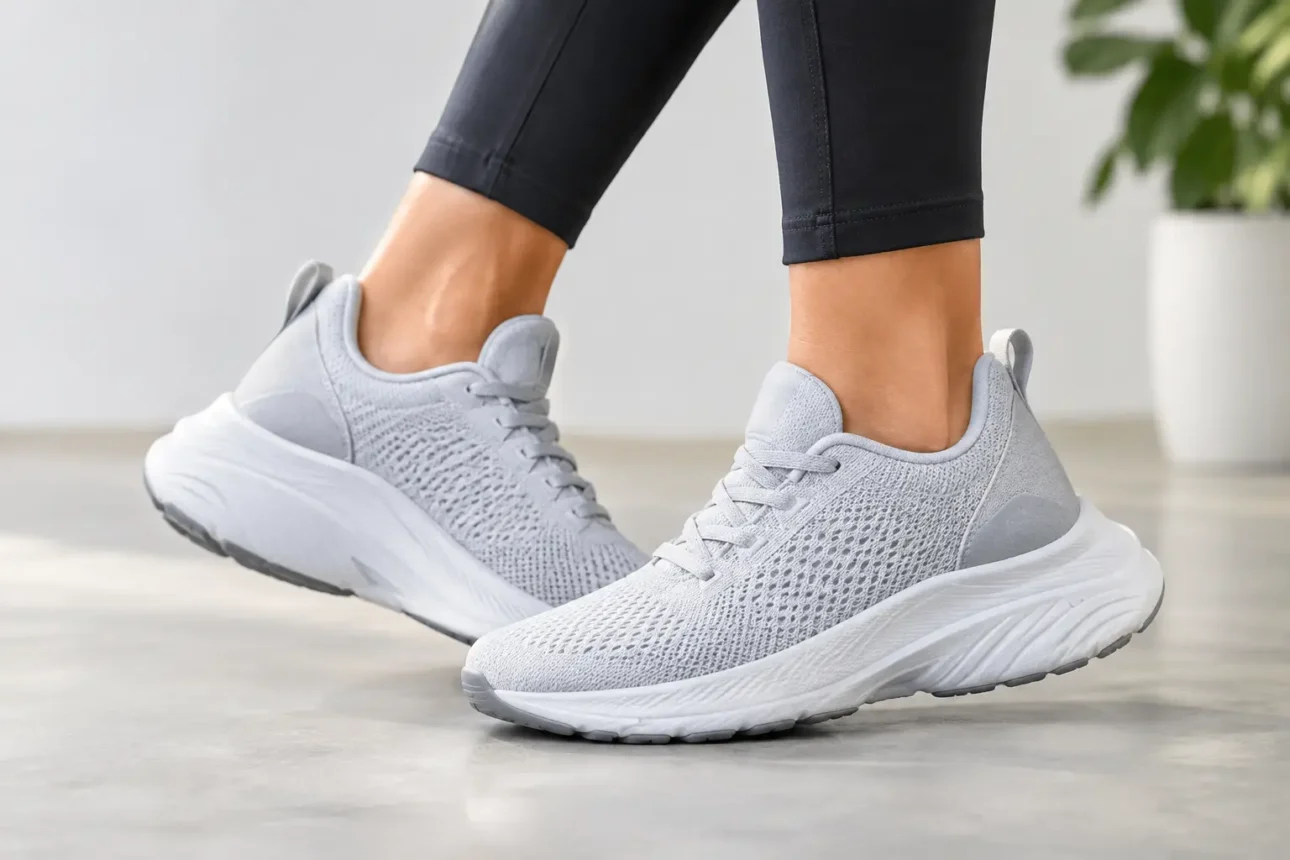
Flat feet sneakers are not about finding the biggest arch bump you can stand on. That is how people end up with shoes that feel “supportive” for ten minutes and annoying by lunch. What matters is a stable ride, enough room for your foot to sit naturally, and cushioning that does not turn every step into work.
Flat feet are common. Some people have flexible flat feet that look flat when standing but move normally. Others deal with fatigue, inward rolling at the ankle, or sore heels after a long day. Those are different situations, so the same sneaker will not suit everyone. Still, a few fit rules make shopping a lot less random.
We would start with the base of the shoe, not the marketing around the arch. A sneaker with a broad, steady platform can make a bigger difference than a tall, aggressive arch insert. When the sole is narrow or overly soft, your foot has more room to collapse inward with each step. That can feel fine in the store, then sloppy after a few miles.
Look for a heel that stays planted and a midsole that does not twist like a towel. You do not need a brick. You just want some resistance through the middle of the shoe. Pick it up and gently bend it. Flex near the toes is normal. If it folds easily through the arch area, it is probably not our first choice for long walks or standing shifts.
A secure heel counter helps too. That is the firmer piece wrapping the back of the shoe. It should hold your heel without rubbing or forcing it forward. If your heel slides around, the rest of the support story does not matter much.
A giant arch bump is not automatically better for flat feet. For some people, it feels like standing on a golf ball. A good shoe supports the whole foot through a stable platform and sensible shape. It does not jab one spot in the middle and call it a day.
If you wear orthotics or inserts, this matters even more. Choose sneakers with a removable insole and enough depth so the insert does not push your foot too high out of the collar. Cramming an orthotic into a shallow fashion sneaker is a quick way to create heel slip and pressure on top of the foot.
Soft cushioning is nice, especially on concrete. But very soft foam can be a bad match if your ankles roll inward a lot. The shoe may feel plush at first, then unstable when you are tired.
We like cushioning that compresses a little but still gives you a clear sense of where your foot is landing. Think padded, not swampy. Runners may want more foam for longer mileage. If you are mostly walking the dog, commuting, or working retail, a moderate stack with a stable base often feels more natural.
Brands fit differently. So do models from the same brand. A size 10 in one running shoe can feel totally different from a size 10 in another, which is why buying based on the number alone is a bad move.
Your toes need a little room in front, roughly a thumb’s width for running shoes. Your heel should stay in place when you walk. The midfoot should feel held, not squeezed. If your foot spills over the side of the midsole, try a wide option before sizing up. Going longer to get more width often leaves you with a sloppy heel.
Try shoes later in the day if you can. Feet swell. The pair that feels perfect first thing in the morning can become a problem after hours on your feet.
Pay attention to what happens when you stand on one leg or walk a few laps. Does your ankle feel like it is falling inward? Does the arch press too hard? Does your pinky toe feel trapped? Do not talk yourself out of those signals because the colorway looks clean. Plenty of good-looking sneakers wear terribly.
If you want flat feet sneakers for walking, running, or long days on your feet, structured running models are usually where we would look first. They are made for repeated movement, not just a quick mirror check.
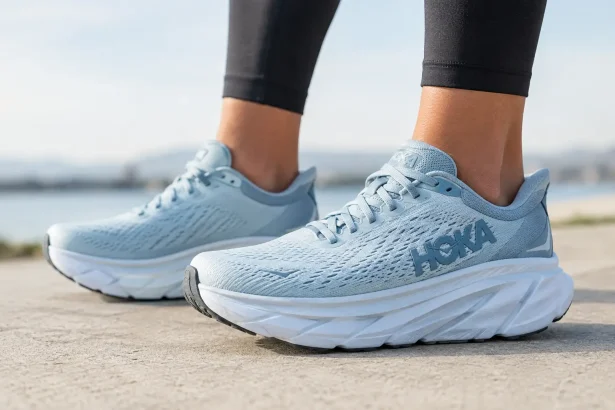
Shoes such as the Brooks Adrenaline GTS, ASICS GT-2000, New Balance 860, and Hoka Arahi are known for adding guidance or stability without feeling like old-school orthopedic shoes. They are not all the same. The Brooks option tends to feel dependable and straightforward. The ASICS GT-2000 is a solid middle-ground shoe for people who want support without a huge, bulky build. The New Balance 860 is worth a look if you often need more width. The Arahi gives you a lighter, more rocker-shaped feel, though that shape is not everyone’s thing.
If you need more room or a more planted ride, models with a wider base can make sense. The Hoka Gaviota and Brooks Glycerin GTS are more cushioned, more substantial choices. They can feel great for walking and standing, but they are not subtle. If you prefer a low-profile sneaker, they may look like too much shoe with jeans.
Here is the honest part: stability shoes are not mandatory just because your arches look low. Some people with flat feet feel best in neutral, well-cushioned shoes. If you do not have pain, your ankles feel steady, and a neutral model fits well, there is no prize for buying the most corrective-looking sneaker on the wall.
A neutral shoe is not the same as a flimsy shoe. Models like the ASICS Gel-Nimbus, Brooks Ghost Max, New Balance Fresh Foam X 1080, and Hoka Clifton can work for flat-footed wearers who want cushioning but do not need extra guidance.
The trade-off is simple. You get a smoother, often softer ride, but less built-in control. A neutral shoe with a wide platform may feel more stable than expected. A narrow, tall neutral shoe may feel sketchy if you tend to roll inward when tired.
We would not buy a super-soft max-cushion sneaker blind if balance is already an issue. Try it first. If it feels like your foot is perched on top of foam instead of sitting inside the shoe, skip it.
For casual wear, flat soles and retro shapes can look sharp. They are also often the wrong call for a full day of walking. Adidas Sambas, Nike Dunks, Converse, and similar low-profile styles have their place. They work for dinner, errands, and a clean outfit. But most do not offer much underfoot support or shock absorption.
That does not mean you have to avoid them forever. It means use them honestly. If you are heading to a concert, traveling through airports, or standing at work for eight hours, pick the running-inspired pair. Save the flatter fashion sneaker for days when your feet are not doing overtime.
New Balance’s lifestyle runners can be a better middle ground. Many have a more supportive shape than classic court sneakers while still looking good with jeans and joggers. Just do not assume every chunky retro runner is built for distance. Some are made for style first, and that is fine as long as you know what you are getting.
Sneakers can improve comfort, but they are not medical treatment. If you have sharp pain, swelling, numbness, pain that keeps returning, or a major difference between your feet, talk to a podiatrist or another qualified clinician. The right shoe can support a plan, but it should not replace one.
The same goes for custom orthotics. Some people genuinely benefit from them. Others do well with a supportive sneaker and a simple over-the-counter insert. It depends on your symptoms, your activity, and how your feet move. We would rather see you buy one pair that fits properly than stack expensive inserts into a shoe that was wrong from the start.
Start with how the sneaker feels after an ordinary day, not how it looks under store lights. The right pair should leave your feet quieter at 5 p.m., while still fitting the way you dress. That is the standard worth shopping for.