Cart
No products in the cart.
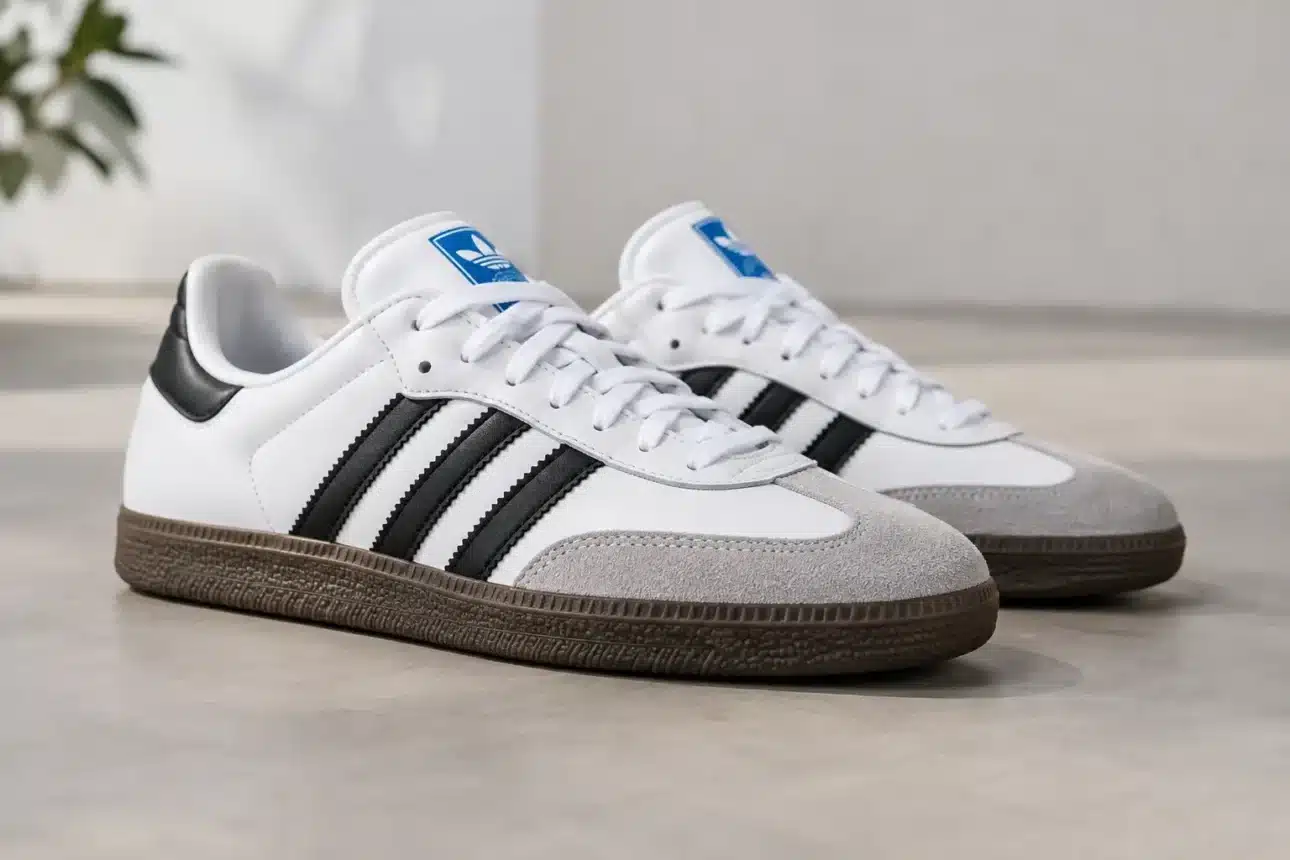
A Samba can make a basic outfit look sharp. That part is easy. The harder question is whether you will still like wearing it after a full day out. Our Adidas Samba test gets past the street-style photos and into the stuff that matters: fit, comfort, grip, durability, and where this shoe falls short.
We like the Samba because it is clean, low-profile, and easy to wear with almost anything. We do not like the idea that it is the right shoe for every day and every foot. It is a flat, fairly slim retro sneaker. That is the point. It is also the reason some people buy them, wear them twice, then wonder why their feet are tired.
Most Adidas Sambas fit true to size in length for average-width feet. If you usually wear a standard men’s or women’s width and like a close fit, start with your normal size. There is not much extra room in the toe box, though. The shape is tapered through the forefoot, especially around the little toe.
Wide feet change the conversation. Going up half a size can give your toes a little more breathing room, but it also adds length. That can leave the heel feeling loose. If your feet are wide, high-volume, or sensitive around the forefoot, we would not call the Samba a safe blind buy. Try them on if you can, or choose a roomier sneaker rather than forcing a good-looking shoe to work.
The leather upper does soften with wear. It will give a bit around the sides, but do not expect a dramatic stretch. A shoe that feels painfully narrow out of the box is unlikely to become your favorite after a week.
The tongue is thin and the laces sit fairly close to the top of the foot. That gives the Samba its neat shape, but people with high insteps may feel pressure there. Loosening the lower laces helps. So does wearing a thinner sock. Thick athletic socks can make an already close fit feel cramped fast.
The heel is generally secure. There is not much padding, so it does not hug your foot in the plush way a running shoe does, but it should not slide around if the size is right. New pairs can feel stiff at the heel collar. Wear them around the house for a few sessions before taking them on a long city walk. That small break-in period can save you a rough first day.
Here is the straight answer: the Adidas Samba is comfortable for casual wear, not comfort-first footwear.
The sole is low and firm. You feel closer to the ground than you do in a chunky lifestyle sneaker, and there is very little soft foam between your foot and the pavement. Some people love that connected, stable feel. Others want more cushion by lunchtime.
For errands, commuting, coffee, class, and a night out, the Samba feels good once it has broken in. It is light, easy to move in, and does not feel bulky with straight jeans, loose pants, shorts, or joggers. It is one of the few sneakers that can look understated without disappearing completely.
For long days of sightseeing, standing at work, or walking several miles on concrete, it depends on your feet. If you are used to flat shoes, you may be fine. If you normally reach for cushioned running shoes, the difference is obvious. The Samba does not have the arch support or impact protection that makes a Hoka, Brooks, or a proper walking shoe easier on tired feet.
We would not buy Sambas as a work shoe for an eight-hour shift on your feet. They can do it occasionally, but that is not where they shine. Looking good and feeling soft are not the same thing.
A thin replacement insole can make the ride more forgiving, especially if you need a little extra arch support. Keep it thin. The interior is not deep, and a thick insole can push your heel up, make the fit tighter, and cause rubbing around the collar. If you need substantial support or cushioning, it makes more sense to start with a shoe built for it.
The gum outsole is one of the Samba’s best parts. It grips well on dry sidewalks, indoor floors, and smooth surfaces where some fashion sneakers feel slippery. That grip comes from the shoe’s indoor soccer roots, and it still holds up for normal city wear.
Wet pavement is less predictable. The rubber has traction, but it is not a rain shoe. Watch painted crosswalks, wet tile, metal grates, and slick leaves. That is normal sneaker behavior, not a flaw unique to the Samba.
The upper is usually leather with suede around the toe, depending on the colorway. Leather handles regular wear well and gets better looking when it picks up a little character. The suede T-toe is tougher than it looks, but it catches dirt and water marks more easily than smooth leather. Cream or white pairs need more attention than black pairs. No surprise there.
The real wear point is often the edge of the sole and the crease across the forefoot. Creasing is part of wearing leather sneakers. Do not panic over it. Keep them away from heavy rain, wipe off dirt before it settles in, and they can stay presentable for a long time. The sole is thin enough that hard daily pavement use will wear it down faster than a thicker cupsole sneaker, but it is not fragile.
Let’s be honest. Nobody chooses a Samba because it has the most forgiving midsole. They choose it because it works.
A white pair with black stripes is almost unfairly easy to style. It looks right with blue denim, black pants, gray sweats, wide-leg trousers, and simple shorts. Black Sambas are even easier to keep clean and feel a little less trendy, which we mean as a compliment. They have been around long enough that they do not need to scream for attention.
That said, the Samba has had a huge style moment. If you are tired of seeing them everywhere, that is fair. The shoe is popular because it is good-looking, not because it is rare. There is no prize for owning the same colorway as everyone else. A darker pair, a suede version, or a less obvious color can keep the low-profile shape without making your outfit feel copied from a feed.
The profile works best with pants that do not swallow the shoe. Very wide jeans can still work, but the Samba may look small underneath them. With cropped or tapered pants, it looks especially clean because you can see the shape of the upper and the gum sole.
Buy it if you want a classic everyday sneaker with a slim look, decent grip, and a firm underfoot feel. It is a solid pick for someone whose day involves normal walking, not miles of pavement. It also works if you like sneakers that sit low and do not make every outfit feel overly sporty.
Skip it if cushioning is your top priority, your feet run wide, or you need a shoe for long shifts. We would also skip it for gym training, distance running, hiking, or wet-weather use. The Samba can handle a casual kickabout, but its real job now is lifestyle wear.
At Sneakerness, we think the Samba earns its place. It is not overbuilt, not overly precious, and not secretly a comfort shoe. Get the size right, give the leather a few wears to relax, and use it for the kind of day it was made for: looking clean while you get on with yours.
If your feet feel best in soft, supportive sneakers, listen to them. A shoe can look great on your shelf and still be the wrong choice for a 20,000-step day.