Cart
No products in the cart.
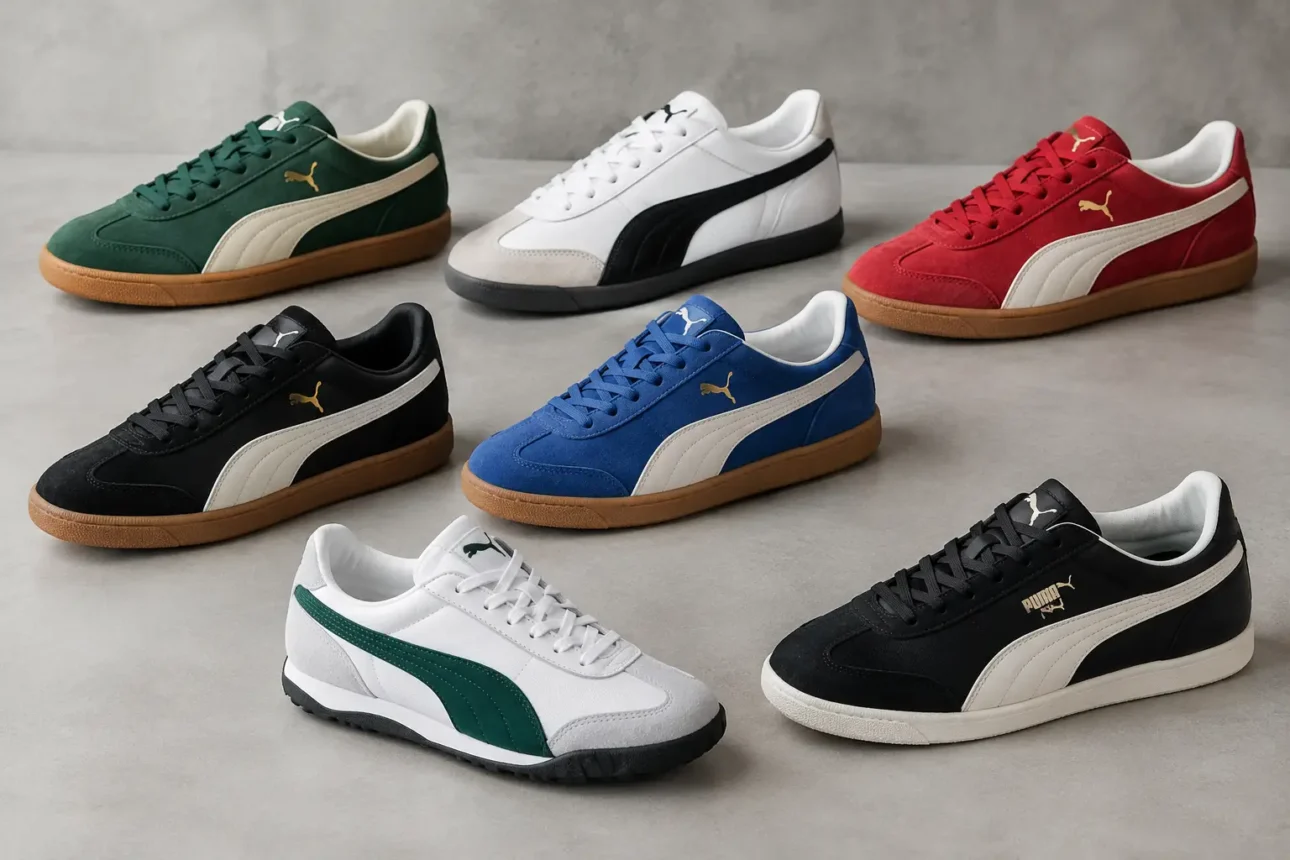
Puma does retro better when it keeps things simple. The best Puma retro models are not trying to win a tech race or look like a sneaker convention on your feet. They have clean lines, decent materials, and enough history to feel real. More importantly, the right pair still works with the clothes you already own.
Not every old Puma deserves a comeback. Some look cool in product photos and feel flat, stiff, or weirdly narrow by lunchtime. We picked the pairs that have a reason to be in your rotation, whether you wear jeans, cargos, shorts, or relaxed trousers.
A good retro sneaker has to earn its place. Looks come first, obviously, but the shoe should also be easy to wear more than once a month. That rules out plenty of overly chunky throwbacks and super-flat racing styles that only work if you are willing to suffer for the outfit.
Puma’s strongest classics tend to sit low, use suede or leather well, and avoid too much branding. They look sharp without begging for attention. Just keep expectations realistic: most retro shoes are lifestyle shoes, not all-day support shoes. If you walk miles for work, save your cushioned runners for that job.
The Suede is the safe pick, but that is not an insult. It has been around for decades because the shape is right: a low profile, simple Formstrip, solid suede upper, and a sole that does not try too hard. Black, navy, gray, green, and red all work. If you only want one Puma retro pair, this is where we would start.
It is not plush. The sole is fairly flat and the shoe feels more firm than soft. But it breaks in well, holds up to regular casual wear, and looks better as it picks up a little character. Keep suede protector handy if wet sidewalks are part of your week.
The Palermo is the current favorite for people who want a terrace-style sneaker without wearing the exact same shoe as everyone else. Its slim shape, T-toe panel, and gum sole give it a proper old-school soccer look. It feels cleaner and a bit more dressed up than the Suede.
We like the Palermo with straight-leg jeans, pleated pants, or shorts with taller socks. It can look a little too narrow next to oversized cargo pants, though. Fit can feel close through the forefoot, so wider feet should try their usual size carefully rather than assuming the slim look is just visual.
The Speedcat is a motorsport shoe first and a comfort shoe second. That is the honest version. It is low, flat, narrow-looking, and very good at making a basic outfit look more intentional. The small Puma logo and sleek toe give it a different feel from bulkier skate-inspired sneakers.
If you are mostly driving, going out, or walking around the city for a few hours, it is a strong choice. If you stand behind a counter all day or need serious arch support, skip it. The Speedcat trend is real, but it is also easy to overdo. Choose a simple colorway and let the shape do the work.
The Easy Rider has a relaxed 1970s running-shoe look without feeling like costume gear. The nylon-and-suede mix gives it texture, while the rubber outsole adds just enough visual bite. It is lighter-looking than the Suede and less precious than the Palermo.
This is one of the easier Puma retro models to wear daily. It suits joggers, cuffed pants, vintage denim, and casual shorts. The trade-off is that the outsole can look a little busy in bright colors. We would stick to muted suede panels and a neutral base if you want the pair to stay useful after the first few wears.
The Super Team is for people who like a gum sole but do not want a shoe that feels too polished. Originally tied to handball, it has a compact shape, suede upper, and a slightly tougher look than the Palermo. Think old gym floor, not country club terrace.
It is a great middle ground if the Suede feels too familiar and the Speedcat feels too fashion-led. The Super Team looks especially good with washed denim and workwear pants. It is still a flat retro sneaker, though, so do not confuse its tough look with all-day cushioning.
The Clyde has a little more personality than the Suede. Its roots are in basketball, but the shoe is low and clean enough for everyday wear. The longer, sleeker shape and leather or suede options make it feel slightly smarter than a standard court shoe.
We rate the Clyde highly if your wardrobe leans simple: plain tees, good denim, overshirts, and relaxed tailoring. Loud collaborations can be fun, but the plain versions are usually the better buy. The design does not need extra graphics to work.
The Roma is an underappreciated classic. It has a rounded toe, a slightly chunkier sole than the Suede, and a 1960s training-shoe feel that is easy to live with. It is not the most talked-about Puma, which is part of the appeal.
The shape is friendly with casual outfits and gives a little more underfoot substance than the flattest options here. Still, it is not a modern walking shoe. Think coffee runs, errands, travel days, and everyday wear where style matters as much as mileage.
The Slipstream Lo brings a 1980s basketball shape without the massive bulk of many retro court sneakers. It has more paneling and more visual weight than the Suede or Palermo, which makes it a better choice if you wear wider pants or prefer a sturdier-looking shoe.
It can feel heavier on foot, and some colorways go too hard with contrast panels. We prefer the quieter leather versions. In a clean white, off-white, or black-and-white colorway, the Slipstream Lo is a solid alternative to the usual retro basketball choices.
Start with the shape you actually wear. If you like a slim, low sneaker, go Palermo or Speedcat. If you want the most dependable all-rounder, get the Suede. If you want a little more texture and a casual running-shoe feel, the Easy Rider makes more sense.
Then think about your day, not just your mirror. The Suede, Clyde, Roma, and Slipstream can handle regular casual use well. The Palermo and Super Team are fine for normal city days but remain fairly flat. The Speedcat looks excellent, but it is the least forgiving choice for long hours on your feet.
Color matters more than people admit. White sneakers are easy, but suede Puma pairs often look better in dark green, navy, brown, gray, or black. They hide wear better and make the shoe feel less generic. A gum sole helps too, especially if you want that old-school look without looking like you borrowed a pair from a museum.
If you are between sizes, do not size up automatically. Extra length can make a low-profile shoe feel sloppy. Start with your normal size, then pay attention to width and toe room. Leather and suede can ease up with wear. A shoe that crushes your toes will not magically become your favorite pair.
A retro Puma should feel like an easy choice, not a precious purchase. Pick the pair that fits your clothes and your actual plans. The cleanest sneaker is usually the one you will still reach for after the trend moves on.