Cart
No products in the cart.
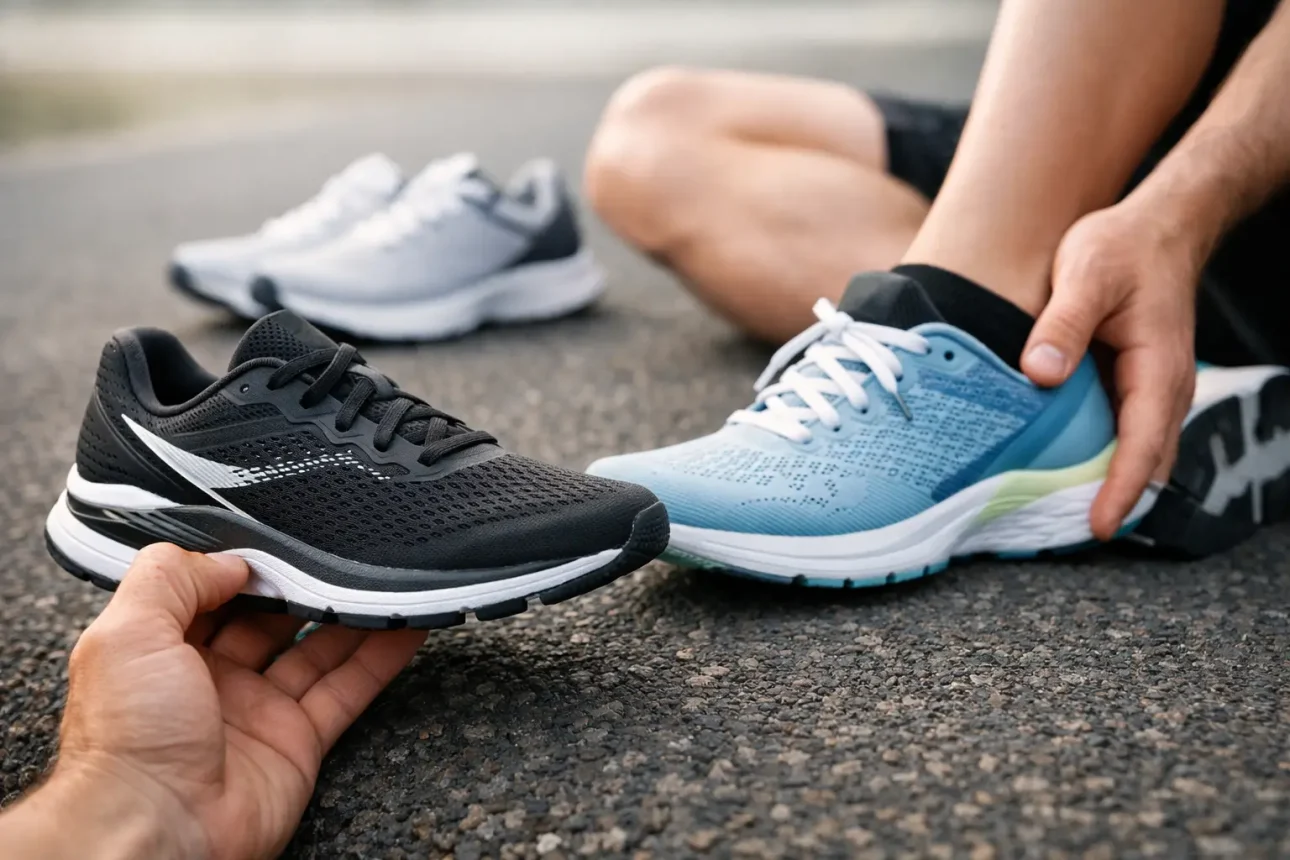
You usually know a bad running shoe by mile two. Your toes start arguing with the front of the shoe, your arch feels weird, or your heel keeps slipping just enough to annoy you. That is why learning how to choose running sneakers matters before you check out, not after your first run.
A lot of people overthink the wrong stuff. They chase whatever model is all over social media, or they buy the same pair their friend swears by. That is a fast way to waste money. Running shoes are personal. What feels soft and easy for one person can feel unstable and clunky for someone else.
Start with one question: what kind of running are you actually doing? Not your fantasy version where you suddenly train for a marathon. Your real version. Maybe you run three times a week around your neighborhood. Maybe you mix short treadmill runs with long walks. Maybe you want one pair that can handle easy miles and not wreck your feet after standing all day.
That part matters because the best shoe on paper can still be the wrong shoe for your routine. A super soft max-cushion pair can feel great on long easy runs, but if you like faster, shorter sessions, it may feel slow. A light, snappy shoe can be fun for speed work, but not everyone wants that firmer ride on recovery days. There is always a trade-off.
If you only remember one thing, remember this: buy for your usual run, not your most ambitious one.
Brands love talking about midsole tech. We get it. Some of it is useful. Most of it matters less than whether the shoe actually fits your foot.
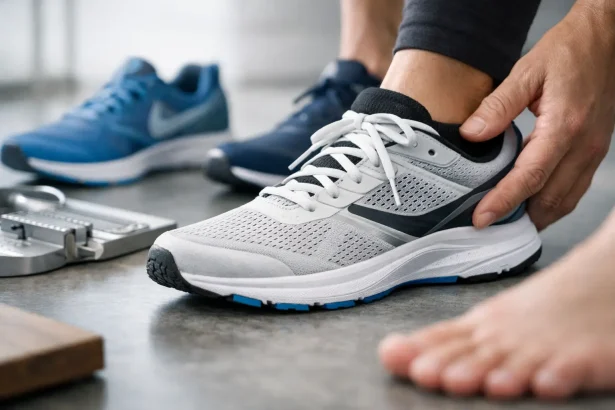
The toe box is a big deal. Your toes need room to spread a bit when you land and push off. If the front feels cramped while you are standing still, it will feel worse once you start running. On the other hand, too much space can make the shoe feel sloppy. You want enough room in front of your longest toe so you are not jamming into the end on downhills or longer runs.
Heel fit matters too. A little movement is normal. Constant slipping is not. If the heel lifts every few steps, that shoe is probably not for you, even if everything else looks good.
Then there is midfoot fit. This is where a lot of shoes win or lose people. Some runners like a locked-in feel. Others hate anything that squeezes the arch or sidewalls. Neither side is wrong. It depends on your foot shape and what feels natural.
A simple rule we trust: if a shoe feels irritating in the first few minutes, do not talk yourself into it. Running shoes are not the kind of thing you should need to “break in” just to make them tolerable.
Wide forefoot? Narrow heel? High instep? Flat-out hard-to-fit feet? That narrows things down faster than any ad campaign.
Some brands tend to run narrow in the toe box. Some feel roomier and more forgiving. That does not mean one is better. It means you should stop expecting every brand to fit the same. A Nike running shoe and a New Balance running shoe in the same labeled size can feel very different. Same goes for Hoka, Brooks, Asics, On, and Adidas.
If you already own a sneaker that fits you well, use that as your baseline. Not because you should buy the same thing again, but because it tells you something useful about the shape your foot likes.
A lot of runners think they should buy the softest shoe possible. Sometimes that works. Sometimes it feels like running on a mattress.
Soft cushioning can feel easy on easy days, especially if you run longer distances or spend a lot of time on hard pavement. But extra softness can also feel unstable if you corner a lot, run uneven routes, or just prefer a more connected feel. Some people feel fresher in a firmer shoe because it feels more controlled.
We usually tell people to stop chasing extremes. If you are a newer runner or just want a daily trainer, a balanced ride is the safest bet. Not brick-hard. Not marshmallow-soft. Just solid underfoot and easy to trust.
This is where a lot of overhyped shoes lose us. They sound great in product copy, then feel awkward for normal people doing normal runs.
Not everyone needs a stability shoe. Not everyone should avoid one either.
If you have run comfortably in neutral shoes for years, you probably do not need to fix what is not broken. If your foot rolls inward a lot and neutral shoes always feel sloppy or tiring, some extra structure can help the shoe feel more guided. That does not mean it will solve every issue. It just means the shoe may feel more secure.
The mistake is forcing yourself into a category because of one buzzword. Neutral, stability, support – these labels are a starting point, not the truth. What matters is whether the shoe feels steady and natural when you move.
Road running shoes are what most people need. They are built for pavement, sidewalks, treadmills, and everyday miles. If that is your routine, keep it simple.
Trail shoes are a different story. More grip, more protection, often a firmer feel. Great for dirt, rocks, and wet ground. Less fun if most of your runs are on concrete. Some people buy trail shoes because they look tougher. Fair enough. For actual road running, they can feel clunky and overbuilt.
There are hybrid options too, but they usually come with compromise. Fine if your route mixes road and light gravel. Less fine if you want a shoe that is excellent at one thing.
Most people buy their running shoes too small.
Your running size is often not the same as your casual sneaker size. Feet swell during runs. Downhill sections push your foot forward. Heat makes things worse. That is why a pair that feels snug in your bedroom can feel awful five miles later.
A little extra room in the front is smart. A sloppy heel is not. Both things can be true at once, which is why fit is more than just picking a number.
If you are between sizes, the better choice often depends on where the shoe feels tight. Tight in the toe box? Go up. Loose in the heel but good in length? Another model may suit you better than another size.
And yes, socks matter. If you try on or test a running shoe in paper-thin socks but run in thicker ones, you are changing the fit more than you think.
When people compare running shoes, they often focus on the wrong details. Weight matters, but not as much as comfort. Stack height matters, but only if you notice instability. Drop matters, but only once you know what your legs and feet prefer.
For most runners, the real questions are simpler. Does the shoe disappear on your foot, or do you keep noticing it? Does it feel smooth at your usual pace? Can you picture wearing it for an hour without wanting it off?
That is why daily trainers are usually the smartest buy. They are not flashy. They are not always the coolest looking pair in the lineup. But they handle the most runs for the most people. If you only want one running shoe, start there.
If you run a lot, having two pairs can be worth it. One softer, one lighter. One for easy miles, one for quicker days. But if your budget says one pair, do not let anyone make you feel like you need a whole rotation. You do not.
You are allowed to care about style. We do.
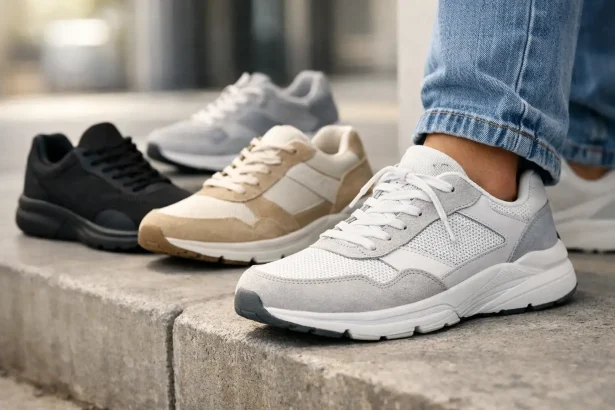
A running shoe can fit well and still look like a medical device. If that bothers you, keep shopping. There are plenty of clean options now that run well and do not look terrible with joggers or jeans.
That said, do not let looks outrank feel. A sharp colorway does not help when the upper rubs your pinky toe raw. We would rather wear a slightly boring shoe that feels right than a beautiful one that sits by the door because it is annoying.
The sweet spot is obvious when you find it. Good fit. Good ride. Looks clean enough that you actually want to wear it.
Carbon-plated shoes are fun, but most casual runners do not need them. They are expensive, less versatile, and often feel awkward at slower paces.
Max-cushion models can be worth it if you love a soft ride or run long. They are not automatically better for everyone.
Some brands nail comfort but miss on looks. Some nail looks and feel average once you start moving. We would always side with comfort first, then style, then hype somewhere near the bottom.
And if a shoe gets endless praise online but feels off on your foot, trust your foot. The internet is wrong all the time.
The right running shoe is not the one with the loudest reviews. It is the one that makes you forget about your feet and just run.