Cart
No products in the cart.
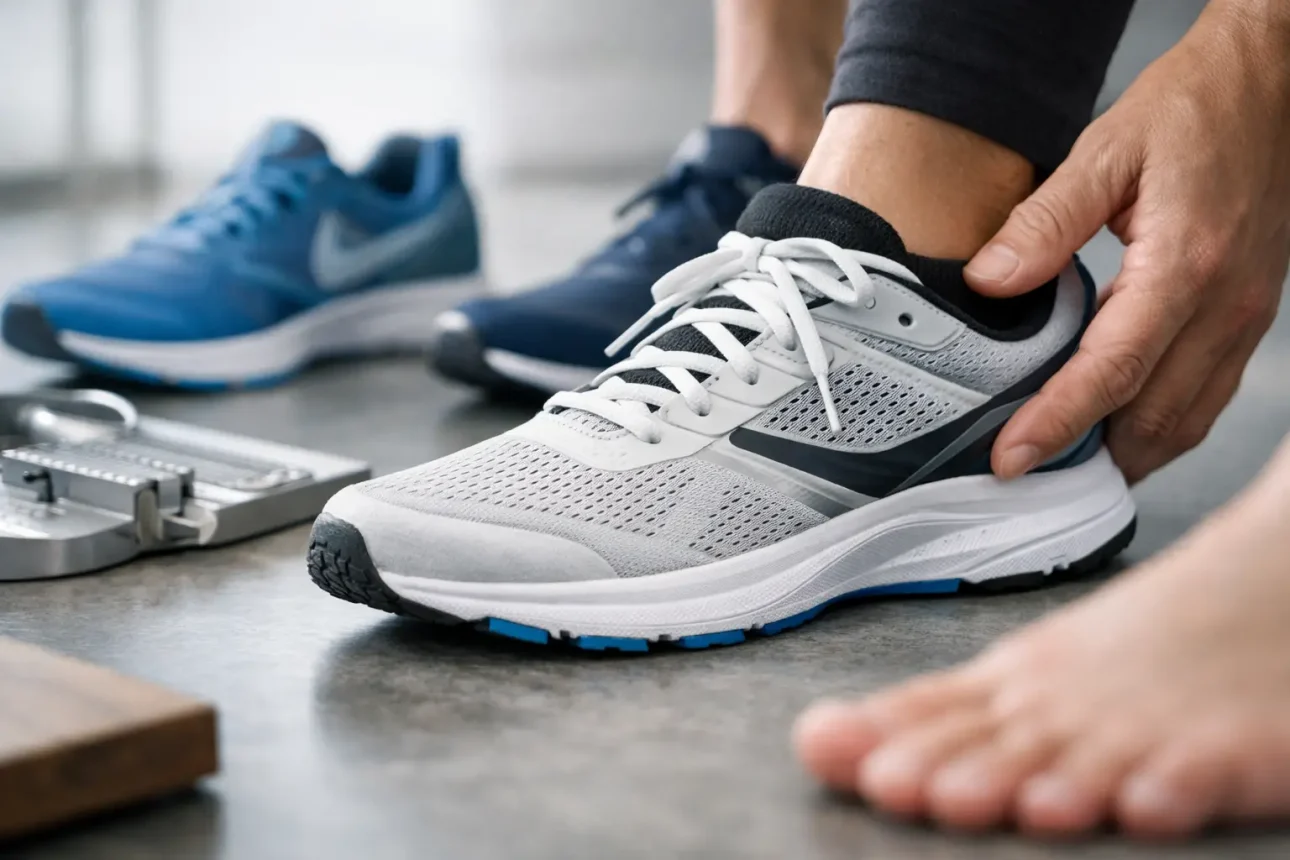
A running shoe can feel fine for the first five minutes and terrible by mile two. That is why a running shoes sizing guide matters more than the number printed on the box. Your feet warm up, spread out, and move forward with every step. A pair that feels snug and sharp in the mirror can turn into bruised toes, numb spots, or heel rub once you actually run.
We are not here to tell you every runner needs the same fit. They do not. But there are a few things that separate a shoe that feels right from one you keep trying to convince yourself is fine.
Your casual sneaker size is a starting point, not a rule. Plenty of people wear their everyday shoes close to the toes because that is how they like the look. Running shoes need more breathing room. Your foot slides forward on downhills, swells as it gets warm, and takes repeated impact. There is no prize for wearing the smallest size possible.
For most runners, starting a half size up from their casual sneaker size makes sense. Not always, but often. If you normally wear a US men’s 10 in a lifestyle shoe, try a 10.5 in a running model first. If the shoe already runs long, or your feet are narrow and low-volume, your usual size may still be right.
The number is not the fit. Brands use different molds, called lasts, and they do not all feel the same. A Nike running shoe may feel narrow through the middle compared with a New Balance or Brooks model in the same listed size. Hoka often gives you a roomy, tall ride underfoot but can still feel fairly secure around the upper. On shoes tend to feel more fitted through the midfoot. None of that is bad. It just means buying blind based on one old pair is how people end up returning shoes.
The simplest check is still the best one. Stand up in both shoes with the socks you plan to run in. Your longest toe should have about a thumb’s width of space between it and the front of the shoe. That is roughly half an inch, though your thumb is more useful than hunting for a ruler.
Do not check this sitting down. Your foot gets longer and wider when you stand. It also gets bigger later in the day, especially if you have been walking around, working, or training. Try running shoes in the afternoon or evening when possible. Morning feet can make a borderline pair seem better than it is.
A little toe room is good. A full-size gap is usually not. Too much length lets your foot slide, which can cause blisters under the forefoot or make your toes grip the shoe to stay put. That is tiring and annoying. The goal is room without a loose, floppy feel.
Your longest toe might not be your big toe. For some people, the second toe sticks out farther. Check the actual longest point of your foot. Ignoring it is a fast route to a black toenail, especially if you run hills or longer distances.
If you have a treadmill, incline ramp, or even a short slope nearby, walk downhill in the shoes. Your toes should not slam into the front. A light touch once in a while is different from repeated impact. Repeated impact means you need more length, better heel lockdown, or both.
A shoe can be long enough and still be completely wrong. If the sides of your forefoot feel pinched, your toes cannot spread naturally, or the upper bulges hard over the midsole, do not hope it will magically break in. Some mesh uppers relax a little. The base shape of the shoe does not.
We see people size up to solve a width problem all the time. Usually, that creates a different problem: too much empty space at the toe and a heel that slips. If a shoe is tight across the ball of your foot but long enough, look for a wide version or a naturally roomier model instead.
A proper fit should let your toes lie flat and move a bit. Your foot should not feel squeezed into a pointed shape. This matters even more on longer runs, when feet tend to swell. If you regularly finish runs with tingling, hot spots, or pressure along the outside of your little toe, width is worth checking.
Wide does not mean sloppy. A good wide running shoe still holds your heel and midfoot securely. It simply gives the front of your foot the space it was asking for.
Toe room gets most of the attention, but heel movement can ruin an otherwise solid fit. Your heel should feel held in place when you walk or jog. A tiny amount of movement is normal. Noticeable lifting on every step is not.
Before changing sizes, try adjusting the laces. Many runners lace every eyelet the same way and then blame the shoe. A runner’s loop, sometimes called a heel-lock lacing method, can tighten the collar without crushing the top of your foot. It is useful when the shoe fits well everywhere except the heel.
If you have to pull the laces extremely tight to feel secure, the shoe may have too much volume for your foot. If the laces leave deep marks or your foot goes numb across the top, it may have too little volume. Length and width are not the whole story. Foot volume matters too.
A shoe should feel secure through the middle without feeling like a clamp. Think held, not squeezed.
Walk around in the pair for a few minutes, then jog if you can. Pay attention to where your foot lands and shifts. Does your arch feel pushed by the shoe’s shape? Does one toe catch the front? Does the tongue press into your ankle? Small annoyances rarely disappear when the run gets longer.
That said, do not expect every running shoe to feel like a soft house slipper. Some faster, firmer models feel more structured and less plush than a walking shoe. That can be fine if nothing rubs, pinches, or forces your foot into a bad position. “Comfortable” does not always mean squishy. It means you stop thinking about the shoe once you start moving.
Run in the socks you actually use. Thick cushioned socks can change a close fit. Thin performance socks can expose extra room. If you wear orthotics or your own insoles, bring them into the equation too. The stock insole may take up less or more space than what you normally wear.
Size charts help, but they are not sacred. Measure both feet from heel to longest toe while standing, then use the larger foot as your reference. If one foot is noticeably bigger, fit the bigger one. Nobody notices a little extra space on the smaller foot. You will notice a crushed toe on the bigger one.
When shopping online, compare the new shoe with a running pair you already know fits. Check the listed US, EU, and centimeter sizing, but keep the shape of the model in mind. A narrow racing-style shoe can feel tighter than a daily trainer at the same size. A retro sneaker’s sizing tells you very little about a modern running shoe.
Read fit notes with some skepticism. “True to size” usually means it worked for the person writing it. It does not tell you whether their feet are narrow, wide, flat, high-volume, or prone to swelling. Useful feedback mentions where the shoe feels short, narrow, roomy, or secure.
At SneakerNess, we would rather see you choose the pair that fits your actual run than force a trendy model that punishes your feet. A clean shoe is only worth wearing if you can forget it is there.
Size up a half size if your toes are close to the front, you run long distances, your feet swell a lot, or you do regular downhill routes. Stay with your usual size when you already have thumb-width room and the shoe feels secure without over-tightening the laces.
Walk away from the model if the width is wrong, the arch support hits in the wrong place, or your heel keeps moving after you adjust the laces. Do not buy discomfort because the color is good or because everyone online says the shoe is popular. Plenty of popular shoes fit plenty of people badly.
The right pair should give your toes room, keep your heel calm, and feel stable once you pick up the pace. If you are still debating whether the pressure point will “probably be okay,” it probably will not. Your run should test your lungs and legs, not your patience with your shoes.