Cart
No products in the cart.
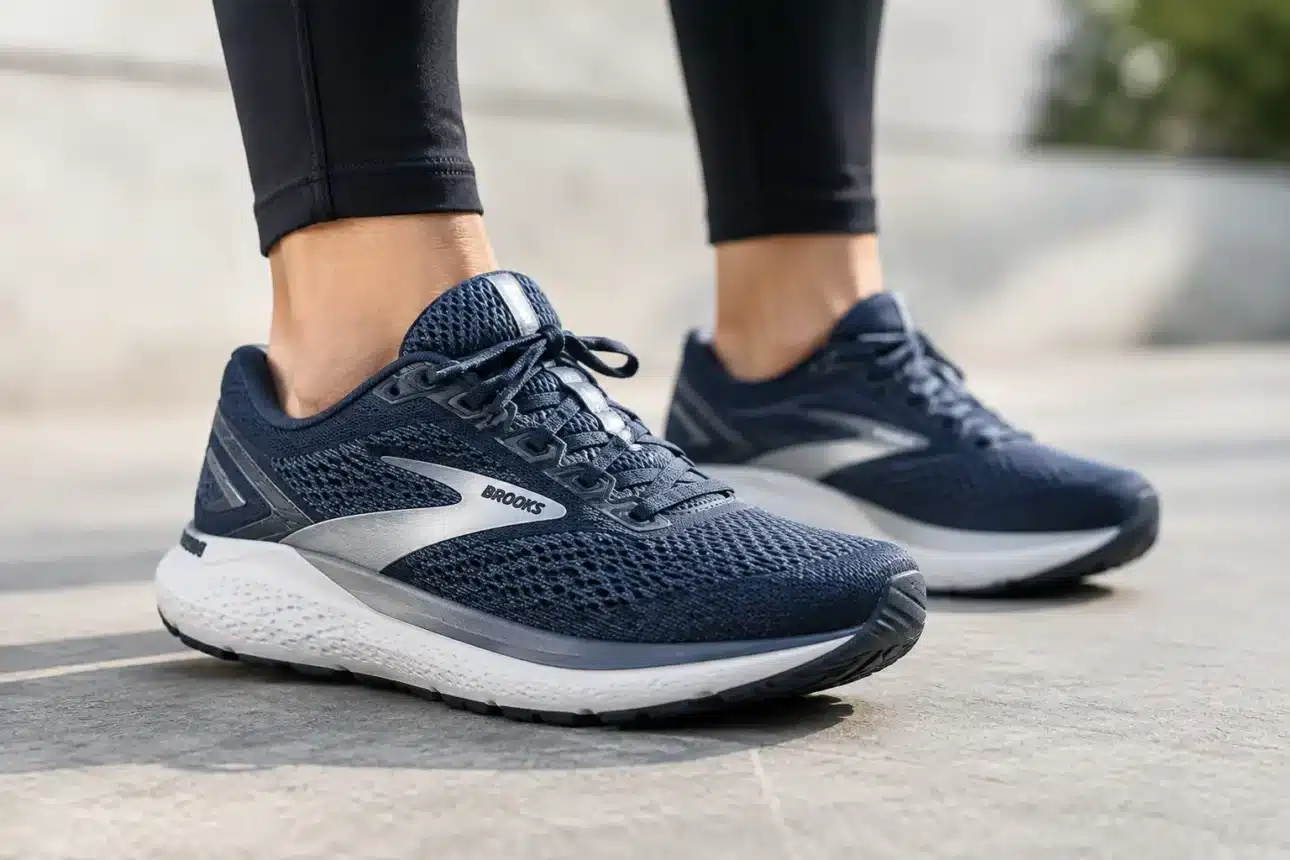
Flat feet do not automatically mean you need the stiffest shoe on the shelf. That is where a lot of bad advice starts. The right Brooks shoes for flat feet depend on how your feet move, what hurts after a long day, and whether you are running miles or just trying to survive a shift on concrete.
Brooks makes some of the more dependable support shoes around. They are not always the coolest-looking option. Some are a little dad-shoe, frankly. But if your arches drop inward and your ankles feel like they are working overtime, a clean, stable ride beats a trendy flat sneaker every time.
A flat arch is not a diagnosis and it is not automatically a problem. Plenty of people have flat feet and feel fine in neutral running shoes. Others roll inward a lot when they walk or run, wear down the inside edge of their soles fast, or get tired feet by mid-afternoon. Those are the people who often get along well with a stability shoe.
Brooks calls its support system GuideRails. Instead of trying to prop your arch up with a hard lump under the foot, GuideRails are firm pieces along the sides of the midsole. The idea is simple: they help keep excess side-to-side movement in check when your stride starts to get sloppy. For flat feet that overpronate, that can feel more natural than an aggressive arch post.
What matters most is not the label on the box. Look for a broad base under the heel, enough structure through the middle of the shoe, and a heel that does not collapse when you press it. Then pay attention to the fit. If the shoe pinches your forefoot or pushes painfully into your arch, it is not the one, no matter how many support features it has.
The Adrenaline GTS is the easy answer because it works for a lot of situations. It is a daily running shoe, but it is also solid for walking, commuting, treadmill miles, and jobs where you are on your feet for hours. The cushioning is balanced. Not mushy, not harsh. The GuideRails add support without making the shoe feel like a correction device strapped to your foot.
We like the Adrenaline for flat-footed runners who want one pair that can handle regular training without making every step feel overly controlled. It also comes in multiple widths, which matters more than people think. Flat feet can spread out under load, and cramming them into a standard narrow fit is a fast way to blame the wrong thing.
The trade-off is that the Adrenaline is not a speed shoe. It is built for steady, repeatable miles. If you want a lightweight, snappy racer, look elsewhere. If you want a shoe that feels predictable at mile one and mile eight, this is usually the safe bet.
The Glycerin GTS takes the same basic support idea and adds more cushion. This is the pick for runners and walkers who want a softer landing, especially on hard sidewalks, treadmills, or long workdays. It feels more plush than the Adrenaline without turning into a wobbly foam pillow.
That last part matters. Soft shoes can be great, but a high, squishy platform with no stability can feel sketchy if your feet roll inward. The Glycerin GTS gives you a cushioned ride with GuideRails around it, so there is more structure when you need it.
It costs more, and the extra foam makes it less quick than a lighter trainer. We would not choose it purely because it is expensive or looks premium. Choose it if your priority is reducing that beaten-up feeling in your feet and legs after long days. For walking and standing, it is one of the better-looking comfort-first options in the Brooks lineup, even if it is still clearly a running shoe.
The Beast GTS and Ariel GTS are Brooks’ heavy-duty support models. The Beast is traditionally offered in men’s sizing and the Ariel in women’s sizing, though the better choice is always the fit that works for your foot. These are for people who want more structure, a wide stable base, and a shoe that does not feel delicate.
They are especially worth considering if lighter stability shoes still feel too flexible, if you use orthotics, or if you are a bigger runner or walker who compresses softer midsoles quickly. The wide sizing options are a real plus here.
Let us be honest: these are not sleek shoes. They look built for a job because they are. They are heavier than the Adrenaline, less fun for faster running, and probably not the pair you wear with slim jeans for the look. But for long walks, standing all day, and easy miles where support comes first, they are tough and dependable.
If you need a shoe for an office, hospital, retail floor, school, or anywhere you stand all day, the Addiction Walker 2 makes more sense than buying a running shoe just because it is popular. It has a stable platform, a supportive feel, and a more traditional walking-shoe shape. Some versions come in leather, which works better with uniforms or less casual dress codes.
It is not a shoe for fast running. Do not force it into that role. But as a work shoe for flat feet, especially if you want a more grounded and structured ride, it earns its place. The look is plain. The comfort is the point.
Here is the part shoe guides often skip: not everyone with flat feet needs the GTS version.
If you have low arches but no pain, no ankle collapse, and no history of feeling unstable in neutral shoes, a neutral model like the Brooks Ghost may be completely fine. Some flat-footed runners actually dislike strong stability features because they feel restrictive. Your foot should not be fighting the shoe.
A stability model makes more sense if you notice your ankles rolling inward, your knees drifting inward when you squat or run, or the inside edge of your old shoes wearing down much faster than the outside. It can also be a sensible call when a neutral shoe feels tired and sloppy late in a run.
Pain is a reason to slow down, not a reason to blindly buy a firmer shoe. Foot, heel, ankle, or knee pain that sticks around deserves a proper assessment from a qualified clinician. Shoes can improve comfort and support, but they are not medical treatment.
The best Brooks model can still feel awful in the wrong size. Try shoes later in the day if you can, when your feet are closer to their largest. Leave about a thumb’s width in front of your longest toe. Your heel should feel held in place, but the upper should not clamp down on the top of your foot.
Width is a big deal for flat feet. When the arch lowers under body weight, the foot often gets wider. If your pinky toe hangs over the edge of the insole, or the upper bulges along the sides, move to a wide size instead of sizing up in length. A shoe that is too long can make your heel slip and create a whole new problem.
If you wear orthotics, remove the stock insole before testing the fit. Bring your orthotics along when trying shoes on. The Beast, Ariel, Addiction Walker, Adrenaline, and Glycerin GTS are all usually more accommodating than narrow, low-volume trainers, but the result still comes down to your specific foot.
For most runners with flat feet and mild to moderate overpronation, we would start with the Adrenaline GTS. It is the most balanced option. Choose the Glycerin GTS when softer cushioning matters more. Go Beast GTS or Ariel GTS when you want a more planted, substantial shoe, and pick the Addiction Walker 2 when work shifts and daily walking are the main event.
Do not buy the most supportive shoe just because your arches are low. Buy the pair that keeps your stride comfortable, gives your toes room, and still feels good when it is 5 p.m. and your feet have had enough.