Cart
No products in the cart.
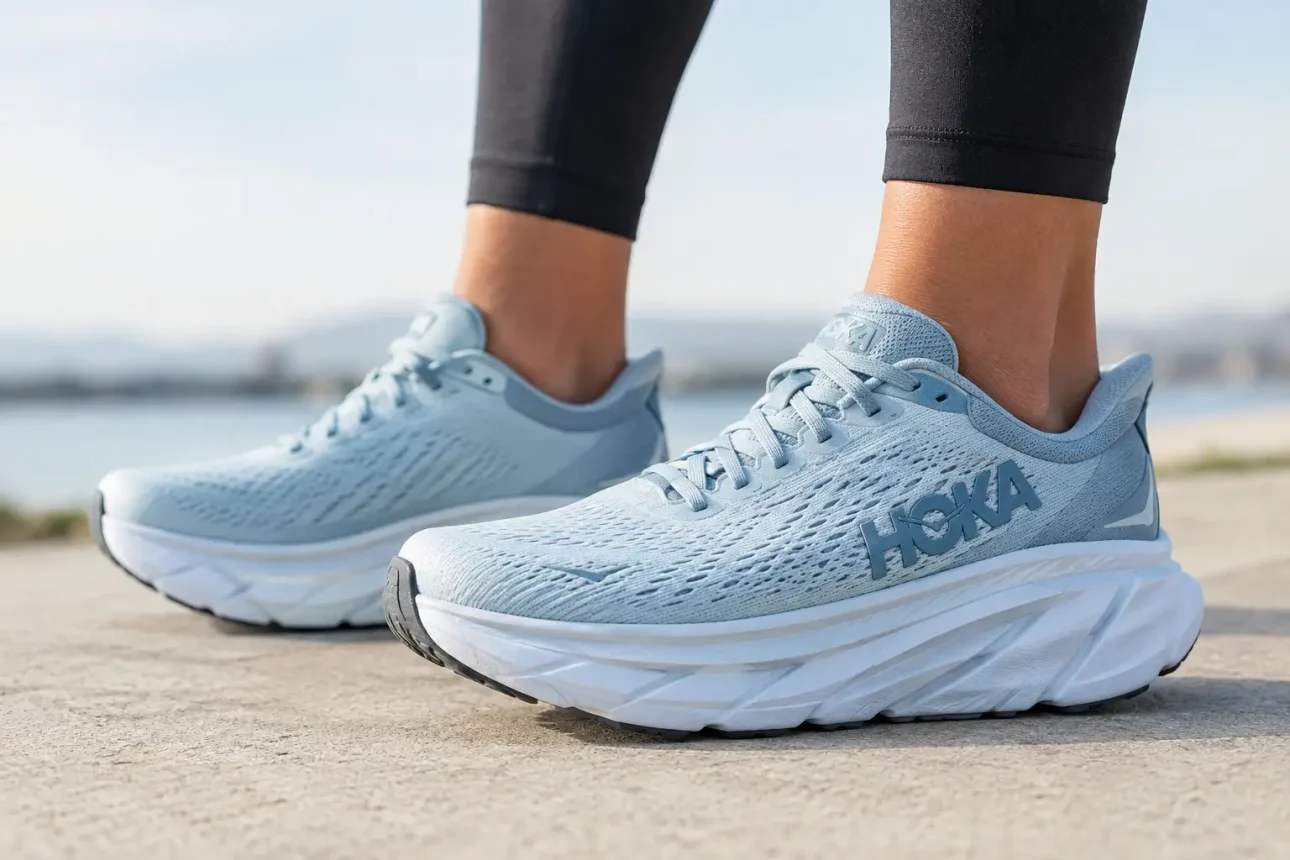
The Hoka Clifton review most people want is simple: is this soft shoe actually good, or is it just everywhere because it looks different? Our answer: it is a solid daily trainer for easy runs, long walks, and long days on your feet. But it is not the fast, snappy miracle some marketing makes it sound like.
The Clifton works because it keeps the ride light and cushioned without turning your foot into a marshmallow. It is easy to wear. That matters more than a wild-looking midsole or a spec sheet full of foam names. If you want one pair for relaxed miles and normal life, we get the appeal. If you want a shoe that feels sharp when you pick up the pace, there are better options.
The Clifton has built its name on a thick-looking midsole that does not feel as heavy as it looks. On foot, the ride is soft but controlled enough for everyday running. Your legs do not get beaten up on easy pavement miles, yet the shoe usually avoids that loose, sinking feeling that makes some max-cushion models feel clumsy.
That balance is why we like it. The Clifton is not trying to be a race shoe, a trail shoe, or a gym shoe. It is built for the boring but useful stuff: three miles after work, a relaxed weekend run, walking the dog, travel days, and standing through a long shift.
The rocker-shaped sole also helps the shoe move along smoothly. You do not need to think about it. Your foot rolls forward without much effort, especially at an easy pace. Runners who land toward the heel tend to notice this most, but plenty of midfoot strikers like the smooth transition too.
It also does a better job than many chunky running shoes at looking clean with casual clothes. The Clifton is still clearly a running shoe. Nobody is confusing it with a retro sneaker. But in a simple colorway, it works with joggers, shorts, or jeans without looking like you forgot to change after a marathon.
Soft cushioning is great until you ask it to do everything. The Clifton does not have the punchy rebound or locked-in aggression of a speed-focused trainer. Push hard through tempo workouts, hill repeats, or fast intervals and it can feel a little flat. Not bad. Just not exciting.
That is the main thing to understand before buying. The Clifton makes easy runs feel easier. It does not make fast runs feel faster.
The outsole grip is another area where expectations should stay realistic. It is fine on dry sidewalks, roads, and normal paths. On wet painted crosswalks, slick tile, loose gravel, or muddy ground, it is not the shoe we would reach for. The exposed foam design helps keep weight down, but it also means the outsole is not built like a tank.
Durability depends heavily on how you use it. Use the Clifton for road running and everyday walking, and it should hold up like a normal lightweight trainer. Drag your feet, run rough trails, or use it as your only gym shoe for lateral work, and you will wear it out faster. That is not a deal-breaker. It just means the shoe has a lane.
The upper generally feels light, breathable, and comfortable straight out of the box. There is enough padding around the collar to keep the heel from feeling raw, while the rest of the upper stays fairly simple. We prefer that over an overbuilt upper that feels hot after a few miles.
Fit is usually true to size for average-width feet. The toe box is not especially roomy, though. If your toes spread a lot when you run or you hate a close forefoot fit, do not assume the standard width will work just because the shoe looks wide from the side. Look for a wide option if it is available in your size.
The heel hold is secure for most runners, but the Clifton is not a stability shoe. It has a broad platform, which helps it feel more grounded than a narrow soft shoe. Still, if your ankles roll inward heavily or you want firm guidance through every stride, this may feel too relaxed. A stability-focused model will make more sense.
One more honest point: Hoka’s tall foam look makes some people expect a super-plush, pillowy ride. The Clifton is softer than a traditional daily trainer, but it is not the softest thing Hoka makes. That is actually a plus for us. The shoe stays more versatile because it does not feel overly squishy.
We would point the Clifton toward runners who want comfort without a brick on their feet. It makes sense for newer runners building mileage slowly, experienced runners needing an easy-day option, and walkers who spend a lot of time on hard sidewalks.
It is also a good pick if you have one shoe budget and your life includes more than running. The Clifton can handle a morning jog, errands, commuting, and a full day of standing without looking or feeling ridiculous. That flexibility is a big part of why it remains popular.
The best match is someone who likes a smooth, protected ride and does most of their miles at conversational pace. Think easy runs, recovery runs, and long steady efforts where comfort matters more than chasing a watch time.
Skip the Clifton if you want a firm, ground-close feel. Some runners want to feel the road and react quickly through turns. The Clifton sits higher and feels more cushioned than that kind of shoe.
We would also skip it as a dedicated speed-day trainer. You can absolutely run fast in it, but the shoe will not give much back when you ask for a hard effort. A lighter, firmer, or more responsive model will feel better for workouts and races.
If you need serious stability, do not buy a neutral shoe and hope the cushioning solves the problem. It will not. The Clifton’s base is reasonably stable for its category, but it is not designed to control major overpronation or replace the support of a stability model.
And if you mostly train on trails, leave it alone. A road outsole on wet roots and loose dirt is a bad combination. You do not need to learn that halfway down a hill.
Compared with a traditional daily trainer from brands like Brooks, ASICS, or New Balance, the Clifton usually feels lighter and more rockered. It encourages a smooth roll through the stride rather than a flat, planted sensation. That can feel great for tired legs, but it may feel odd if you prefer a more natural, flexible shoe.
Against other soft runners, the Clifton lands in the middle. It is not the bounciest. It is not the softest. It is not the most stable. What it does well is stay balanced enough to wear often. That is more useful than being extreme in one direction.
This is also where we think the Clifton earns its price. You are paying for a dependable daily-use shoe, not a piece of flashy tech that only feels good for the first two miles. Still, if you already own a soft recovery shoe and a quick workout shoe, it may overlap with what you have.
The Clifton is popular for a reason, even if the hype can get annoying. It is light, cushioned, easy to wear, and versatile enough for runners and walkers who spend real time on pavement. We would call it a dependable choice, not a magic fix for sore legs or slow splits.
Buy it for easy miles, long walks, and all-day comfort. Skip it if your runs are mostly fast, technical, or stability-dependent. Try it on with the socks you actually run in, pay attention to toe room, and choose the width that lets your feet relax. The right running shoe should feel good at mile one, but what really matters is how your feet feel when the day is almost over.