Cart
No products in the cart.
White sneakers look sharp for about five minutes after you put them on. Then sidewalks, coffee drips, rain, and one bad scuff get involved. Knowing how to clean white sneakers is less about buying a cabinet full of cleaners and more about not treating every material like rubber.
Our rule is simple: clean them early, use less water than you think, and do not throw them in the washing machine because somebody online said it worked once. A pair of canvas beaters might survive. Your leather, suede, glued soles, and shape might not.
Start by checking what the upper is made from. Leather, mesh, canvas, knit, and suede all react differently to water and scrubbing. The sole is usually the easiest part. The upper is where people get impatient and ruin a good pair.
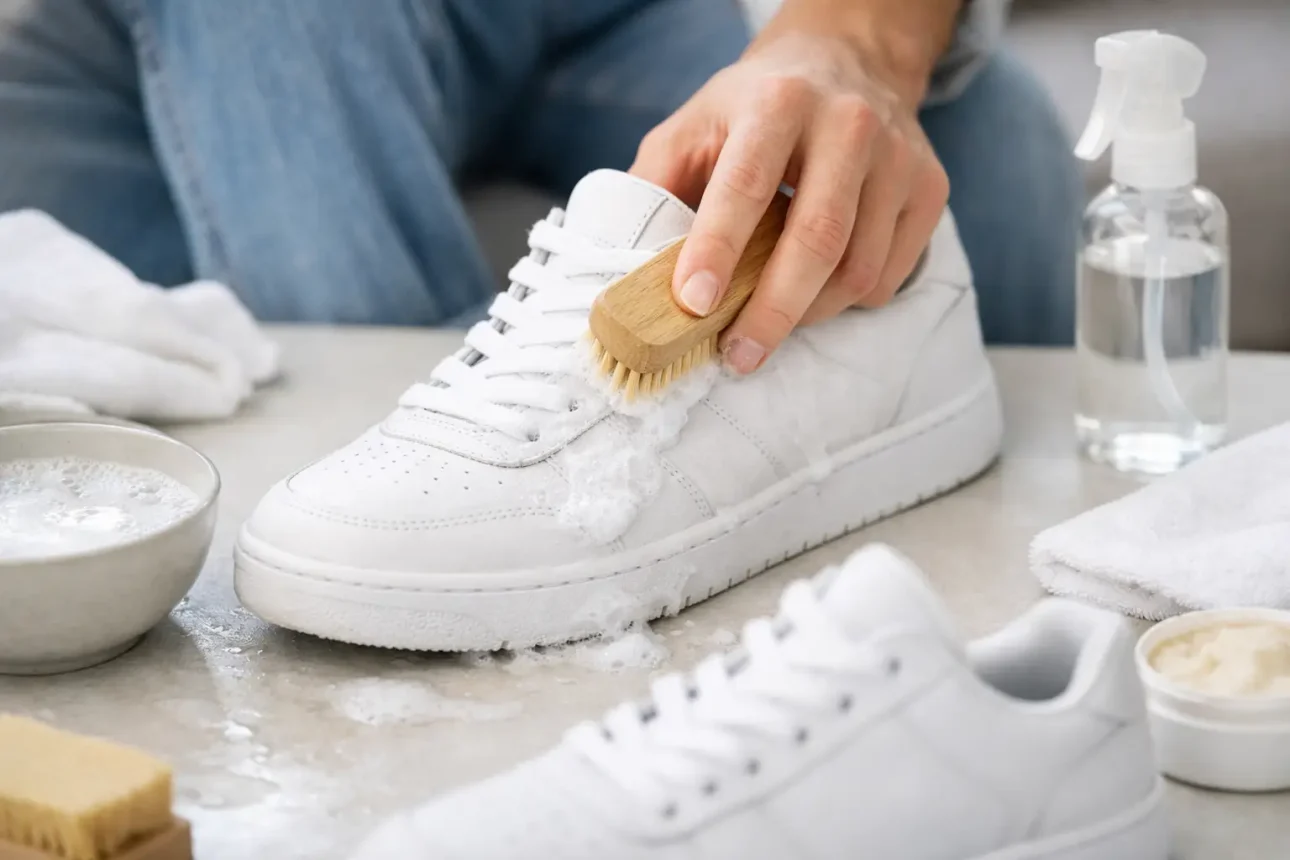
For most white sneakers, you only need a soft brush, a microfiber cloth, lukewarm water, mild dish soap, an old toothbrush for the rubber, and a dry towel. Skip bleach. It can yellow white fabric, dry out leather, and leave a weird patchy finish. Skip harsh all-purpose sprays too. They are made for countertops, not shoes.
Take out the laces and insoles before you do anything. It makes the shoe easier to clean and stops dirt from being pushed farther into the tongue and eyelets. Knock the soles together outside or use a dry brush first. Wet dirt turns into mud fast, which is not helping anyone.
Mix a small amount of mild soap into lukewarm water. We mean a few drops, not a bubble bath. Dip the brush, shake off most of the water, then work in small circles. You want a light foam, not a soaked upper.
Wipe away loosened dirt with a damp microfiber cloth. Then use a separate dry towel to pull out moisture as you go. This part feels slow, but it is what keeps water marks and warped materials from showing up later.
Leather is forgiving until you scrub it like a patio chair. Use a soft cloth or very soft brush with your mild soap mix. Work one panel at a time, especially around creases where grime collects. Wipe the soap away with a clean damp cloth, then dry it right away.
For stubborn scuffs on smooth white leather, a melamine sponge can work, but go easy. It is mildly abrasive. A few gentle passes may lift a mark. Hard rubbing can dull the finish and make one spot look flatter than the rest of the shoe. We would try the cloth first every time.
Once the pair is dry, a small amount of leather conditioner can help if the leather feels dry or stiff. Do not use it on suede, nubuck, mesh, or canvas. Also, do not drown white leather in conditioner. Too much can darken it temporarily and attract dust.
Mesh and knit look clean and light, but they hold onto grime like they have a personal grudge. The trick is patience. Use a soft brush with very little liquid, brushing gently from the outside of the stain toward the center. Aggressive scrubbing can rough up fibers and leave a fuzzy patch that looks worse than the dirt.
For a deeper spot clean, use a cloth dampened with soapy water and blot rather than rub. Keep repeating with clean areas of the cloth. If the stain is still there after a few rounds, let the shoe dry before deciding whether it needs another pass. Wet white mesh can hide marks that become obvious only once dry.
Do not use hot water. It can mess with glue and synthetic fibers. And do not toss knit running shoes in a dryer. The heat is tough on foam, adhesives, and the shape of the upper.
Canvas can handle a little more brushing than mesh, but it still does not need a full soak. Use the same mild soap mix and a soft brush. Focus on stained areas, then wipe with a clean damp cloth until soap residue is gone.
Canvas is the material people are most tempted to bleach. We get it. White fabric plus stain seems like an obvious fix. But bleach often creates yellowing, weakens fibers, and can leave your shoe looking old in a different way. A paste made from baking soda and a little water can help with a stubborn canvas mark, but test it in a small hidden area first and do not grind it in.
Suede is where we take a hard line: do not clean it with soap and water unless you want to gamble with the finish. Use a suede brush when the shoe is dry. Brush lightly in one direction to lift surface dust, then use a suede eraser on small marks.
If you catch a wet stain, blot it immediately with a dry cloth. Do not rub. Let it dry naturally, then brush the nap back up. Salt lines are more annoying and may need a suede-specific cleaner, but random household hacks are a bad bet here. White suede can go stiff, blotchy, or gray fast.
Rubber midsoles and outsoles take most of the visual damage. They are also the safest place to use a firmer brush. An old toothbrush and mild soap will handle everyday dirt. For the textured grooves underneath, work slowly and wipe often so you can see what is actually coming off.
A melamine sponge is useful on white rubber sidewalls, especially for black scuffs. Again, gentle pressure. It is not magic, and rubbing hard enough to erase the texture is not a win. If the rubber has yellowed from age or oxidation, cleaning will improve it but may not make it bright white again. Some yellowing is not dirt. It is material aging, and no amount of rage-scrubbing changes that.
Keep the cleaner off colored paint, printed logos, and suede panels when you work around the midsole. A clean white sole next to a rubbed-off logo is not a good trade.
Laces are easy. Soak them in warm water with mild soap for 15 to 30 minutes, rub them between your hands, rinse, and air-dry. If they stay dingy, replacement laces cost less than the time you will spend trying to rescue them.
Insoles need a lighter touch. Wipe them with a damp soapy cloth, then let them air-dry completely. If they smell bad, sprinkle a small amount of baking soda on dry insoles overnight and brush it off the next day. Do not put soaking-wet insoles back into the shoe. That is how a clean pair starts smelling worse than before.
For the inside of the shoe, use a barely damp cloth. If you have been wearing them hard, let the shoes air out between wears. Cleaning the outside matters, but drying out the inside is what keeps them from getting funky.
Never dry white sneakers on a radiator, with a hair dryer, or in direct hot sun. Heat can yellow white materials, shrink mesh, crack leather, and weaken glue. Stuff each shoe loosely with plain white paper or a clean white towel to hold its shape and pull moisture out. Avoid newspaper if you can. Ink transfers are a stupid way to ruin a freshly cleaned shoe.
Leave them in a ventilated spot at room temperature. Most pairs need overnight drying, and thicker running shoes can take longer. Put the laces back only when the tongue and inside are fully dry.
The easiest clean is the one you barely need to do. Wipe off fresh marks when you get home, especially on leather and rubber. Dirt that sits for two weeks is harder to remove, and it usually takes more rubbing to get it out.
We also think every white pair should have a job. Save your crisp leather lifestyle sneakers for regular days, not muddy trails or rainy festival grounds. Wear the mesh runners for running. Wear the canvas pair when you know they might get beat up. A shoe can be practical and still look good, but pretending all-white suede is built for a wet night out is how regrets happen.
If you only remember one thing, remember this: gentle cleaning done often beats an aggressive deep clean every time. Your white sneakers do not need to look boxed forever. They just need to look like you care enough to keep wearing them.