Cart
No products in the cart.
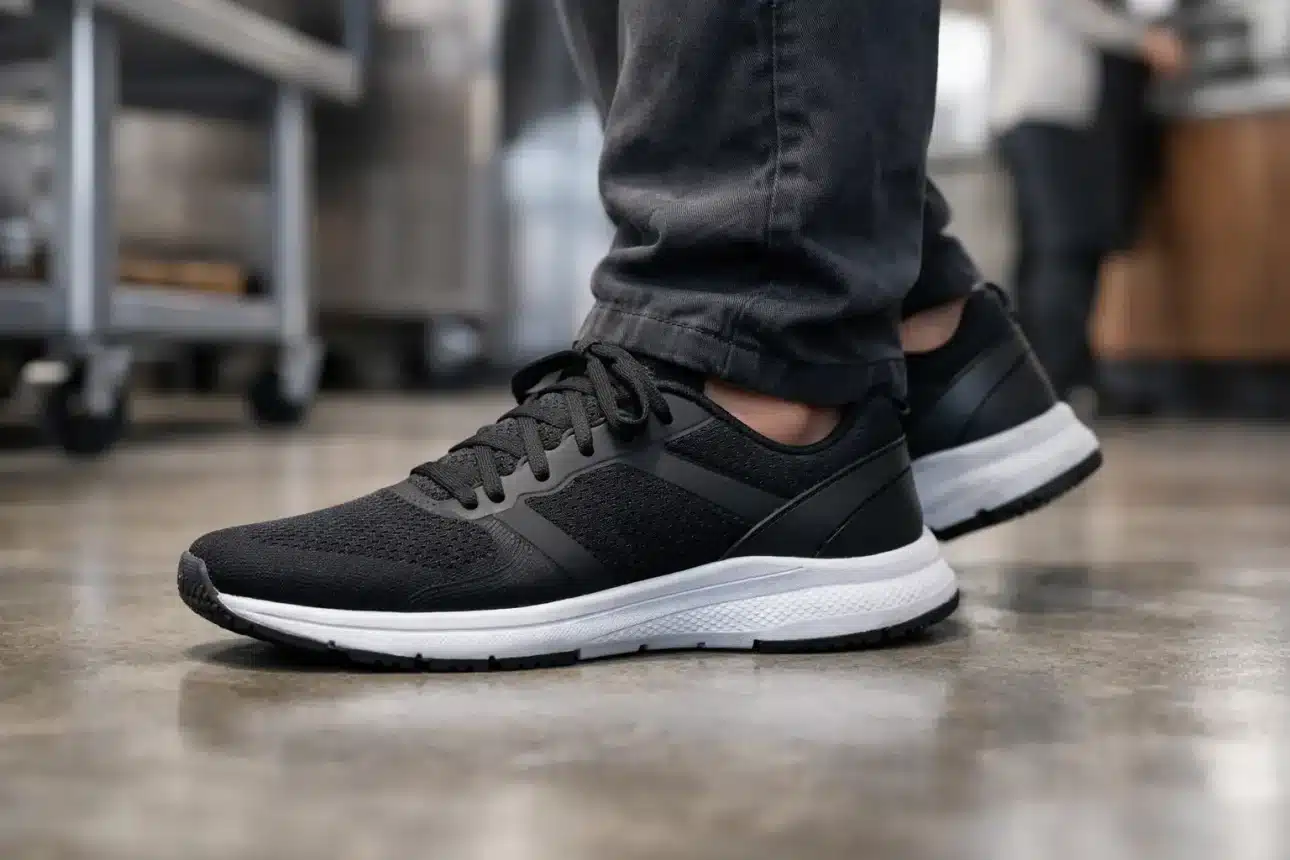
A shift can feel fine at 9 a.m. Then 3 p.m. hits, the floor feels harder than concrete, and every step back to the stockroom feels personal. The best sneakers for standing jobs do not need to look like hospital equipment. They need to keep your feet from feeling cooked before clock-out.
We are not going to pretend one shoe works for every nurse, barista, teacher, warehouse worker, retail associate, or hairstylist. Your floor, body weight, foot shape, commute, and dress code all matter. But some sneaker choices are clearly better than others when you are standing for eight hours or more.
Cushioning gets all the attention. It should not get all of it. A shoe can feel insanely soft for five minutes, then turn wobbly when you have been moving on a hard floor for six hours. For standing work, you want cushioning that absorbs impact without letting your foot sink sideways.
The midsole should feel protective, especially under the heel and forefoot. It also needs a stable base. Look at the outsole from underneath: a wider platform usually gives you a more planted feel than a narrow, curved running shoe.
The upper matters too. A stiff, cramped toe box is a bad deal when feet naturally swell during a long shift. You want enough room to spread your toes without your heel lifting every time you walk. Breathable mesh helps in warm workplaces, though a more structured upper can feel better if you need your foot held firmly in place.
Then there is grip. If you work around spills, kitchens, or polished floors, standard running-shoe rubber is not automatically enough. Check your workplace rules and choose a shoe with a grippy, full-rubber outsole. A soft foam-heavy sneaker with little rubber can feel great, but it may wear down fast on concrete.
They buy the softest shoe in the store.
We get it. Step into a plush foam runner and it feels like a win. But very soft shoes can be tiring if you need stability, carry boxes, make quick turns, or stand still in one spot. Your feet and lower legs have to work harder to balance on a squishy platform.
For most standing jobs, medium-soft cushioning is the sweet spot. It should take the edge off hard floors while still feeling stable under your heel. Think supportive comfort, not a mattress strapped to your foot.
Flat lifestyle sneakers are another common trap. A classic court shoe can look clean with almost anything, but thin soles and limited arch structure are rough for long shifts. Converse Chuck Taylors, Vans Old Skools, and similar flat pairs have their place. A nine-hour retail floor is usually not it. Save them for shorter days, a casual night out, or work where you are mostly sitting.
If hard floors are your main enemy, start here. The Hoka Bondi has a thick, protective platform and a broad base that works well for people who want a lot of cushion without feeling completely loose. It is not the sleekest shoe in the room. We do not care. At the end of a long shift, your feet will care less about sleek.
The New Balance Fresh Foam X 1080 is softer and more flexible. It feels good for workers who move around a lot and want a plush ride, not a stiff platform. The trade-off is that softer foam can feel less steady for some people, especially if you prefer a very locked-in shoe.
The Brooks Ghost is not flashy. That is part of why we like it. It has dependable cushioning, a stable feel, and a fit that works for plenty of foot shapes. It is a solid choice for teachers, retail workers, and anyone walking a lot between periods of standing.
The ASICS Gel-Nimbus is more cushioned and often feels a little more padded around the foot. It is a strong option if your shifts involve miles of walking, but it can feel bulky if you prefer a low-profile sneaker. Neither is a fashion-first pick. Both are better at doing the job than pretending to be cool.
Some people feel better in a shoe that gives them more structure through the arch and heel. The Brooks Adrenaline GTS and ASICS Gel-Kayano are worth trying if your current sneakers feel unstable or your ankles tend to roll inward as the day goes on.
That does not mean everyone needs a support shoe. If you have a neutral stride and feel fine in standard running sneakers, extra structure can feel intrusive. Try them on. Walk around. Your feet will tell you quickly if the guidance feels helpful or annoying.
Not every job lets you wear a chunky max-cushion runner without getting side-eye. The New Balance 990 line is a good middle ground. It has more underfoot support than a flat retro sneaker, a durable build, and a look that works with jeans, chinos, and workwear. It is pricier than many options, so it makes the most sense if you will wear it far beyond your shifts.
The On Cloudrunner has a sharper, lighter look than many traditional support shoes. It feels firm compared with a Bondi or 1080, which some people genuinely prefer for standing. If you want soft, it may disappoint. If you want a stable shoe that does not look like a medical device, it is worth a look.
A good model in the wrong size is still a bad work shoe. Try sneakers later in the day if possible, when your feet are closer to their shift-size. Leave about a thumb’s width in front of your longest toe. Your heel should stay put, and the forefoot should not feel squeezed from the sides.
Do not buy a narrow shoe hoping it will stretch enough. Some mesh gives a little. Most structured running shoes do not transform into a wide fit. If the shoe comes in wide sizing, use it. There is no prize for forcing your feet into a standard width.
Your socks count too. Thin dress socks can make a shoe feel roomier, but they may also create more friction and less cushion. Wear the socks you actually work in when trying on pairs. Boring advice, but it saves returns.
An insole can improve a shoe that is almost right. It cannot turn a flat, worn-out sneaker into a proper standing shoe. If the midsole is compressed, the outsole is uneven, or the upper no longer holds your heel, replace the pair.
A basic cushioned insole can add comfort in a firmer sneaker. A shaped insole can help if you like more arch contact. But do not stack a thick insole inside a shoe that already fits snugly. Less space equals more pressure, and that is the opposite of what you want halfway through a shift.
If foot pain is persistent, sharp, or getting worse, a sneaker recommendation is not a diagnosis. Check in with a qualified clinician rather than trying to shop your way around a problem.
Standing jobs burn through shoes faster than casual wear. Rotate two pairs if you can. Foam gets a chance to rebound, the inside dries out, and you are not asking one shoe to carry every shift of the week.
Watch for the signs that a pair is done: the heel leans to one side, the tread is smooth in key spots, the cushioning feels flat, or you notice more fatigue than you did a few months ago. A sneaker can still look clean while being finished as a work shoe.
At Sneakerness, we like a pair that works hard without making your outfit look like an afterthought. Pick the shoe that feels stable at minute one and still has enough room when your feet swell later. Your shift is long enough. Your sneakers should not make it longer.