Cart
No products in the cart.
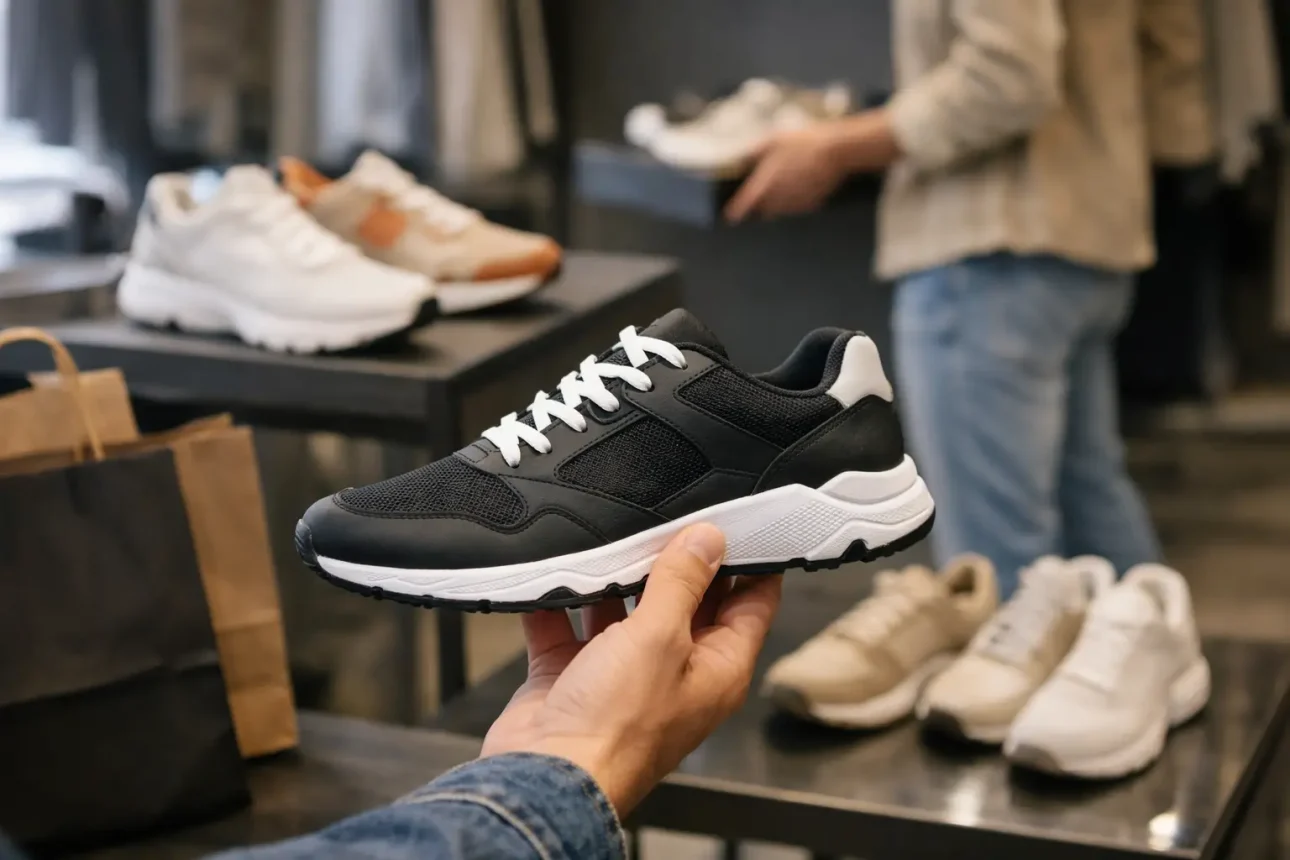
A sale price can make almost any sneaker look better than it is. That is how closets end up with stiff runners in a weird color, a pair half a size too small, and one “deal” you have not worn since the day it arrived. Knowing how to shop sneaker sales is less about chasing the biggest percentage off and more about spotting a pair you will actually use.
We like a bargain. We just do not think a cheap sneaker is a good buy if it does nothing for your feet, your wardrobe, or your daily routine.
Start with the shoe, not the red price tag. A 40% discount on a pair you do not like is still money spent on something you do not want. Brands and stores put perfectly good sneakers on sale for boring reasons: a new colorway is out, the season changed, or they have too many units left. That does not make the shoe bad.
But sales also collect the stuff people passed over for a reason. Neon colorways. Odd materials. Sizes that run strangely. Old models with a sole that was never comfortable in the first place. Be honest with yourself. If you would not look twice at the shoe full price, you probably do not need it at 30% off.
A better question is simple: would you wear this next week? Not on vacation someday. Not after you buy the exact outfit that makes it work. Next week, with the clothes you already own.
Before opening a sale page, decide what job the sneaker needs to do. Maybe you want a clean everyday pair for jeans and joggers. Maybe you walk a lot, stand through long shifts, or need a running shoe to replace one with a worn-down outsole. Those are different purchases.
For an everyday sneaker, looks and easy wear matter most. A neutral Adidas, Nike, New Balance, Puma, or Onitsuka Tiger style can make sense because it works without much planning. White, gray, black, navy, gum soles, and muted earth tones get worn. They may not make people stare at your feet, but that is not the point. They earn their place.
For long days on your feet, skip a shoe just because it has a famous logo or a chunky sole. Look toward walking and running models from brands such as Hoka, Brooks, ASICS, On, or New Balance. Some of these are not the sharpest shoes in the room. A few are honestly a little ugly. But if your feet are tired by 5 p.m., a cleaner-looking flat sneaker is not automatically the better choice.
For actual runs, buy a running shoe. Retro basketball shoes and fashion runners can look great, but they are not substitutes for a pair built to handle repeated miles. Sale shopping is a good time to replace an older running pair, especially when a new version has pushed the previous one down in price.
The best sale sizes disappear first. That creates pressure, but guessing your size is how you turn a deal into a return.
Use pairs you already own as your reference point. Think about the exact model family when you can, not just the brand. Nike can fit narrow in some lifestyle styles. New Balance varies by model and width. ASICS running shoes may feel different from their casual sneakers. Hoka often feels roomy in the toe box for some people, while others still need to size up for running space. There is no universal answer because feet are not universal either.
If a shoe is new to you, check the fit notes and compare its shape to something you wear comfortably. Narrow feet can often get away with a more fitted upper. Wide feet should not talk themselves into a tight shoe because it is the last pair left in their size. That usually ends with sore toes and a box in the corner.
Do not size down because the deal is good. Do not size up two full sizes because you plan to wear thick socks. Both ideas sound reasonable at checkout and feel ridiculous once the shoes arrive.
Try to picture when you will wear the pair. Your feet can swell after walking, commuting, or standing for hours. A sneaker that feels perfect while you are sitting at home may feel cramped later. For running, most people need a little space ahead of the toes. For casual wear, a secure fit matters, but your toes should not be pressed against the front.
If you are between sizes, the right call depends on the shoe. A structured leather retro sneaker may loosen a bit with wear. A narrow knit runner may not loosen in any useful way. Do not expect a shoe to change into a different fit just because you want the sale to work.
“Was $180, now $100” looks good. But the only number that matters is whether $100 is fair for that shoe and your budget. A discount percentage is marketing math. Your bank account does not care what the original price was.
Compare similar models, not random sneakers. A sale on a premium daily trainer might be worth it if you were already planning to buy one. A basic canvas sneaker at the same price probably is not. Think about cost per wear, but do not make it complicated. If you can see yourself wearing a pair twice a week for a year, spending a little more for the right fit and color is usually sensible.
Also check what is included in the final total. Shipping costs, taxes, and return rules can change a deal fast. Free shipping is useful, but a clear return policy matters more when you are trying an unfamiliar model. At Sneakerness, we would rather help you land on a pair you keep than push a sale shoe that is wrong for you.
Sale sections are full of loud colors because loud colors are harder to sell. That is not a rule, and a bright pair can be fun. But it should be a choice, not an accident caused by a discount.
If this is your main pair, stay practical. White and light gray look clean but need more upkeep. Black hides dirt and works well for commuting or work. Navy, brown, olive, and cream are easy alternatives when plain white feels too basic. A small hit of color is easier to wear than a full neon upper.
Materials matter too. Suede looks sharp, especially in darker colors, but rain and messy sidewalks are not kind to it. Mesh breathes better and often feels lighter, though it can show dirt quickly. Leather is usually easier to wipe down, but some leather sneakers need a break-in period. There is no perfect material. Pick the one that matches your actual life, not the version of your life where every sidewalk is clean.
Scrolling every discounted shoe is a fast way to convince yourself you need four pairs. Narrow the options early by size, category, brand, color, and price. You are not missing out by filtering. You are avoiding the weird stuff that only looked tempting because it was 55% off.
Keep a short mental list of models you already like. When one goes on sale, you can act with a clear head. This works better than trying to learn every sneaker on the page in five minutes. If you know you like a certain New Balance runner, a clean Adidas terrace shoe, or a dependable Brooks walking model, the sale becomes simple: right size, right color, right use, fair price.
It is also fine to leave a pair in your cart for a night if stock is not clearly low. Good shoes go on sale again. Not always in your size or favorite color, sure. But buying a sneaker you do not love just to avoid missing a deal is exactly how bad purchases happen.
Previous versions of running and walking shoes are often where the real value sits. The newest version may have small changes, a new upper, or a fresh color palette. Sometimes those updates are useful. Sometimes the brand changed very little and raised the price anyway.
If the older model fits you well and has the support and cushioning you need, it is usually the smarter buy. We would take a proven shoe at a fair sale price over a brand-new model bought just because it is new. The exception is when the new version fixes a fit problem you had with the old one. If the previous shoe pinched your toes or rubbed your heel, do not buy it again simply because it is cheaper.
A sneaker sale should make a good choice easier, not turn a bad choice into a “maybe.” Buy the pair that fits your life, fits your feet, and still looks good once the discount tag is gone.