Cart
No products in the cart.
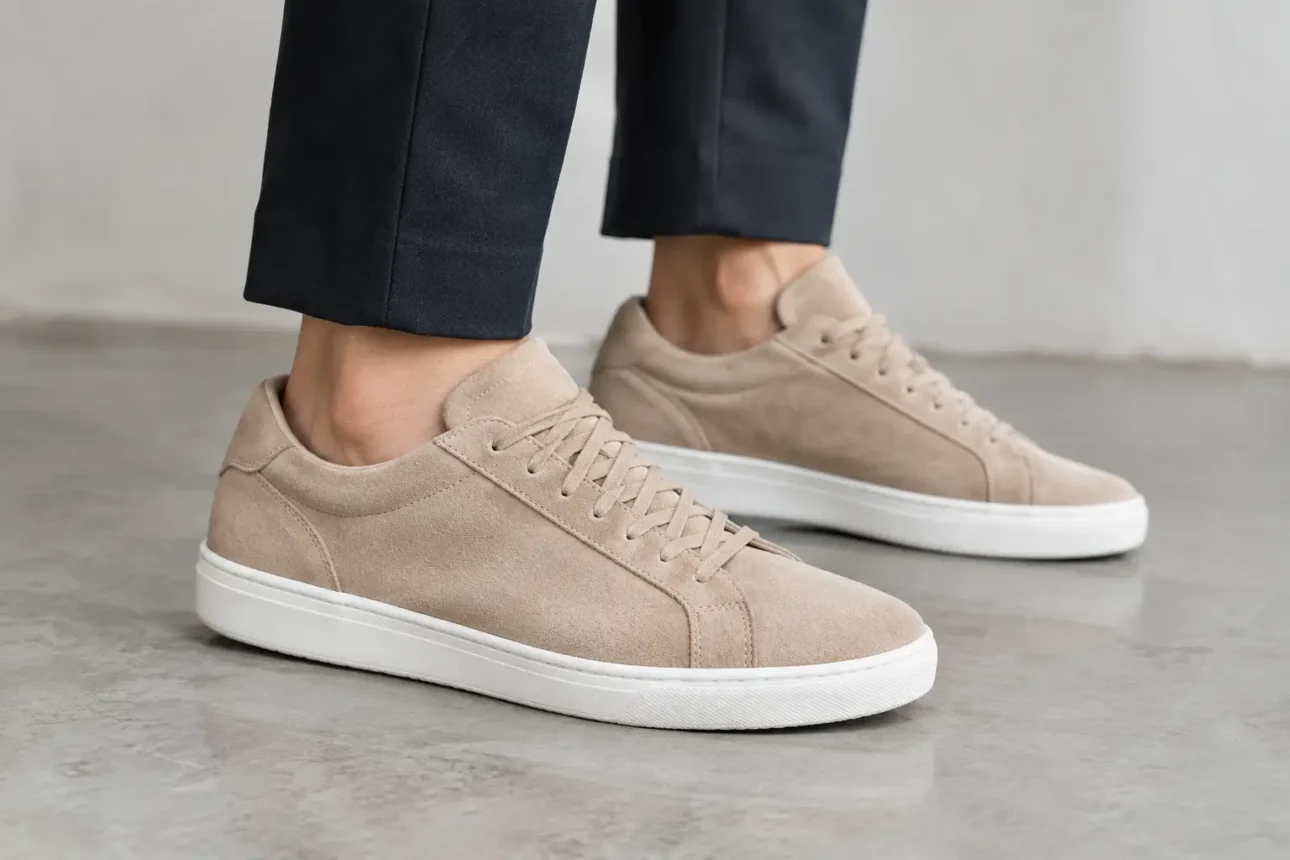
A clean pair of suede sneakers can make a basic outfit look intentional. Jeans, a plain tee, and a good suede shoe is often enough. But suede has one obvious downside: it looks amazing right up until you walk through a puddle, scrape a curb, or let a stain sit for two weeks.
We still think suede is worth it. You just have to buy it for the life you actually live, not the life where every sidewalk is dry and nobody spills coffee.
Leather sneakers can be clean, but they can also look stiff. Mesh is practical, especially for running, but it rarely gives an outfit much shape. Suede sits in the sweet spot. Its soft, matte finish adds texture without shouting for attention.
That texture is why suede works so well in neutral colors. Gray, navy, olive, tan, brown, cream, and black all look richer in suede than they do in smooth leather. A gray suede sneaker with faded denim has more going on than a plain white court shoe, even if the rest of your outfit is simple.
The catch is that suede is less forgiving. Smooth leather lets you wipe off a mark and move on. Suede holds onto dirt, water rings, and oily stains if you ignore them. So no, it is not the best pick for a rainy commute or a job where you are outside all day. If that is your routine, go for leather, ripstop, or a darker mesh shoe instead.
For dry-weather daily wear, though, suede is hard to beat. It looks broken-in in a good way. Not sloppy. Just less like it came straight from a box.
The best suede shoe is not always the most delicate-looking one. A pale beige pair can look sharp, but it demands more attention than most people want to give a sneaker. If you want a pair you can grab three or four times a week, gray, dark brown, navy, charcoal, or olive makes more sense.
We like gray suede most for a first pair. It works with black denim, blue jeans, chinos, cargos, and joggers. It also hides everyday dust better than cream or light tan. That is not glamorous advice. It is useful advice.
Low-profile retro runners and terrace-style sneakers are easy to wear because they sit close to the ground and do not dominate your outfit. They work with straight-leg jeans, relaxed pants, shorts, and even cleaner casual looks. Think of them as your reliable off-duty shoe.
Chunkier suede runners have more presence and usually feel better for long walking days. The trade-off is simple: they can look heavy with skinny pants or short, tight joggers. Give them some room. Relaxed denim, wider cargos, and fuller sweatpants tend to balance them better.
Suede basketball-inspired shoes are often the hardest to keep clean because they have bigger panels and usually sit lower to the ground. They can still be worth it if you like that look, but do not pretend they are a low-maintenance white sneaker alternative. They are not.
Some sneakers use suede as an overlay on a mesh running upper. Others are mostly suede and built for casual wear. The first type can handle a busy day better, especially if the shoe has a proper foam midsole and a grippy outsole. The second is usually about style first.
If you are walking a lot, standing through long shifts, or traveling, check what is under the suede. A nice upper does not make a flat, firm shoe comfortable after eight hours. What matters is how your feet feel at 5 p.m., not how good the shoe looked in your mirror that morning.
Suede already brings texture, so it looks best when the rest of the outfit stays fairly simple. You do not need matching suede accessories or a carefully coordinated color palette. That can get costume-like fast.
A gray or navy pair works with blue denim and a sweatshirt. Brown suede looks strong with faded black jeans, olive pants, or ecru denim. Cream suede is good with lighter washes, khaki, and navy, but it needs cleaner surroundings. A beat-up cream pair next to muddy jeans just looks tired.
Black suede is a good option if you want something more understated than black leather. It has depth and does not look as shiny. Still, black suede collects lint and dust. Keep a brush nearby, especially if you wear a lot of black pants. A shoe covered in pale fuzz does not look lived-in. It looks neglected.
For warm weather, low-cut suede sneakers with crew socks, relaxed shorts, and a plain shirt are enough. Skip the no-show sock struggle unless you truly like that look. Crew socks are easier, more comfortable, and less likely to slide under your heel halfway through the day.
There is one styling mistake we see a lot: wearing delicate, light suede shoes with clothes meant for bad weather. If you have waterproof cargo pants, a heavy shell, and a soaked sidewalk outside, wear your tougher sneakers. Suede does not need to prove anything.
Most suede disasters happen because someone waits too long. A quick brush after a few wears takes less than a minute. Trying to rescue a dirty pair six months later is a whole project.
Before you wear a new pair out, use a suede-safe water and stain protector. Let it dry fully indoors, away from direct heat. This does not make the shoe waterproof. It gives you a little time to blot off a splash before it settles in. That is useful. It is not magic.
A soft suede brush is the main tool worth owning. Brush gently in one direction to lift dust and revive the nap, which is the fuzzy surface that gives suede its look. If a spot looks flattened, a light pass in different directions can bring the texture back.
For a dry scuff, a suede eraser usually does more than people expect. Rub lightly, then brush away the residue. Do not attack the shoe like you are sanding furniture. Too much pressure can leave a lighter patch.
If you get caught in rain, stuff the shoes loosely with plain paper and let them air-dry at room temperature. Do not put them on a radiator. Do not blast them with a hair dryer. Heat can stiffen the material and leave the surface looking uneven. Once they are dry, brush them gently to bring the texture back.
Oil stains are harder. Cornstarch can help absorb fresh oil if you leave it on the spot overnight, then brush it away the next day. Old oil stains may never disappear completely. That is the honest answer. If that kind of imperfection will drive you crazy, do not buy light suede.
We like suede, but we are not going to sell you a fantasy. Skip it when the forecast is wet for weeks, when you need one shoe for muddy parks and city walking, or when you know you will not clean it at all. There are plenty of leather and technical sneakers that will take more abuse and still look decent.
Also skip suede if you only want one pair of shoes for everything. It is not a gym shoe, a trail shoe, or a rain shoe. It is a good everyday casual sneaker when the conditions make sense.
At SneakerNess, we would rather see you wear a suede pair often and take basic care of it than keep it boxed up for perfect weather. A few small marks are normal. The goal is not to make suede sneakers look untouched forever. It is to keep them looking like your favorite pair, not your most regretted one.