Cart
No products in the cart.
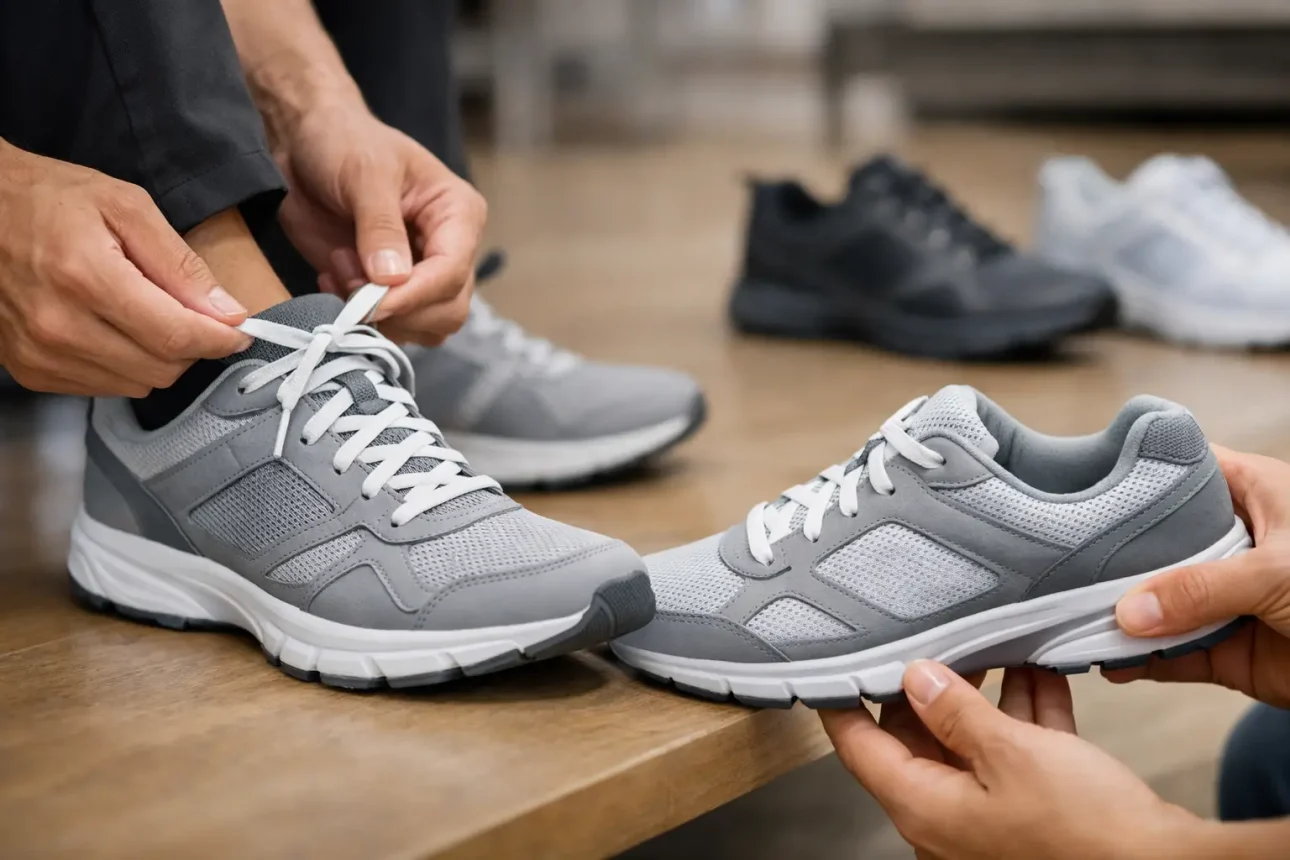
That “fine for a few minutes” feeling is exactly how people end up with walking shoes they hate by lunchtime. If you’re trying to figure out how to pick walking shoes, ignore the marketing and pay attention to what your feet are doing after an hour, not after one lap around the store.
A lot of shoes can pass the first impression test. Soft step. Clean look. Nice color. Then you wear them for a real walk and suddenly your heel slips, your toes feel boxed in, or the midsole turns flat fast. That’s the difference between a shoe that sells well and a shoe that actually works.
We’d keep it simple. A good walking shoe should do three things. It should fit right from the start, feel stable when you’re moving, and still be comfortable after your feet warm up and swell a bit. If one of those is missing, move on.
People get stuck chasing tech terms. Most of that stuff matters less than basic fit. You do not need the most cushioned shoe on the shelf. You do not need the trendiest retro pair either. Some lifestyle sneakers look sharp with everything and still wear terribly for actual walking. We like a clean shoe as much as anyone, but if you’re logging real miles, comfort wins.
The first thing we look at is shape. Not the silhouette for style – the actual shape of the shoe where your foot sits. If the toe box pinches when you’re standing still, it won’t magically get better later. If your heel lifts with every step, that small annoyance gets old fast.
This part gets skipped all the time. Before you buy anything, be honest about what the shoe is for. A 20-minute dog walk is not the same as a city day, a theme park day, or an eight-hour shift on hard floors.
If you’re mostly walking on pavement, you want enough cushioning to take the edge off, but not so much that the shoe feels mushy. Too soft can feel good for five minutes and weird for five miles. If you’re on your feet all day, stability matters more than people think. That planted, steady feel is what keeps a shoe from getting annoying late in the day.
If your walking is casual and mixed with everyday wear, a lighter all-around sneaker usually makes more sense than a maxed-out performance model. On the other hand, if you’re doing long walks on purpose, don’t buy a fashion sneaker and hope for the best. That’s how you waste money twice.
A lot of people assume more foam means more comfort. Sometimes yes. Sometimes not at all. Thick, super-soft midsoles can feel great underfoot, but they can also feel unstable if you like a firmer, more grounded step.
We usually tell people this: if you want a soft ride and your walks are longer or on hard surfaces, more cushion can be worth it. If you want control, balance, and a shoe that feels less bulky, go moderate. There isn’t one correct answer here. It depends on what feels natural to you.
A walking shoe should bend where your foot bends. Sounds obvious. Still gets ignored.
If a shoe is too stiff through the forefoot, your stride can feel awkward. If it’s too floppy, it may feel cheap and tired fast. The sweet spot is a shoe with some structure through the middle and enough flex up front to move naturally.
You can talk about foam, outsoles, and brand names all day. If the fit is off, none of it matters.
Your toes need room to spread a little. Not swim around. Not hit the front. Just enough space so your foot doesn’t feel trapped. A lot of people buy walking shoes too small because they like a snug first try-on. Bad move. Feet swell through the day, especially if you’re actually walking in them.
Your heel should feel secure without needing to crank the laces like crazy. If you’re already fighting heel slip in a fresh pair, that’s not a great sign. A good walking shoe should feel locked in without drama.
Width matters too, and plenty of people ignore it because they’ve always bought the same size. Length and width are not the same thing. If the sides of your feet feel squeezed, or you get that bulging-over-the-midsole look, try a wider fit instead of sizing up. Going longer when you really need width just creates a different problem.
Morning feet and evening feet are not the same. If you test shoes when your feet are at their smallest, you might end up with a pair that feels tight by dinner. We trust late-day fit more because it’s closer to real life.
And wear the kind of socks you’d actually use. Thin no-shows and thick athletic socks can change the fit more than people expect.
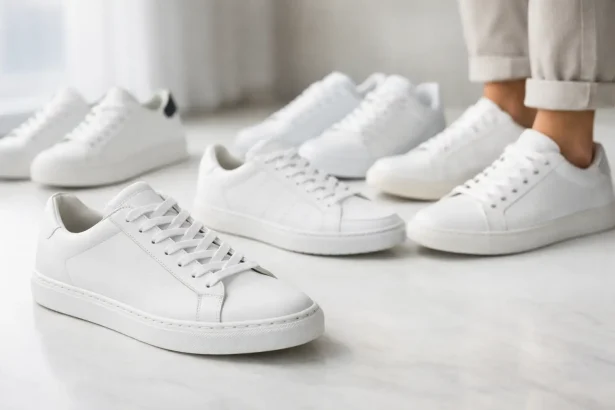
We’ll say it straight. Some of the best-looking sneakers are bad walking shoes. Flat cupsoles, stiff uppers, minimal support – great for a coffee run, not so great for a long day on concrete.
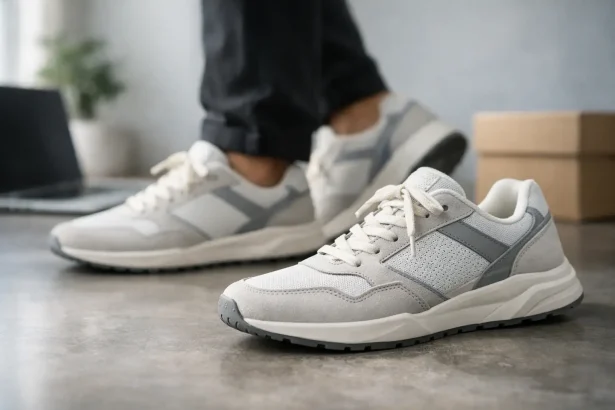
That’s not us saying ugly shoes are the answer. Plenty of walking-friendly pairs still look clean. The trick is not forcing a style shoe into a job it wasn’t built for. If you want one pair for everything, go for something that sits in the middle: sporty enough to perform, simple enough to wear with normal clothes.
This is where a lot of cross-brand shopping helps. Different brands shape their shoes differently. Some run narrow. Some feel roomy. Some lean soft. Some stay firmer and more stable. We wouldn’t marry yourself to one logo if the fit isn’t there.
Heavy shoes aren’t always bad, but they do feel different after a few miles. If the shoe feels clunky in your hand, there’s a good chance it’ll feel clunky on foot too. For everyday walking, we usually like something light enough that you stop noticing it.
The upper matters more than people think as well. A soft, breathable mesh can feel great in warm weather and break in easily. A more structured upper can add security, but if it’s stiff in the wrong spots, you’ll know fast. This is one of those trade-offs. More structure can mean more support. It can also mean less forgiveness.
If your feet run hot, don’t ignore breathability. A shoe that traps heat gets uncomfortable even if the cushioning is solid.
The biggest mistake is buying for the first five steps. The second biggest is buying shoes that solve the wrong problem.
If you’re walking a lot, skip flat fashion sneakers with thin soles. They might look clean in photos, but they usually don’t feel great deep into the day. We’d also be careful with super-soft shoes that feel like pillows at first touch. Some are excellent. Some just collapse and get sloppy.
Another thing to avoid is hoping a bad fit will break in. Modern sneakers do not usually transform that much. A little softening, sure. A total shape change, no. If it rubs, pinches, or slips right away, believe it.
Expensive doesn’t always mean better for walking. Sometimes you’re paying for hype, materials, or a name. Sometimes a more reasonably priced pair just fits your foot better and does the job.
We’d rather see you in a solid shoe that suits your routine than in an overhyped one that sits in the closet after two wears.
Ask yourself a few blunt questions. Does the shoe feel good without needing excuses? Can you picture wearing it for the kind of day you actually have? Does it feel stable when you walk, not just soft when you stand still? If the answer is shaky, keep looking.
And trust your feet over reviews. Reviews can help, but they can’t tell you how your heel sits, how your toes spread, or whether the arch feels right for you. Walking shoes are personal. What feels amazing to someone else can feel completely wrong on your foot.
If we had to boil it down, this is it: pick the pair that feels natural, not the pair with the loudest claims. The right walking shoe shouldn’t need a sales pitch. It should just make you want to keep walking.