Cart
No products in the cart.
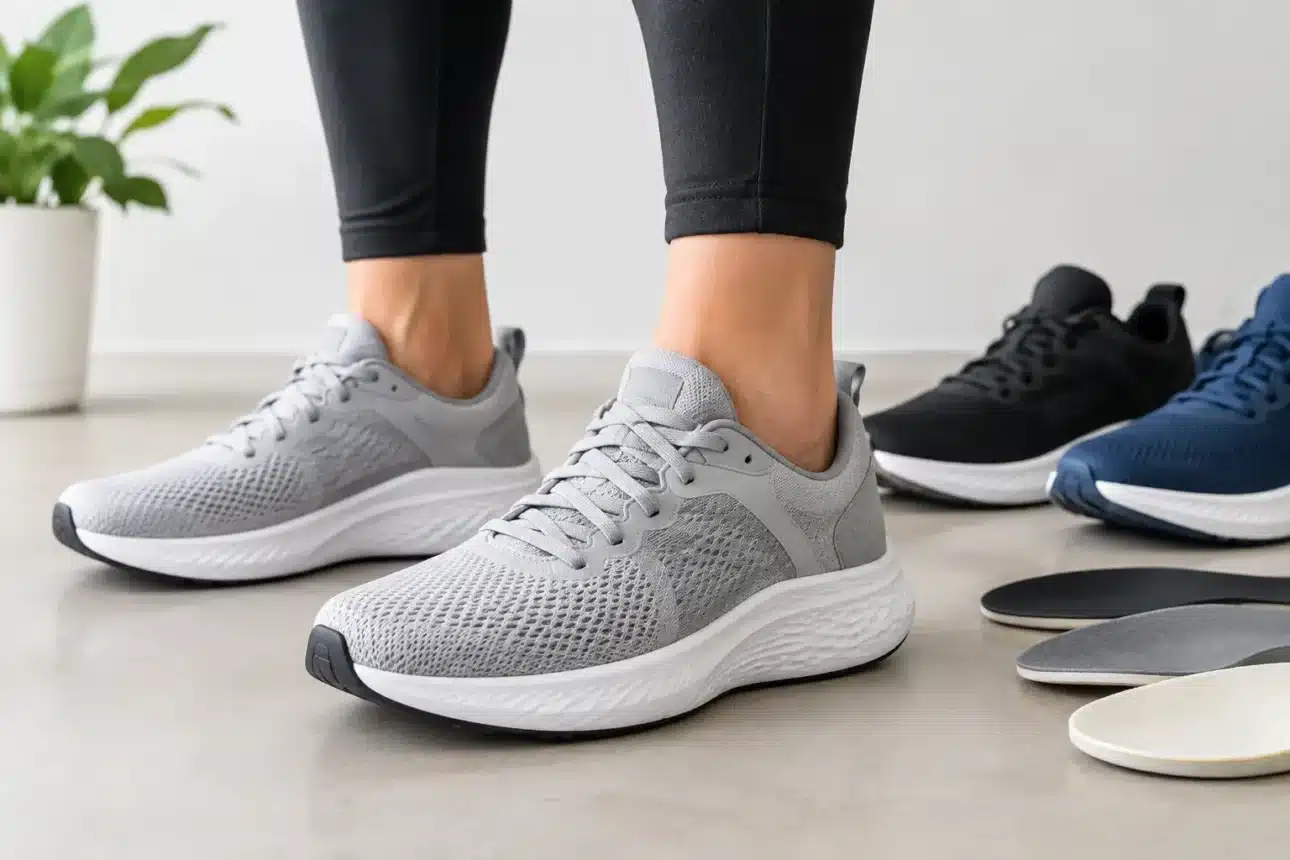
A shoe can be your usual size and still be completely wrong for your feet. That is the part most people miss. This walking shoes width guide is here to help you spot the difference between a shoe that feels snug in a good way and one that will have you thinking about your feet by lunchtime.
Length gets all the attention. Width is what decides whether your toes can spread, your forefoot stays calm, and your walk feels natural after a few miles. If you walk to work, stand all day, travel, or just want a clean sneaker that does not feel like a vice, width matters more than most product pages admit.
Your foot does not stay the same size from breakfast to 5 p.m. It usually expands as you walk and stand. Heat, long days, thicker socks, and a lot of pavement can all make a shoe that felt fine in the morning feel tight later on.
A narrow fit can press the sides of your forefoot and crowd your toes. Go too wide, though, and your foot can slide around inside the shoe. That creates rubbing, makes the shoe feel sloppy, and can leave you gripping with your toes just to stay stable. More room is not automatically better. The right amount of room is.
We see people size up in length because the front of the shoe feels tight. Sometimes that works. Often, it just leaves them with extra space past the toes and a heel that slips. If the shoe is long enough but squeezes across the ball of your foot, you probably need more width, not another half size.
Most adult shoes use letters to describe width. The labels are not perfectly consistent between brands, which is annoying, but the basics are useful.
For many men’s shoes, D is standard width and 2E is wide. Some brands also make 4E, which is extra wide. For many women’s shoes, B is standard width and D is wide. A narrow women’s width is often AA or 2A. Brands sometimes label shoes as regular, wide, or extra wide instead of using letters.
That does not mean a men’s D and a women’s B are built on exactly the same foot shape. It also does not mean every wide shoe feels equally wide. One brand may add volume through the toe box, while another adds it through the midfoot or heel. Treat the label as a starting point, not a promise.
If you buy unisex sneakers, check the size chart carefully. A unisex shoe often follows men’s sizing and width conventions. A person who usually wears a women’s standard width may find that fit roomier than expected, especially through the heel.
A wide toe box is helpful if your toes feel crowded. But the rest of the upper matters too. Some shoes are narrow through the midfoot, even with a decent amount of space up front. Others have a secure middle and a relaxed forefoot, which tends to work well for walking.
Heel shape matters as well. A shoe can have plenty of room up front but still rub your heel if the collar is too loose or cut too high. This is why we do not recommend buying based on width letters alone. Put the shoe on and judge the whole fit.
You do not need a foot scanner or a lecture on anatomy to tell when a shoe is squeezing you. Your feet will make it obvious.
Look for pressure along the sides of the forefoot, especially around the little toe and the base of the big toe. If the upper bulges outward over the midsole, the shoe is working too hard. Numbness, tingling, hot spots, and deep sock marks after a normal walk are also bad signs. Do not write them off as a break-in period.
A little stiffness in a new shoe is normal. A shoe that pinches from the first try-on rarely turns into a favorite after two weeks. We are not fans of buying footwear that requires suffering as a personality test.
Another clue is how your foot looks when you take the shoe off. If the sides are visibly compressed or your toes have been pushed together, the fit is off. A soft knit upper may feel forgiving at first, but stretched fabric does not change the shape of the midsole underneath. If the platform is too narrow, a soft upper only hides the problem for a while.
Start with length. You want roughly a thumb’s width of space between your longest toe and the front of the shoe while standing. Your longest toe is not always your big toe, so check both feet. Fit the larger foot, not the smaller one.
Then focus on the forefoot. Your toes should lie flat and move a little. They do not need acres of empty space, but they should not be stacked, curled, or pressed into the sidewall. When you shift your weight forward, the shoe should not trap the sides of your foot.
The midfoot should feel secure without a sharp line of pressure across the top. Your heel should stay mostly in place when you walk. A tiny amount of movement can be normal, especially in a softer running-inspired sneaker. Repeated lift that rubs your heel is not.
Try shoes later in the day if you can. That is when your feet are closer to their walking size. Wear the socks you actually plan to use. Thin no-show socks and cushioned crew socks can change the fit more than people expect.
If you are trying on a new pair at home, walk on a clean indoor surface for five to ten minutes. Stand still, then walk normally, take a few stairs if you have them, and pay attention to the first places you feel pressure. Do not just admire the mirror angle.
Check that you can wiggle your toes. Press lightly on the front to confirm you have space ahead of the longest toe. Look at the upper from above and from the side. If it is pulling hard across the widest part of your foot, do not convince yourself it is fine because the color looks sharp.
Also test both shoes. Most of us have one foot slightly larger or wider than the other. It is common. Fit for the foot that needs more room.
Choose a wide width when the shoe is long enough but tight across the forefoot or midfoot. That is the clean answer. Sizing up can give a bit more overall room, but it also moves the flex point away from where your foot bends and can cause heel slip.
Sizing up makes sense when your toes are hitting the front or you are right at the end of the shoe. It can also work if a model runs short overall and only comes in one width. But if you are adding a full size just to stop side pressure, move on or find a wide option. The wrong shape is the wrong shape.
Lacing can help with small fit issues. Loosen the lower eyelets if the midfoot feels tight, or use a heel-lock lace pattern if the heel moves. It cannot make a narrow shoe truly wide. Laces adjust the upper. They do not widen the sole.
Some brands have a reputation for roomier fits, while others often feel more streamlined. There is truth in that, but model-to-model changes are real. A retro lifestyle shoe from a brand may fit nothing like its walking or running line.
New Balance, Brooks, Hoka, and Asics are often worth checking if you want several width options. That does not mean every pair will suit every foot. Nike, Adidas, Puma, On, and Onitsuka Tiger can run more shape-specific depending on the model, and some are better for a slimmer foot than a broad one. We would not call that good or bad. It just means do not buy by logo.
For walking, we usually favor a shoe with a stable base, enough forefoot room, and an upper that does not fight your foot. A super-sleek sneaker can look clean, but if it makes your toes feel packed in, save it for short outings. Your daily walking pair has a job to do.
Standard width is likely fine if your shoes feel comfortable all day, the upper does not bulge at the sides, and you are not getting rubbing or numbness. Do not chase a wide shoe just because it sounds more comfortable. Too much volume can make walking less secure.
If you are between widths, think about how you will wear the shoe. Thick socks, long work shifts, warm weather, and long city walks all lean toward more room. A casual sneaker worn for quick errands can feel fine in a closer fit. Context matters.
The best walking shoe is not the one with the most padding or the loudest comfort claim. It is the pair you forget about while wearing. Give your feet room where they need it, keep the heel steady, and let the shoe earn its place after a real day on your feet.