
Cart
No products in the cart.
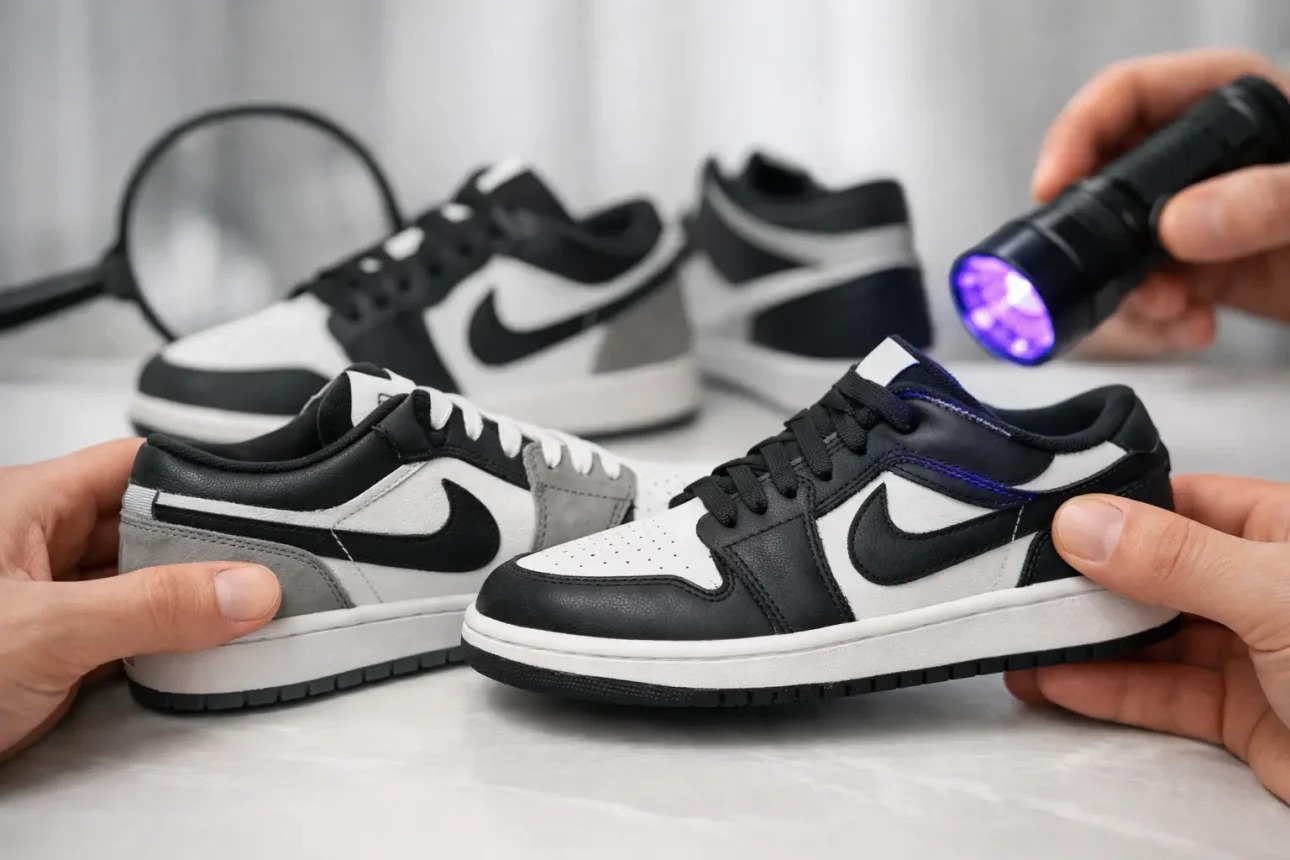
That pair looks clean in photos. The price looks even better. Then it shows up, the shape is off, the logo looks weird, and the midsole feels like a brick. That’s usually how people learn how to spot fake sneakers – after they’ve already paid.
We’d rather save you the headache before that happens. Fake pairs have gotten better, but most still give themselves away if you know where to look. You do not need to be a collector with a microscope. You just need to pay attention to the stuff that actually matters.
The first red flag is usually the listing, not the shoe. If a seller uses blurry photos, stock images only, or awkward product names that dance around the real model name, we’re already skeptical. Same goes for sellers with brand-new profiles, no real reviews, or a weird mix of random products that have nothing to do with sneakers.
Price matters too. We’re not saying every cheap pair is fake. Good deals exist. But if a pair that normally sells for real money is suddenly half price from some sketchy storefront, don’t talk yourself into it. Most fake sneaker listings rely on one thing – people wanting to believe they found a steal.
Ask for real photos if you can. Side profile, heel, outsole, size tag, box label, insole, and tissue paper. If a seller gets defensive or avoids the request, that tells you enough. Real sellers usually want to prove the pair is legit. Fake sellers want a fast checkout.
A lot of people go straight to the logo or the SKU code. That stuff matters, but the overall shape is usually the faster tell. Fake sneakers often get the silhouette wrong. The toe box might be too bulky. The heel may sit too straight. Panels can look puffy or flat when the real pair has sharper lines.
This is especially obvious on models people know well. Air Force 1s, Sambas, New Balance 550s, Jordan 1s, Yeezys, Gel-Kayanos – fakes often miss the proportions. Even when the colors look right, the shoe can still look a little dead. That’s the word we’d use. Dead shape, dead materials, dead details.
If you’ve seen the real pair enough, your eye usually catches it fast. If you haven’t, compare the listing photos to images from trusted retailers. Not one photo. Several. Look at the side profile and toe shape first. That’s where bad pairs fall apart.
People love a clean box label check, and sure, it helps. But fake boxes have improved a lot. Some counterfeit pairs come with boxes that look close enough to fool anyone who only checks the sticker.
Still, the box can expose lazy fakes. Look for mismatched fonts, poor print quality, wrong color codes, weird spacing, and labels that don’t match the shoe inside. The style code on the box should match the size tag inside the shoe. If it doesn’t, that’s a problem.
Also pay attention to the cardboard itself. Real brand boxes usually feel consistent and solid. Fake ones can feel thin, flimsy, or just slightly off in color. Not always. But enough that it’s worth checking.
Tissue paper and extras can help too. Extra laces, hang tags, wrapping, inserts – counterfeiters often include too much, too little, or the wrong version. If a basic GR pair shows up packaged like a luxury item, something’s off.
If you’re serious about how to spot fake sneakers, the size tag matters. It’s one of the easiest places to catch sloppy reps. The font may be wrong. The spacing can look cramped. Dates, factory codes, QR codes, and country lines may be printed badly or placed unevenly.
That said, don’t rely on one code check from social media and call it solved. Some fake tags copy real formatting pretty well. We treat the label like one piece of the puzzle, not the whole case.
What you want is consistency. The size tag should look clean, readable, and properly attached. If the text looks fuzzy, the sticker is peeling, or the information seems jammed together, that’s not a great sign. Compare both shoes too. Fake pairs sometimes have tags that don’t even match each other.
Cheap materials are hard to hide. Fake sneakers often look shiny when they shouldn’t, stiff when they should flex, or overly soft when the real pair has more structure. Synthetic leather can feel plasticky. Suede may look flat and lifeless. Mesh can be too loose or oddly thick.
Touch matters here. Real pairs from major brands aren’t perfect every time, but they usually feel intentional. The upper has the texture you’d expect. The padding feels even. The lining doesn’t feel scratchy or glued together in a rush.
Smell is another tell, even if it sounds basic. A strong chemical smell is common with fake pairs because of lower-grade glue and materials. New shoes can smell like new shoes, sure. But if you open the box and it hits like a paint can, we’d be suspicious.
Not flawless. Clean.
A lot of buyers expect every real pair to be perfect, and that’s just not true. Even legit pairs can have minor glue marks or a stitch that isn’t museum-level neat. Factories make mistakes. That alone doesn’t mean fake.
What matters is the pattern. Fake sneakers often show uneven stitching lines, loose threads, messy edges, and glue spreading way outside the panel lines. The shoe can look rushed. One side may not match the other. Logos can sit too high or too low.
We always tell people to look at symmetry. Put the shoes side by side. Do the toe boxes match? Are the lace holes aligned? Is the heel branding centered on both shoes? Real pairs usually land close. Bad fakes drift all over the place.
You can fake a photo better than you can fake how a shoe feels on foot. Counterfeit pairs often have soles that are too hard, too light, or weirdly hollow. Grip patterns may look close but feel cheap. Flex can be wrong too. Some fake shoes barely bend where they should. Others fold too easily because the build is weak.
Comfort is tricky because not every legit sneaker feels amazing. Some famous models are stiff. Some are flat. Some look better than they wear. But a fake pair often feels off right away. The insole may slide around. The cushioning feels dead. The fit can run strangely long, narrow, or unstable.
If a model is known for a certain feel, and your pair feels nothing like it, trust that reaction. Your feet notice bad fakes faster than your eyes sometimes.
This is the part people try to skip. They want the secret code, the hidden stamp, the one weird trick. Honestly, the best move is still buying from a seller you trust.
A legit pair from a known retailer beats a thousand close-up inspections from a random marketplace seller. That doesn’t mean every resale platform is bad. It means risk changes depending on where you shop. Some places have better checks, clearer returns, and actual customer support. Some are just chaos with a payment button.
If a seller refuses returns, gives vague answers, or has no clear business info, we’d walk. Doesn’t matter how good the photos look. A fake seller always sounds convincing until the box lands at your door.
The biggest one is focusing on one tiny detail and ignoring everything else. A correct box code doesn’t save a bad shape. A decent logo doesn’t fix cheap materials. Fake sellers know buyers obsess over one or two online “tells,” so they patch those and hope you miss the bigger problems.
Another mistake is assuming every flaw means fake. Real sneakers can have small factory issues. A little glue. A stitch that’s not perfect. That’s annoying, but it happens. What you’re looking for is a cluster of issues, not one small miss.
And honestly, people get blinded by the deal. We get it. Nobody wants to overpay. But if the price only makes sense in a fantasy world, the pair probably came from one too.
At Sneakerness, we think buying sneakers should feel simple. Not like detective work. But if you’re checking a pair and something feels off, don’t force yourself into yes. A clean pair is worth waiting for. A fake pair is just money spent on regret.


