Cart
No products in the cart.
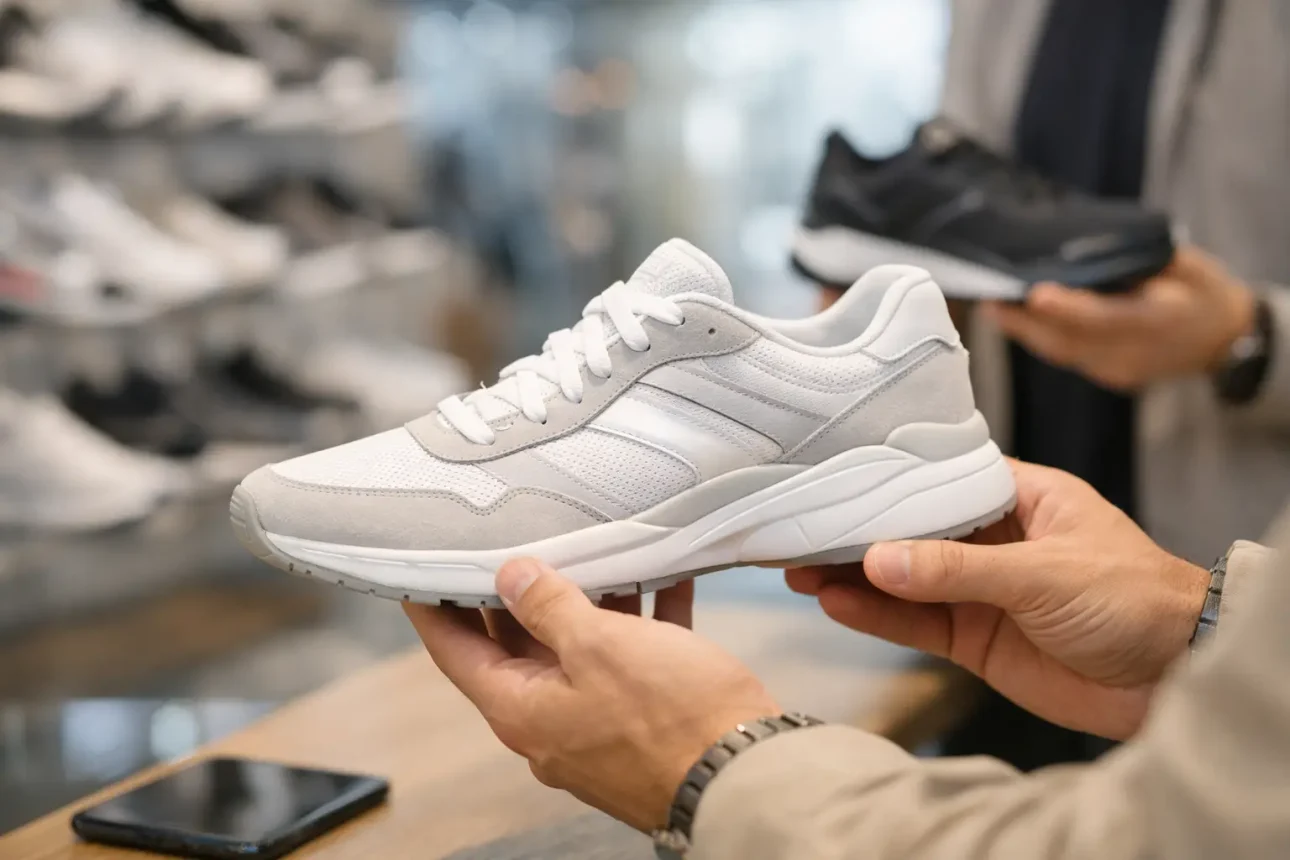
Buying sneakers gets weird fast. You start looking for one clean pair, and 20 tabs later you’re comparing foam names, resale chatter, and colorways you’ll never wear. A good branded sneaker shopping guide should cut that mess down. That’s what this is. No hype. Just what actually matters when you’re spending real money on branded sneakers.
Most people do not need the loudest shoe, the rarest shoe, or the one with the longest tech description. You need a pair that fits your life. That sounds obvious, but it’s where a lot of people get it wrong.
A sneaker can look sharp in photos and still be annoying by noon. Another pair can be plain, a little ugly even, and end up being the one you wear four days a week. We always take real use over marketing copy. If a shoe only works for standing still and taking pictures, that’s not enough.
Start with one question: what are you really buying these for? Daily wear, long walks, work, actual running, or just something clean with jeans? If you skip that question, you usually end up paying too much for the wrong pair.
The brand matters. We’re not going to pretend it doesn’t. Some people trust Nike because they’ve worn it forever. Some want the shape and old-school feel of New Balance or Onitsuka Tiger. Some like Adidas because it usually plays well with casual outfits. That’s all fair.
But the use matters more than the logo on the side. If you’re on your feet all day, skip flat fashion pairs that feel dead after a few hours. If you want something mostly for outfits, you probably don’t need a thick running shoe with a giant sole unless that’s your style. If you actually run, don’t buy a lifestyle model just because it looks cleaner.
This is where people overspend. They buy the brand story instead of the shoe. A famous name does not automatically mean the right fit, the right support, or even the best value.
Go for balance. You want something that looks good with regular clothes and doesn’t punish your feet. That usually means classic runners, retro-inspired pairs, or cleaner modern lifestyle models. New Balance gets this right a lot. Adidas does too. Nike has great options, but some pairs are more about image than comfort, so choose carefully.
Comfort stops being a bonus and becomes the whole point. Hoka, Brooks, Asics, and On are usually worth a look here. Some of these aren’t the coolest shoes in the room. Fine. What actually matters is how your feet feel at 5 pm. We’d take a slightly chunky shoe that still feels solid late in the day over a flatter pair that looks better for the first 20 minutes.
If you’re buying mainly for looks, be honest about it. Retro Nike, Adidas classics, Puma, and Onitsuka Tiger all have strong options. Just don’t fool yourself into thinking every stylish sneaker is built for miles of walking. Some are. Plenty aren’t.
A lot of sneaker disappointment comes down to sizing. Not bad design. Not bad taste. Just wrong size.
Branded sneakers do not fit the same across labels. Even within the same brand, one model can run narrow while another feels roomy. Nike often fits narrower than New Balance. Hoka can feel big underfoot because of the shape and stack. Adidas depends heavily on the model. That’s annoying, but it’s real.
If you’re between sizes, don’t guess based on hope. Think about how you actually wear shoes. Thin socks or thick socks? Loose fit or locked-in fit? Do your feet swell later in the day? These things matter more than people think.
Also, don’t confuse break-in pain with a good fit. A shoe can soften a bit over time, sure. But if it pinches hard, rubs weird, or feels off from the start, it’s probably not your pair. We are not fans of suffering through a bad fit because the shoe looked good in the box.
Some sneakers are genuinely popular because they work. Others are popular because everyone saw the same post last week. There is a difference.
The problem with trend-driven shopping is that it pushes people toward pairs they would never choose on their own. Suddenly you’re paying extra for a shape you don’t even like because it feels current. That’s a fast way to fill your closet with shoes you barely wear.
We like clean, wearable sneakers over loud hype pieces almost every time. A solid pair in white, gray, black, or one good accent color will outlast most trend cycles. You’ll wear it more. You’ll get more value out of it. And you won’t cringe at photos six months later.
That doesn’t mean play it safe all the time. If you like bold color, wear bold color. Just make sure you like it, not the noise around it.
Expensive does not always mean better. Cheap does not always mean worth it either.
A good buy is a sneaker you’ll actually wear a lot. That’s the whole test. If a pair costs more but fits right, holds up, and works with half your closet, that can be money well spent. If a cheaper pair feels stiff, looks tired fast, or only works with one outfit, it wasn’t really a deal.
This is where cross-brand shopping helps. When you compare brands side by side, you stop buying on name alone. You start noticing shape, comfort, and whether a shoe feels fairly priced. Some models are priced right because they earn it. Some are living off reputation.
Our take: buy the pair that gives you the most wear, not the one with the best story.
Stores love throwing material terms at you like they explain everything. They don’t.
What matters is simple. Mesh usually feels lighter and easier for all-day wear. Leather often looks cleaner and wipes down easier, but it can feel stiffer and warmer. Suede looks great when it’s done right, but it needs more care and shows weather fast. Knit uppers can feel soft and flexible, though sometimes they lack structure.
There is no best material. It depends on how you live. If you want one everyday pair and you deal with unpredictable weather, all-suede might not be the smartest move. If you care most about breathability, heavy leather probably isn’t it.
Same with soles. Soft and bouncy feels nice at first, but too much can get sloppy for some people. Firmer soles can feel more stable, though sometimes less forgiving. It depends on what your feet like and how long you’re wearing them.
Buying online is easy until it isn’t. The product shots look perfect. The shoe arrives. Then the toe shape feels off, the sole looks bigger than expected, or the fit is weird.
So keep your filter tight. Start with use, then shape, then color. Not the other way around. If you begin with color, you’ll talk yourself into pairs that don’t suit your needs. If you begin with shape, you cut out a lot of bad options fast.
It also helps to know what you already wear most. Look at your current rotation. Do you keep reaching for cleaner low-profile shoes, or do you prefer chunkier cushioned pairs? Your habits tell the truth faster than trend pages do.
And be honest about your closet. If you mostly wear straight-leg jeans, joggers, and simple outerwear, don’t buy a futuristic runner that only works with one exact outfit. If you dress louder, then sure, go bigger. But if a sneaker doesn’t fit your actual wardrobe, it becomes shelf decor.
Nike is still strong for style and familiar shapes, but not every model is worth the price. Adidas stays reliable when you want easy everyday wear. New Balance is one of the safest bets if you want comfort without looking like you gave up. Asics has gotten a lot more style attention, and some of it is deserved. Hoka and Brooks are more function-first, but if you’re walking or standing a lot, that matters. On sits in that space between performance and clean modern styling, which works for a lot of people. Puma and Onitsuka Tiger can be great if you want something a little less obvious without getting weird.
None of these brands win every category. That’s the point. Shop the shoe, not the loyalty.
A good pair should feel right the first week, not just look good on day one. If you’re buying online, keep it simple. Choose for your real life, not the fantasy version of it. That’s usually how you end up with sneakers worth wearing again tomorrow.