Cart
No products in the cart.
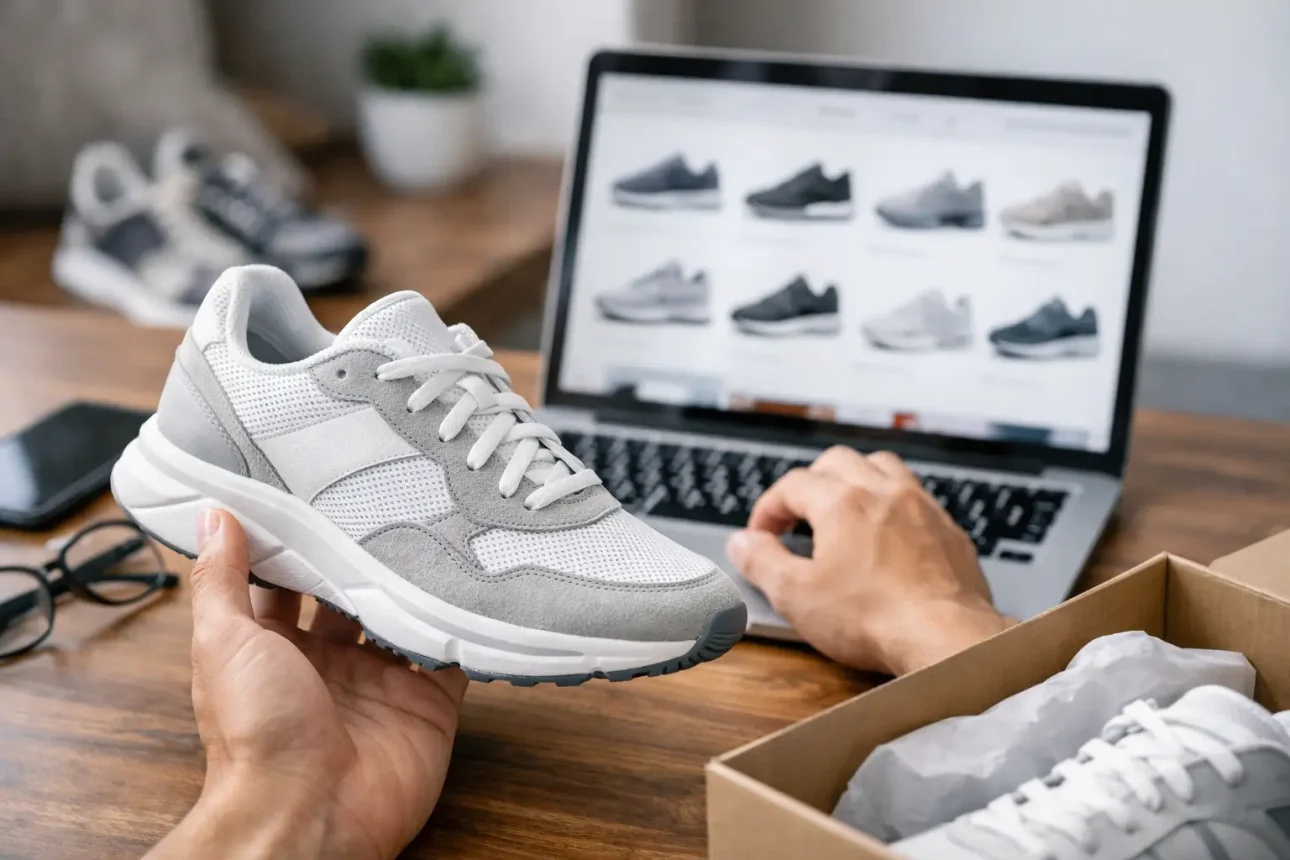
You can tell who bought sneakers online the wrong way. They end up with a pair that looked clean on a product page, then feels stiff, fits weird, and gets worn twice before disappearing into the closet. That is usually what people mean when they say buying online is risky. It is not really risky. You just need to know how to buy sneakers online without getting fooled by good photos and bad choices.
The first mistake is shopping for the image instead of the job. A lot of sneakers look good standing still. That tells you almost nothing. What matters is where you are actually wearing them. If you want something for all-day walking, skip the flat fashion pair with no support. If you need something for standing at work, the cleanest retro shoe on the page might be the wrong move. And if you just want a casual pair for jeans, you probably do not need a chunky running shoe that feels like overkill.
Before you even look at colors, get honest about what the shoe is for. Running, walking, gym, standing, travel, daily wear, or just looking sharp – those are different jobs. Brands love to blur the lines because crossover styles sell. Sometimes that is fine. Sometimes it is not.
A retro Adidas or Nike model can look great with almost anything, but some of them feel pretty flat after a few hours. A Hoka or Brooks pair might not win a style contest for everyone, but if you are moving all day, your feet may care a lot more about that than the shape of the side panel. We like shoes that match real life, not just a fit pic.
This is where people overspend too. They buy the expensive pair because it is popular, not because it suits their day. Hype does not make a shoe more useful. Usually it just makes it harder to return because you talked yourself into it.
If you want the short version of how to buy sneakers online, here it is: never assume your size is universal. A US 10 in one brand can feel clean and exact. In another, it can crush your toes or slip at the heel. That is normal. Annoying, but normal.
Start with the size you wear most often, then check the brand chart and compare it to a pair you already own that fits well. Better yet, pay attention to shape, not just length. Some brands run narrow through the forefoot. Some have more room in the toe box. New Balance often works well for people who hate a cramped front. Certain Nike models can feel narrower, especially in retro styles. On tends to fit pretty true for a lot of people, but the feel is more structured. Asics can vary depending on whether you are buying a lifestyle pair or something built for actual miles.
The product name matters too. Saying a brand “runs small” is too broad to be useful. One model can fit great while another from the same brand feels completely off. That is why people get burned online. They trust the logo more than the specific shoe.
You do not need a technical breakdown. You need to know what is real. A solid product page should tell you the basics fast: material, intended use, fit notes, sizing range, and clear photos from more than one angle. If a listing says almost nothing and shows one polished side shot, that is not confidence. That is hiding something.
Look closely at the upper. Mesh, suede, leather, knit, and synthetic overlays all change how the shoe feels on foot. Leather can look better over time, but it may feel stiffer out of the box. Mesh is lighter and easier for warm weather, though it usually will not hold its shape like leather. Suede looks sharp when done right, but it is not the pair we would grab for bad weather or rough daily use.
Also check the sole shape. A thick foam sole usually means a softer ride, but not always a stable one. A flatter outsole can feel grounded and clean for casual wear, but it may get old fast if you are walking miles. There is always a trade-off. Soft is not automatically better. Firm is not automatically bad.
Studio images are useful, but they are also flattering by design. Bright lighting can make cheap materials look smoother than they are. Angles can make a bulky shoe seem slimmer. White midsoles look fresh in every photo. Then the box arrives and the shoe feels bigger, shinier, or louder than expected.
That is why the small details matter more. Look at stitching. Look at panel cuts. Look at how the tongue sits. If the shape looks awkward in multiple photos, it will not magically improve in person. If the outsole looks too stiff, it probably is. Trust your eye, but trust consistency even more.
Color is another trap online. Off-white, sail, cream, bone, and light gray are not the same thing, even when brands act like they are. If you want a pair that goes with everything, clean neutrals are still the safest play. Loud colors can work, but only if you already know how you dress. A bright shoe that does not match your rotation becomes shelf art.
A lot of people think buying online means chasing the lowest possible price. We do not. Cheap is good only when the shoe still makes sense for you. A discount on the wrong pair is still wasted money.
That said, timing helps. Core colorways and steady sellers do not always need panic buying. Many pairs come back in stock or get marked down when the season shifts. If you are shopping for everyday sneakers, patience usually beats impulse. The exception is when your size disappears often, or you already know a model works for you. Then waiting can backfire.
We also think people overlook value in cross-brand shopping. If one brand’s trendy model is priced too high for what it offers, another brand usually has something just as clean for less. You are not marrying the logo. You are buying a shoe.
Here is a blunt rule: if the return policy feels hard to find, assume it will be annoying when you need it. The same goes for vague shipping info. A good store makes the process clear because it expects normal people to have normal questions.
When you buy sneakers online, the store matters almost as much as the shoe. You want clear sizing info, straightforward shipping, and a return process that does not feel like punishment. That is part of the product whether retailers admit it or not. At Sneakerness, we think the buying part should be simple. You pick the pair, check the fit, place the order, done. No circus.
Also pay attention to what a store chooses to push. If everything is framed like a once-in-a-lifetime chance, that is usually a sign to slow down. Good retailers do not need to yell. A solid pair at a fair price can speak for itself.
Customer reviews are useful when they mention specifics. “Looks amazing” tells you nothing. “Toe box felt tight after three hours” is useful. “Heel slipped until I laced the top eyelet” is useful. “Midsole felt too soft for standing all day” is useful.
Ignore extreme praise and extreme anger unless there is a clear pattern. One person saying a shoe ruined their life is not data. Ten people saying it runs narrow probably is. Look for repeat comments about sizing, stiffness, arch feel, break-in time, and whether the shoe looks the same in person.
And be honest with yourself when reading reviews from people with a different use case. A runner reviewing a daily lifestyle sneaker may care about things you do not. Someone buying a fashion pair for weekend wear may not notice that it turns uncomfortable by 4 p.m. Context matters.
People overcomplicate this. They compare fifteen tabs, second-guess every color, and end up buying nothing or buying something random out of frustration. Usually the right move is simpler. Pick the category that fits your life. Choose a shape you know you will wear. Check the sizing details. Read the return policy. Then buy the pair that makes the most sense, not the one that shouts the loudest.
If you are building a rotation from scratch, start with one easy win. A clean everyday sneaker in a neutral color does more work than a loud pair you need to plan around. If you are on your feet all day, go for comfort first and let the style follow. If you care most about looks, fine – just do not pretend a flat sole and stiff upper are going to feel great after eight hours.
Buying online gets easier once you stop expecting one shoe to do everything. Some pairs are for walking. Some are for outfits. Some are for getting through a long day without thinking about your feet. The trick is knowing which one you are actually shopping for before the photos start talking.