Cart
No products in the cart.
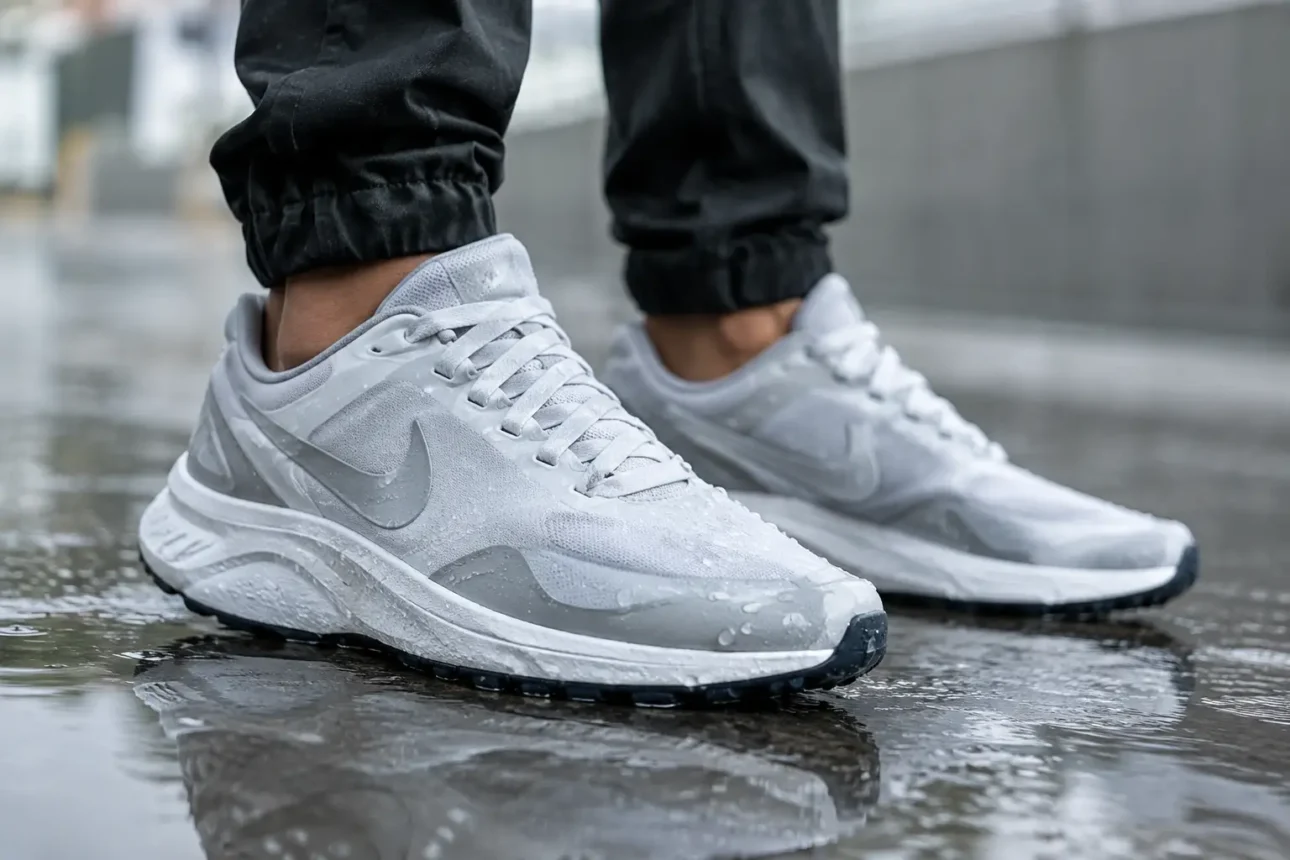
A light drizzle is one thing. A soaked crosswalk, dirty curb water, and a 20-minute walk to the train is another. The best sneakers for rainy days do more than survive a splash – they keep your feet reasonably dry, stay planted on slick pavement, and do not look like hiking gear when you wear jeans.
We would not tell everyone to buy a waterproof sneaker. They can run warmer, feel less breathable, and cost more than a standard pair. But if rain is part of your regular commute, the right pair saves you from wet socks and ruined suede. That is worth thinking about.
Start with the upper. Waterproof membranes such as GORE-TEX are the real deal for rain coming from above and splashes from the side. A water-resistant coating can help with a quick shower, but it usually gives up once the rain gets serious. Mesh without a membrane is comfortable in dry weather and basically a sponge in wet weather. We would skip it for a rainy-day shoe.
Then look down. Outsole grip matters as much as waterproofing. Smooth foam or shallow rubber patterns can feel fine on dry sidewalks, then get sketchy on wet tile, metal grates, and painted crosswalks. A rubber outsole with a deeper, well-spaced tread gives water somewhere to go and gives you more confidence underfoot.
The last piece is shape. A low-cut waterproof sneaker works well for city rain. It will not stop water pouring in over the collar if you step into a deep puddle. Nothing low-cut will. If your route involves mud, trails, or standing water, a trail runner or hiking-inspired sneaker is the smarter call.
The New Balance 2002R GORE-TEX is one of the easiest rainy-day choices if you still want a normal-looking sneaker. It has the layered, early-2000s runner look that works with loose denim, cargos, sweats, or a simple black pant. More importantly, the GORE-TEX upper handles wet sidewalks far better than the usual mesh version.
We like it for commuting, errands, and long city days. The cushioning is comfortable without feeling huge, and the sole has enough grip for typical wet pavement. It is not a serious trail shoe, so do not buy it for muddy hikes. For regular life in bad weather, though, it makes more sense than sacrificing a clean suede pair.
If you actually walk a lot in the rain, the Nike Pegasus Trail GORE-TEX is a strong choice. It has more outsole bite than a lifestyle sneaker, a protective upper, and enough cushioning for people who are on their feet for hours. It is built as a trail runner, but it does not look out of place with joggers or casual pants.
The trade-off is obvious: it looks more technical. If your style is flat, retro court shoes, this may not be your thing. But for rainy walks, travel days, dog walks, and uneven city streets, we would take useful traction over a cleaner silhouette every time.
The On Cloud 5 Waterproof is for people who want something light, simple, and easy to wear. It is a solid commuter sneaker, especially if you are hopping between the car, office, train, and grocery store rather than spending all day outside. The waterproof upper keeps light-to-medium rain from becoming a sock problem, while the low-profile design looks sharper than most trail shoes.
It is not our first pick for slick leaves, muddy paths, or all-day walking on rough ground. The outsole is less aggressive than a trail model. But if your rainy day is mostly pavement and you do not want a bulky shoe, this is the clean middle ground.
Some waterproof sneakers are protective but feel stiff. The Hoka Challenger GTX goes the other way. It is cushioned, stable enough for mixed surfaces, and made for people who care more about how their feet feel at 5 p.m. than whether the shoe looks perfectly minimal.
We would recommend it for long walks, travel, and anyone who spends a lot of time standing. It has a bigger sole and a more outdoorsy look, so it will not be everyone’s style. Honestly, that is fine. A rainy-day shoe does not need to win a style contest if it keeps your feet comfortable through a wet, long day.
When rain comes with dirt, gravel, and slippery paths, look at Adidas Terrex models with a waterproof membrane and a grippy rubber outsole. Terrex is not pretending to be a court sneaker. That is exactly why it works. You get tougher materials, more serious tread, and better protection when the weather is doing the most.
This is the pair for weekend walks, travel with unpredictable weather, and commutes where the sidewalk situation is not great. We would not choose it solely for a quick dash from apartment to car. That is overkill. But if wet ground is a regular part of your day, a more trail-focused shoe is worth it.
Brands use these terms loosely, so read the product details instead of trusting a photo. Waterproof usually means the shoe has a membrane designed to block outside water. Water-resistant usually means the upper has a treatment that repels a little rain for a little while.
For occasional showers, water-resistant can be enough. It is often lighter and breathes better. For daily walks in wet weather, we would spend more on waterproof. The difference becomes very clear after ten minutes in steady rain.
There is one catch: waterproof shoes trap more heat. In warm, humid weather, they can feel sweaty even when it is not raining. If you live somewhere hot and get short storms rather than cold, wet seasons, a water-resistant sneaker plus spare socks may be the more sensible setup.
Suede is the big one. It looks great, but dirty rainwater can leave marks and stiffen the material when it dries. You can protect suede with spray, but that does not make it invincible. If you care about keeping a pair looking fresh, leave it home when puddles are involved.
Canvas has the same issue, just faster. Classic canvas sneakers are light and easy to style, but they absorb water quickly and dry slowly. Leather handles rain better than canvas or untreated suede, especially smooth leather, though repeated soaking can still dry it out over time.
Regular knit and open mesh running shoes are also a bad bet. They breathe well because air moves through them. Water uses the same route.
Do not size up just because you plan to wear thicker socks. A shoe that is too loose can slide around inside, which is annoying on dry pavement and worse when the ground is slick. Start with your normal size, then make sure your toes have room without your heel lifting as you walk.
Wear socks that dry quickly, too. Cotton is comfortable until it gets wet, then it stays wet. A synthetic or merino-blend athletic sock is a better match for a waterproof sneaker because it manages moisture without feeling heavy.
Even waterproof sneakers need a little care. Wipe off mud and road grime when you get home instead of letting it dry into the upper. Pull out the insoles after a real soaking and let the shoes air-dry at room temperature. Do not put them on a radiator or blast them with a hair dryer. Heat can weaken glue and make materials brittle.
If water stops beading on the outside of a waterproof pair, the membrane may still be working. Often, the outer fabric just needs cleaning and a fresh water-repellent treatment. That is a lot cheaper than replacing a shoe that still has life left in it.
A rainy-day sneaker does not have to be ugly, heavy, or only for trails. Pick the level of protection that matches your actual route, not the worst storm you can imagine. Then save the delicate pairs for dry days and let the practical pair do its job.