Cart
No products in the cart.
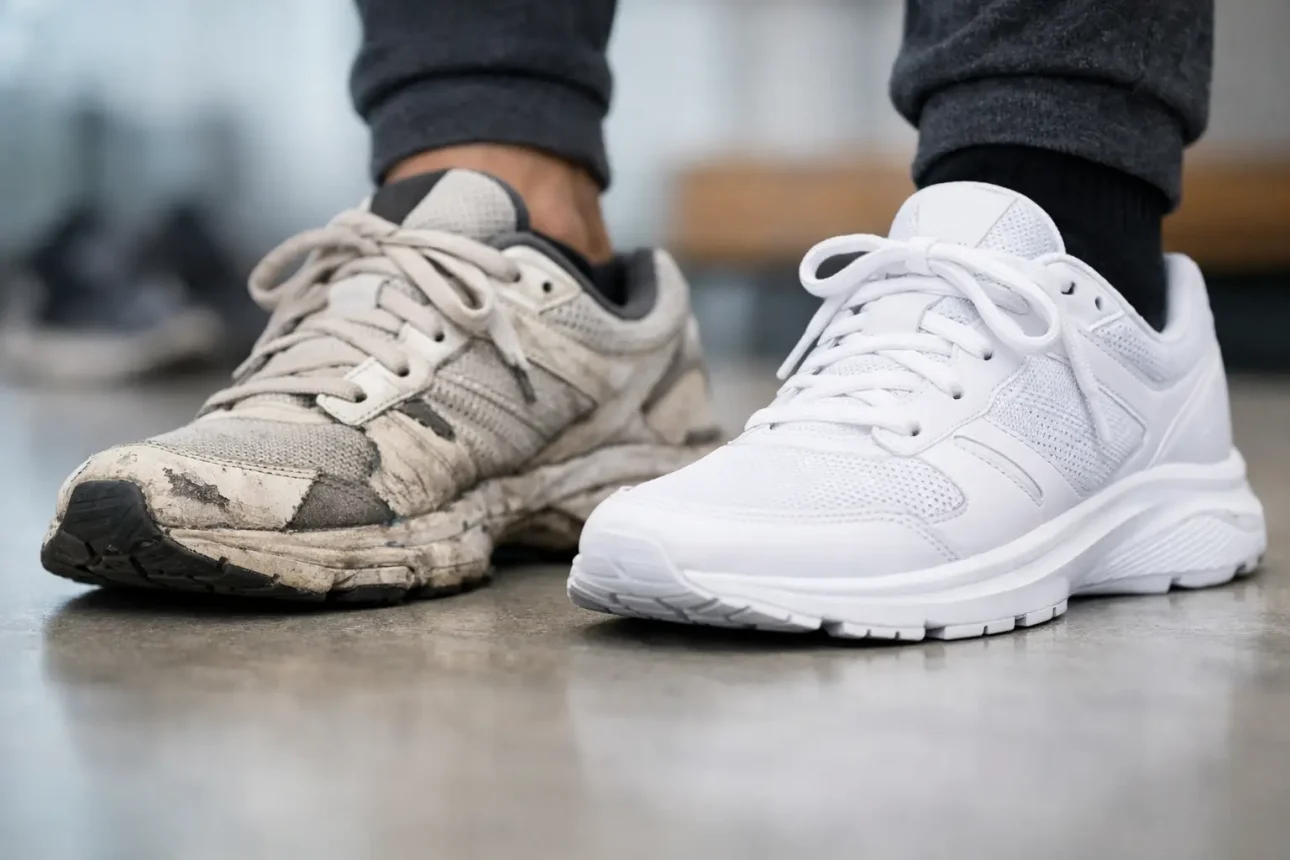
Your sneakers can still look clean and be completely cooked. That is the annoying part. When should you replace sneakers? Usually when the parts you cannot see or feel at first – cushioning, support, grip – have stopped doing their job. A little dirt is normal. A shoe that leaves your feet, knees, or lower back feeling beat up is not.
We are not here to tell you to replace a pair because a new colorway showed up. Wear what you like until it is actually done. But do not hang onto tired sneakers just because the upper still looks decent.
The clearest sign is simple: your shoes feel different than they used to. Maybe your feet ache halfway through a walk that normally feels easy. Maybe standing at work suddenly feels brutal by late afternoon. Maybe your usual run feels harsher, even though your routine has not changed.
That does not automatically mean the shoes are the problem. Harder surfaces, longer days, and old socks can all play a part. Still, if the discomfort shows up consistently in one pair and disappears when you wear another, we would stop blaming your feet.
Cushioning does not always look worn out. Foam compresses over time, then stops bouncing back the way it should. A sneaker can look sharp from the outside while feeling flat, stiff, and unforgiving underfoot. That is especially common with running shoes and everyday pairs used for long shifts.
If you are getting new or persistent pain, do not try to tough it out through every walk or run. Take a break from that pair. If pain sticks around, talk to a qualified medical professional. Sneakers are footwear, not medical treatment.
Flip the shoe over. If the tread is flattened, especially under the heel or forefoot, grip is gone. Wet sidewalks, painted crosswalks, gym floors, and loose gravel get a lot less forgiving when the rubber has been rubbed down.
Uneven wear matters too. A heel worn heavily on one outer edge is common, but a dramatic tilt can make the shoe feel unstable. Once you can see foam through the outsole, there is no debate. Retire them.
Creases alone are not a death sentence. Most foam midsoles crease with regular wear. What matters is whether the foam is deeply compressed in the spots where you land and whether it still feels supportive.
Press the midsole with your thumb, then compare it with a less-used pair if you have one. Old foam often feels hard or stays dented. It may also lean to one side when you set the shoes on a flat table. That is a real sign the structure is tired, not just a cosmetic issue.
A worn sneaker can change how your foot meets the ground. You may notice tired arches, sore heels, hot spots under the ball of your foot, or shin discomfort after normal use. Again, bodies change and activity levels matter. But when the pattern follows a specific pair, pay attention.
This is where casual shoes get ignored. People replace running shoes, then wear the same flattened lifestyle sneakers for twelve-hour days. If you walk, commute, travel, or stand in them constantly, they are working just as hard as a gym pair.
The heel counter is the firmer section wrapped around the back of your heel. When it bends too easily, folds inward, or lets your heel slide around, the shoe has lost some of its hold.
You can test it with your hand. A little flex is fine. If the back of the shoe crushes like a paper cup, it is not giving you much structure anymore. This matters most for walking, running, and work shoes. For a low-use fashion sneaker, it may be less urgent, but a loose heel still makes a shoe feel sloppy.
No sneaker has magical traction. Some outsoles are simply better than others. But if you are sliding on surfaces where you normally feel secure, inspect the rubber before you write it off as bad weather.
A smooth outsole is especially rough in rain. If your daily route includes wet pavement, stairs, or slick indoor floors, replace worn shoes sooner rather than later. This is one area where squeezing out a few more months is not worth it.
Small scuffs are character. A tiny loose thread is not a crisis. But torn mesh near the toes, separated overlays, busted eyelets, and stretched-out laces can change how the sneaker holds your foot.
If the upper has split but the sole is still solid, repair can make sense for a favorite casual pair. A shoe repair shop may be able to stitch a seam or replace laces. If the upper is failing and the foam is dead too, do not sink money into a lost cause.
Sometimes the sneaker is not ruined. It is just wrong for what you are asking of it.
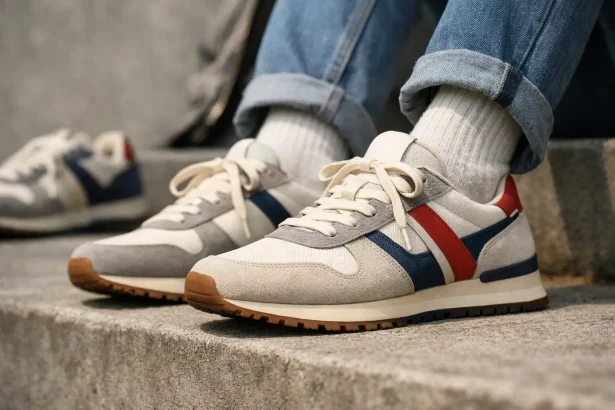
That flat retro pair might look great with jeans, but it is probably not the shoe we would choose for a full day on concrete. A soft running shoe can feel excellent for walking, yet feel unstable for strength training. And a lightweight lifestyle sneaker may be fine for coffee runs but poor for rainy commutes once the tread wears down.
Replacing sneakers is not always about damage. It can be about using the right pair for the job.
Runners often hear that shoes last around 300 to 500 miles. That is a useful range, not a rule carved in stone. A heavier runner, rough pavement, poor weather, and daily wear can shorten a shoe’s life. A lighter runner on softer paths may get more out of the same model.
For walking and everyday sneakers, mileage is harder to track. Think in terms of frequency. A pair worn every day for commuting, errands, dog walks, and work will wear out far faster than a pair worn two Saturdays a month. Most daily sneakers show meaningful wear somewhere around six to twelve months, but your mileage may be very different.
Rotation helps. Two pairs worn on alternate days can last longer than two pairs worn back-to-back until one dies. They have time to dry out and rebound between wears. More importantly, rotation lets you notice when one pair feels noticeably flatter than the other.
We will take the other side here: beat-up does not always mean finished. Leather can crease. Suede can get marked up. White midsoles can turn gray. None of that means the sneaker is bad to wear.
If the outsole still grips, the cushioning feels good, the fit is secure, and the upper is intact, keep wearing them. Cleaning them up may be all they need. A scuffed pair with solid support is a better choice than a pristine pair that pinches your toes.
The exception is when the material is cracking or crumbling. Older stored sneakers, especially pairs with foam or glued soles, can break down even with low mileage. If the sole separates, flakes, or feels brittle, do not trust it for serious activity. Age matters, even when a shoe has spent most of its life in a box.
Do not automatically buy the exact same type of sneaker. Ask what the old pair was doing for you. Was it your standing-all-day shoe? Your easy-run shoe? Your clean, goes-with-anything pair? Those are different jobs.
If you are on your feet all day, skip thin, flat sneakers as your only option. They can look good, but looks do not help at 5 p.m. Choose something with enough cushioning for your day and a stable base underfoot. If you run, replace your running pair with a running shoe, not a casual sneaker that happens to look athletic.
For everyday wear, comfort still matters, but you have more room to choose based on style. A clean retro shoe, a cushioned runner, or a simple low-top can all work. Just be honest about how far you will walk in it.
Keep a fresh pair ready before your current one becomes a problem. Not because you need more shoes. Because your feet should not have to spend another month negotiating with a pair that is clearly done.