Cart
No products in the cart.
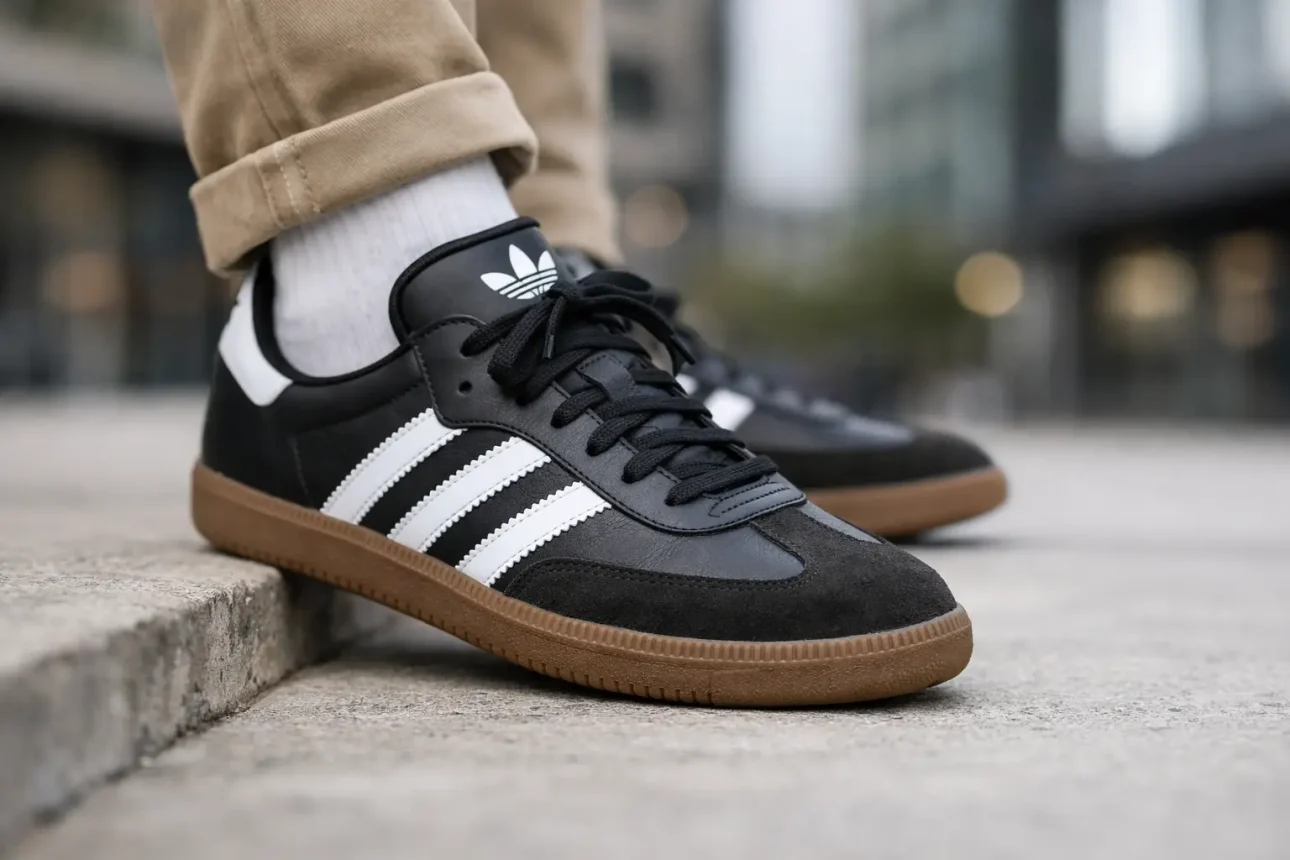
The Samba is one of those shoes that looks easy until you try to buy the right pair for your actual life. Our adidas samba review is simple: it is a clean, classic sneaker that works with almost everything, but it is not the comfort king people sometimes pretend it is. If you want a sharp low-profile shoe for daily casual wear, it earns its place. If you stand or walk all day, there are better options.
That is not a knock on the Samba. It was built as an indoor soccer shoe, and it still wears like one. The thin sole, close-to-the-ground feel, and firm upper are exactly why it looks so good. They are also why it can feel tough by late afternoon.
The standard Samba shape is the whole point. It sits low, has a narrow profile, a suede T-toe, leather panels, and a gum rubber outsole. Nothing about it is loud. It does not need to be. The design has stayed around because it looks right with straight-leg jeans, relaxed pants, shorts, joggers, and most casual fits without trying too hard.
We like the Samba because it is cleaner than a bulky retro runner and more interesting than a plain white court sneaker. The gum sole gives it character, while the upper keeps it polished. Black and white pairs are the safe move. White, cream, and earthy colorways feel lighter for spring and summer. Bright versions can work, but the shoe is strongest when the color does not fight the shape.
The downside of all that simplicity is that Sambas are everywhere. They are not rare, and they do not need to be. If you want a shoe that makes strangers ask what you are wearing, look elsewhere. If you want something that makes your regular clothes look more put together, the Samba does that job well.
Fit is where an honest adidas samba review matters most. Most Sambas run close to true to size in length, but they are narrow through the midfoot and toe area. People with average or slim feet will usually be fine in their normal size. People with wide feet should take that seriously before checking out.
If your feet are wide, going up half a size may give you a little more room, though it can also leave extra space at the front. The better call depends on whether the tightness is mostly at your toes or across the sides of your foot. A thin sock helps, but it will not turn a narrow shoe into a roomy one.
The leather does loosen somewhat after a few wears. The suede and synthetic areas do not stretch in the same way, so do not expect a dramatic change. If the shoe pinches hard right out of the box, it is probably the wrong size or simply the wrong shape for your foot.
The collar sits low, and the heel lock is decent once the laces are dialed in. There is not much padding around the ankle. That helps the shoe stay sleek, but it also means the first few wears can feel a little stiff. We would not call the break-in brutal, but this is not a pair you throw on for a full day of city walking without testing first.
For normal-width feet, start true to size. For slightly wide feet, try a half size up if you prefer room at the toes. For genuinely wide feet, we would skip the gamble unless you can try them on. The Samba is a good shoe, but no shoe looks good enough to justify sore feet.
Here is the part social media often skips. Sambas are comfortable enough for errands, dinner, commuting, school, and a casual day out. They are not plush. The insole is thin, the cushioning is minimal, and the sole keeps you very close to the ground.
Some people love that firm, connected feel. It makes the shoe feel quick and stable rather than soft and bouncy. If you are used to flat shoes like classic skate sneakers or canvas trainers, the Samba will not shock you. If you spend most days in running shoes, Hoka models, or cushioned New Balance pairs, the difference will be obvious.
What actually matters is how your feet feel at 5 p.m. If your day includes a short walk, public transit, a desk, and meeting friends, Sambas are solid. If it includes eight hours on hard floors, a long sightseeing route, or a shift where you barely sit down, wear something with more underfoot support.
You can swap in a thinner supportive insole, but there is limited vertical space inside the shoe. A thick insert can make the fit tighter and push your heel up. That is a workaround, not a reason to buy a Samba for jobs that demand all-day comfort.
The gum outsole is more than a style detail. It provides dependable traction on dry indoor floors, pavement, and everyday surfaces. It is not a trail sole, and wet smooth tile can still be slick, but it performs better than many fashion-first sneakers with flat rubber bottoms.
The upper is usually leather with suede overlays, so it holds up well if you treat it like a casual sneaker and not a work boot. The suede toe is the area most likely to show scuffs, dust, and water marks. A little care goes a long way. Brush dry dirt off, avoid soaking them, and do not toss them into a washing machine unless you are fine with changing their shape and finish.
White leather pairs need regular wiping if you want them to stay crisp. Black pairs hide daily wear better and are easier to live with. The gum sole can darken over time, but honestly, that is part of the shoe. A Samba with a little wear usually looks better than one kept like a museum piece.
The Samba OG is the version most people mean when they say Samba. It has the familiar low shape and classic details. It is the safe pick if you want the original look.
The Samba Classic leans more toward the shoe’s soccer roots and can feel different underfoot, often with a longer tongue and a more athletic look. It is less versatile as a style sneaker for most people. Other versions change materials, platform height, or details. Some are fun, but they can lose the stripped-back look that made the original work in the first place.
We would stick with the OG unless you specifically want a platform sole, a different material, or a more soccer-focused setup. The basic version is popular for a reason. It gets the proportions right.
Buy the Samba if you want a low-profile sneaker that looks sharp without being flashy. It is especially good for people who wear denim, chinos, relaxed trousers, track pants, or simple neutral outfits. It also makes sense if you prefer firm, grounded shoes over thick foam soles.
Skip it if comfort is your first priority, your feet run wide, or you need a shoe for long standing shifts. There is no shame in choosing a more cushioned sneaker. A shoe can be stylish and still be the wrong tool for your day.
The Samba is also not a running shoe, gym shoe, or serious soccer shoe for most modern players. Its roots are real, but its current strength is casual wear. Treat it that way and you will get along with it.
The adidas Samba is not overhyped because it looks bad. It is overhyped when people act like it can do everything. It cannot. It is slim, firm, and narrow. It is also one of the easiest sneakers to wear with real clothes.
For casual outfits and regular daily use, we think it is worth it. Pick your size carefully, give the leather a few wears to relax, and do not expect running-shoe cushioning. The best pair is the one you reach for without thinking, and for plenty of people, the Samba becomes exactly that.