Cart
No products in the cart.
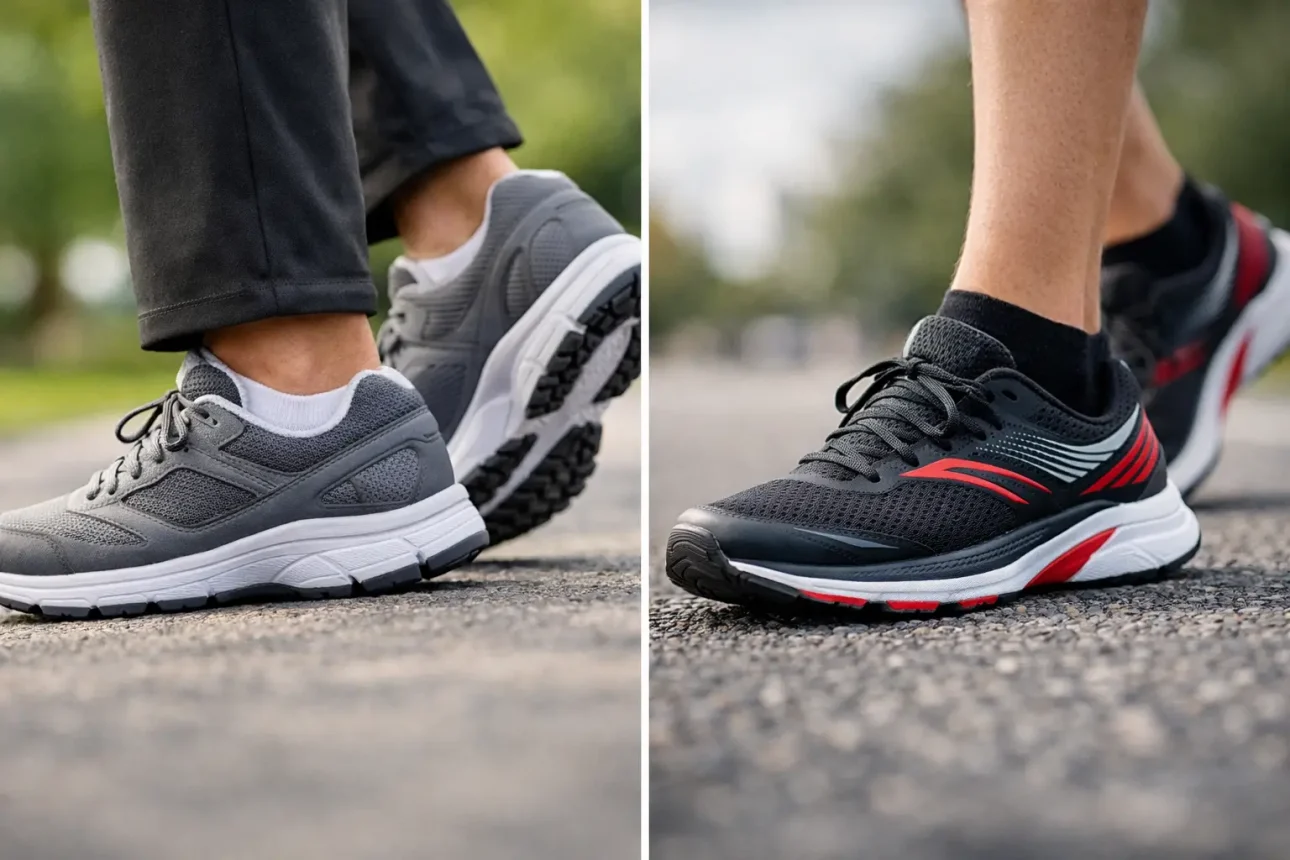
Walking shoes vs running shoes is not just a marketing debate. Put the wrong pair on for the job and you notice it fast: sore arches halfway through a run, tired calves after a shift, or toes banging the front of the shoe on every downhill block. They may look similar on the shelf. Under your feet, they do different work.
A running shoe can be a solid walking shoe. A walking shoe can work for short jogs. But if you run often, walk miles every day, or spend long hours standing, the details matter more than the logo on the side.
The biggest difference is how each shoe handles motion. Running is repeated impact. Every stride includes a landing force that is much higher than walking, followed by a quick push forward. Running shoes are built to soften that impact, move you through the stride, and stay stable when your pace picks up.
Walking is slower and flatter. Your heel usually touches down first, then your foot rolls forward for longer before you push off. A good walking shoe needs comfort, a stable platform, and enough flexibility for that easy heel-to-toe roll. It does not need to feel like a trampoline.
That is why running shoes often have thicker midsoles, more shaped foam, and a noticeable curve under the sole. That curve, often called a rocker, helps the foot roll forward. Some runners love it. Some walkers do too, especially on long city days. Others feel like the shoe is tipping them forward. If it feels weird in the first few minutes, do not talk yourself into it.
Walking shoes are often firmer and less dramatic. That can sound boring, but boring is good when you are on your feet for eight hours. A shoe that feels wildly soft in the store can feel sloppy by late afternoon. Your foot should feel supported, not like it is sinking into a mattress.
We get why people grab the softest shoe they can find. Cushioned shoes feel great for the first thirty seconds. But soft foam is only useful when the rest of the shoe keeps your foot centered.
For running, cushioning helps manage repetitive impact. Most runners will be happier in a dedicated road running shoe, especially if they run more than a couple of miles at a time. The shoe should have enough foam to take the edge off pavement without feeling unstable around turns.
For walking, moderate cushioning is usually the sweet spot. You want protection from hard sidewalks, but you also want to feel planted. If you walk the dog, commute on foot, travel, or work retail, a slightly firmer midsole can stay comfortable longer than an extra-soft one.
Heel height matters too. Running shoes commonly have a higher heel than forefoot, known as heel-to-toe drop. That shape can suit runners who land on their heel or want a little help taking pressure off their calves. For walking, a moderate drop often feels natural. Very low-drop shoes can be fine, but switching from a traditional sneaker to a flat shoe overnight is a bad idea. Your calves will have opinions.
Buy a running shoe if running is actually part of your week. That sounds obvious, but plenty of people try to make casual lifestyle sneakers do a job they were never designed for. A clean retro pair can look sharp with jeans. It is usually not the pair we would choose for a 5K.
A running shoe also makes sense if you walk fast, cover long distances, or spend your day moving on concrete. The extra cushioning and shaped sole can reduce that beat-up feeling in your feet and legs. This is where models from brands like Brooks, Asics, Hoka, On, New Balance, Nike, and Adidas can make sense, depending on the fit you like.
Do not buy a running shoe just because it has the thickest sole, though. Huge stacks of foam are not automatically better. They can feel great on straight pavement but less steady on uneven ground, stairs, or quick turns. If you need a shoe for a busy job, a lower and wider platform may feel more secure.
Choose a walking-focused shoe when your day is mostly errands, travel, work, and easy neighborhood miles. These shoes tend to prioritize stable comfort over speed. They are also often easier to wear with everyday clothes, which matters if you do not want to change shoes after your commute.
We especially like walking shoes for people who stand for long shifts. What matters is how your feet feel at 5 p.m., not how bouncy the shoe felt by the mirror. Look for a base that sits flat, a heel that does not wobble, and enough room across the front for your toes to spread naturally.
A walking shoe is also a smarter choice if you prefer a simpler, less bulky look. Not everyone wants a max-cushion running shoe under wide-leg pants or chinos. There are plenty of clean options that still have enough support for a full day out.
Yes, for a lot of people. If you walk regularly and only jog once in a while, a comfortable daily running shoe is usually the best compromise. It gives you more impact protection for occasional runs while still working for errands and travel.
The compromise has limits. If you are training for races, running several times a week, or dealing with a workday that keeps you standing for ten hours, separate pairs are worth it. One pair can be your run shoe. The other can be your stable, everyday shoe. Rotating them also gives the foam time to rebound and can make both pairs last longer.
We would not go the other direction as often. A basic walking shoe can handle a short jog to catch the bus. It is not the best tool for regular running. The lack of impact-focused cushioning and secure upper can show up as foot fatigue, rubbing, or a shoe that feels dead too soon.
The best category in the world means nothing if the shoe does not fit. Your heel should feel held without being squeezed. Your toes need a little space in front, roughly a thumb’s width for most people. If your big toe is pressed into the end while standing, it will be worse after a few miles.
Pay attention to width. A lot of people blame a shoe’s cushioning when the real problem is a narrow toe box. If the sides of your forefoot feel pinched, or your little toe hangs over the edge of the insole, size up in width if that option exists. Going longer can help sometimes, but it can also leave your heel sliding around.
Try shoes later in the day when your feet are a little fuller. Wear the socks you normally use. Walk around on a hard floor, not just carpet. If you run, do a few light hops and jog in place. You are checking for heel slip, pressure on the top of the foot, and any spot that feels irritating right away. Shoes rarely become magically comfortable after a painful break-in period.
Also, do not assume you need heavy stability features because your feet roll inward a little. Many people do well in a neutral shoe with a wide, stable base. If you have ongoing pain, repeated injuries, numbness, or a medical foot concern, talk with a qualified clinician instead of trying to diagnose it from a shoe label.
A shoe can look clean and still be worn out. Foam loses some of its bounce and structure over time, especially if you wear the same pair every day. Look for a midsole that feels compressed or uneven, outsole rubber worn smooth in key spots, and a heel counter that has gone soft or crooked.
Running shoes often need replacing sooner than casual shoes because they take more impact. Walking shoes may last longer, but daily pavement still wears them down. When your usual route suddenly leaves your feet feeling more tired, check the shoe before blaming your body.
Pick the shoe that matches the miles you actually do, not the version of you who might start marathon training next month. A clean, stable walking shoe is worth it for long days. A real running shoe is worth it if you run. And if one pair feels good, fits right, and gets you moving more, that is a better choice than the trendiest sneaker in the room.