Cart
No products in the cart.
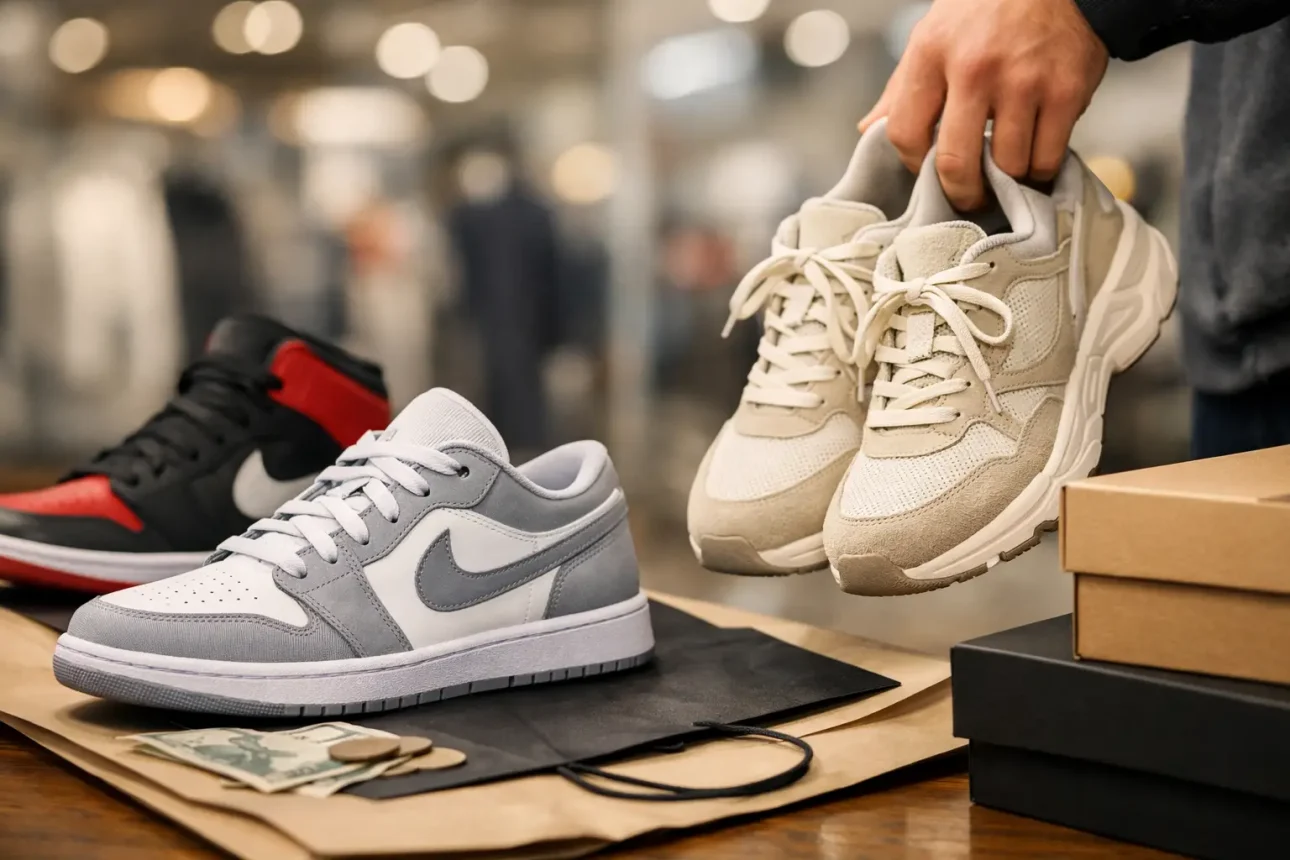
You do not need to pay resale prices or chase fake “must-have” pairs to wear good sneakers. If you want to know how to get branded shoes for cheap, the real answer is pretty simple: stop shopping like the brands want you to shop. Most people overpay because they buy the hottest name, the newest color, or the pair everyone else is posting.
That is where budgets get wrecked.
We have seen it a hundred times. Someone says they want Nike, Adidas, New Balance, or Asics for less, but they keep clicking the loudest release instead of the best value. Those are not the same thing. A solid pair at a fair price usually comes from better timing, better model choices, and being a little less emotional when you hit add to cart.
Cheap and low-quality are not the same thing. That is the first thing to get straight. There are plenty of branded shoes that are worth buying at lower prices. The trick is knowing what the brand is discounting and why.
Sometimes a shoe gets marked down because the color did not move. Fine. If the upper is neon slime green, maybe that matters to you. If it is a clean gray or white pair that just got overshadowed by a newer launch, that is usually where the smart money goes. Same shoe. Same comfort. Less hype. Better price.
Older versions are another easy win. Brands update running and lifestyle models constantly, and not every update is better. Sometimes the new version has tiny tweaks and a bigger price tag. Last year’s model can still feel good, hold up well, and save you real money. If you are walking, commuting, or standing all day, you probably will not care that the tongue shape changed by three millimeters.
This is where people mess up. They think cheaper means settling. It does not. It means skipping the noise.
A lot of shoppers say they want branded shoes, but what they really want is the most famous branded shoe. That is a different problem.
Take Nike. Everyone rushes to the pairs with the loudest reputation. But some of the best value in the brand sits a tier below the poster-child models. Same goes for Adidas and New Balance. The pair getting all the attention is often not the pair that gives you the best wear for the money.
We would rather buy the less flashy model that still looks sharp and feels good on foot than blow the whole budget on one overhyped option. A clean GR sneaker beats an overpriced status pair most days of the week.
If you care more about how the shoe fits into your life than how it plays on social media, you are already ahead.
This matters more than people think. If you are shopping for everyday use, do not start in premium retro collabs or limited lifestyle collections. Start with what you actually need.
Running shoes, walking shoes, and all-day pairs often go on sale more often than trend-driven releases. That gives you more room to find a branded pair for less. Lifestyle sneakers can be a steal too, but only if you are not fixated on the one pair with all the noise around it.
If you need a shoe for standing all day, skip the flat fashion pair just because it looks clean in photos. That kind of mistake gets expensive fast. Buy for real use first. Style comes after that.
If you are serious about how to get branded shoes for cheap, timing does a lot of the work.
The worst moment to buy is right when a shoe launches or gets talked up. That is when sizes are tight, prices are firm, and common sense disappears. The best moment is usually a few weeks or a few months later, when the hype cools off or the next wave starts pushing it out of view.
Retail calendars matter. End-of-season clear-outs, holiday sales, mid-year promotions, and stock refreshes are where branded shoes get more affordable. Not every discount is amazing, but enough of them are worth waiting for. Patience beats panic-buying.
That said, waiting too long can backfire if you wear a common size. The sweet spot is when a pair has stopped being new but has not been picked over yet. That is where the real value tends to sit.
This sounds obvious, but people still ignore it. Black, white, and the launch colorway usually stay firm longer. The less famous colorway drops first.
That does not mean you should buy an ugly shoe just because it is cheap. Cheap ugly is still ugly. But if you are flexible, you can often get the same model for a lot less just by choosing a quieter color.
We actually like this move. A cleaner, less-hyped color usually ages better anyway. It works with more fits and does not scream, “I paid extra for attention.”
Not every sale is a deal. Some stores mark a shoe up just so they can mark it down. Some only discount weird leftover sizes. Some push low prices on pairs nobody wanted for a reason.
A real deal is simple. It is a legit branded shoe, in a wearable color, in normal sizes, at a price that makes sense for the model. That is it.
If the price looks too low, check the basics. Is it a current product line or a very old pair that has been sitting forever? Is the seller clear about sizing, returns, and shipping? Are the product photos and details consistent? You should not need detective work to buy sneakers.
That is one reason people like shopping with a straightforward store instead of random marketplaces. Less guesswork. More actual shopping.
A cheap shoe is only cheap if you actually wear it. If it sits in the box because it pinches, looks weird with your clothes, or feels too precious to scuff, that was not a deal. That was dead money.
We always come back to wear-per-dollar. A $70 pair you wear four times a week is better value than a $140 pair you are scared to crease. Same with comfort. If a shoe feels bad after two hours, the discount stops mattering.
This is why practical models often win. A clean runner, a solid daily retro, a tough walking shoe – those usually earn their keep fast. They may not get the most comments. They will get the most use.
People chase deals and forget fit. Then they keep a pair that is slightly off because returning it feels annoying. Bad move.
Branded shoes are not consistent across every model. One New Balance pair can feel roomy, while another fits more snug. Some Adidas models run long. Some Nike pairs feel narrow. If you know your sizing habits by brand, use that. If you do not, slow down and check before you buy.
The cheapest shoe becomes expensive real fast if it is wrong for your foot.
Here is the part people skip: build a rotation with some sense. You do not need five expensive pairs that all do the same job. You need a few solid pairs that cover your week.
One everyday pair. One pair for walking, training, or long hours on foot. Maybe one cleaner lifestyle pair if that matters to you. That approach keeps you from impulse-buying another trendy shoe that overlaps with three pairs you already own.
When you shop like that, branded shoes get a lot easier to afford. You stop chasing random stuff and start buying pairs with a purpose. That is less fun for about five minutes. Then your closet makes more sense and your money lasts longer.
If you are buying online, this is where a broad store helps. Being able to compare brands and categories in one place makes it easier to spot value. Sometimes the better buy is not the brand you came for. Sometimes it is the one next to it. We are fine saying that.
SneakerNess works well for that kind of shopping because you can look across brands without the boutique markup or the fake scarcity routine. That matters when you want options, not theater.
If we had to boil it down, this is it. The best way to save on branded shoes is to stop treating every purchase like a big event. Buy proven models. Watch pricing. Be flexible on color. Skip the overhyped pairs. Get the shoe that works, not the one that shouts.
That is how you end up with sneakers that look good, feel right, and do not leave you regretting the receipt.
And if a pair is cheap but you have to talk yourself into it, leave it. The right deal should feel easy.